Tuesday, 4 October 2011

The Road to happiness doesn’t pass on trodden commercial streets [Drumul spre fericire nu trece pe artere comerciale bătătorite]

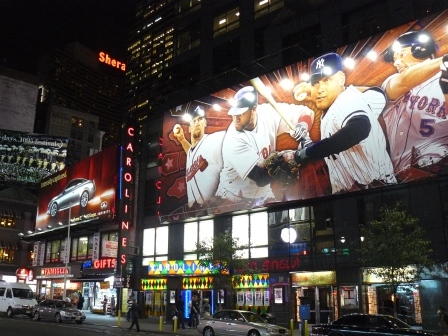
There may be some (women or not only?!) who can benefit (at least temporarily) from the ‘therapeutic effects’ of shopping (a view from India on this), yet it doesn’t work for me – I loathe it.

Some are afraid of driving on high roads; it seems that I’m not, after I drove both on the Transfăgărăşan and Transalpina this summer. Others are afraid of public speaking; I’m not, as long as this is my current job.

Those scared of heights or those hardly willing to speak publicly could possibly understand how (not necessarily ‘afraid’ but clearly) incomfortable I am with going shopping.

Almost every time I have to buy something (meaning that I-really-need-to-do-so!!! ), I feel that I am challenged to get out of my comfort zone, and most shopping sessions and prove to be distasteful experiences.

They can be either mildly depressing to pychologically exhausting experiences. Except for the rare occasions when they were more ‘cultural experiences’ rather than actual shopping.

Although I did buy something, and spent several hundred dollars, euros or pounds, I must admit that I didn’t feel so bad in stores where I got ‘good value for the money’.

The few positive examples: Marks & Spencer stores (in Brighton and Edinburgh), a Upim store (Rome), the bazaar around Yu Gardens (Shanghai) or the store on board the US aircraft carrier USS Harry S. Truman.

On the contrary, in over 90% cases when I go shopping in Romania, there surely must be something to be unhappy about.

I could put the blame on (the lack of) available choices, on outrageous (compared to other, deemed richer, EU countries) prices, or on the (typical Romanian?!) attitude of the vendors, however, it wouldn’t be completely true.

There’s no doubt that no (real or imaginary) external causes such as the above could be to blame. It’s something of my inner nature…

I’ve always been wondering… how did our ancestors live without so many choices at hand? Was life really tough in a ‘choiceless’ society?

Well, according to American psychologist Barry Schwartz, our ancestors may have been better off without many of the contemporary choices available to us.

There’s an official dogma in the Western world claiming that the welfare of citizens = the maximization of freedom = the maximization of choice.

But that’s all wrong! According to Schwartz, the abundant choice around us has made us not freer but more paralyzed, by no means happier but actually more dissatisfied.

Dissatisfied with the products we buy, with the psychological pressures of choosing, and also dissatisfied with everything else around.

Could this explain why we are always discontented, grumpy, and ready to try to change our jobs, professions, goals, and even significant others for ‘choices’ that end up driving us crazier than we were before choosing?

I recommend watching this 20-min video of Schwartz, and trying to read his book: The Paradox of Choice. Why More Is Less!

Not that reading it would change anyone’s shopping habits or would open our road to happiness. Maybe it could help us scrap another choice of road where happiness is not to be found.

[For all the posts on this blog go to/Pentru toate postările de pe acest blog mergi la: Contents/Cuprins]

Friday, 30 September 2011

[EN] A few wonders from the UK / [RO] Câteva minunăţii din UK (25)

[EN] For some, it’s the home of the British democracy, which is seen as a role model in our (Western) civilisation. [RO] Pentru unii, este casa democraţiei britanice, care este văzută drept un model de urmat în civilizaţia noastră (vestică).

[EN] For others it’s but a sham, meant to disguise the fact that Great Britain is run by successive elected dictatorships. [RO] Pentru alţii, este doar o amăgeală, menită să mascheze faptul că Marea Britanie este condusă de dictaturi elective succesive.

[EN] For most ‘apolitical’ visitors of London, it’s just a magnificent tourist attraction, which can’t be skipped. [RO] Pentru cei mai mulţi vizitatori ‘apolitici’ ai Londrei, este doar o magnifică atracţie turistică, ce nu poate fi omisă.

[EN] This is the new (built after 1834) Westminster Palace, which hosts both houses of the British Parliament. [RO] Acesta este noul (construit după 1834) Westminster Palace, care găzduieşte ambele camere ale Parlamentului britanic.

[EN] It lies on the north (left) bank on the Thames, close to the complex of government buildings on Whitehall. [RO] E situat pe malul de nord (stâng) al Tamisei, aproape de complexul de clădiri guvernamentale de pe Whitehall.

[EN] With its Big Ben, the palace makes an iconic brand of the UK, not to be dethroned  by the London Eye any time soon. [RO] Cu al său Big Ben, palatul este un brand iconic al UK, ce nu poate fi detronat curând de London Eye.

[For all the episodes of this series, and all the posts on this blog go to/Pentru toate episoadele din această serie şi toate postările de pe acest blog mergi la: Contents/Cuprins]

Thursday, 29 September 2011

Chestii d-astea, numai la britanici (31) [Things like these, only at the Brits]

Poate că, în afara unor copii iscusiţi de prin Estul Europei (să zicem… :-), nimeni nu s-ar putea căţăra în aceste containere în care se aruncă textilele de reciclat din Scoţia.

Totuşi, aşa cum arată această imagine oferită de prietenul meu scoţian Gregor – al cărui site cu imagini l-am recomandat, dar mai are unul, tot demn de răsfoire – avertismentul Statului Dădacă este nelipsit:

“PERICOL Căţărarea în acest container poate avea drept rezultat moartea sau o rănire gravă”, se zice, ca nu cumva vreun cerşetor să încerce a-şi face bârlog acolo.

Dar oare să fie grija de vagabonzi la mijloc sau temerea că, odată urcată acolo şi căzută (moartă sau rănită), o ‘victimă’ (sau rude ale sale) îi poate da în judecată pe cei ce n-ar fi pus avertismentul?!

[Pentru toate episoadele din această serie şi toate postările de pe acest blog mergi la/For all the episodes of this series, and all the posts on this blog go to: Contents/Cuprins]

Friday, 23 September 2011

[EN] No comment / [RO] Fără comentarii (16) – BMW Obsession / Obsesie BMW

[EN] BMW – a German probably as loved in the UK (pics 1 + 4) as it is in Romania, at least according to what I could see. [RO] BMW – o maşină germană probabil pe atât de iubită în UK (pozele 1 + 4) precum şi în România, cel puţin din ce am putut vedea.

[EN] Indeed, Britons have some big BMW car clubs (+ here, here, here), but they seem far from the ‘BMW obsession’ from Romania. [RO] Într-adevăr, britanicii au nişte mari cluburi auto BMW (+ aici, aici, aici), dar par a fi departe de ‘obsesia BMW’ din România.

[EN] In the 2nd pic: a BMW-inspired urban ‘work of art’ in Bucharest. [RO] În cea de-a 2-a poză: o ‘operă de artă’ urbană din Bucureşti inspirată de BMW :-)

[EN] In the 3rd pic: an old Romanian Dacia tuned up with a BMW bonnet.*** [RO] În cea de-a 3-a poză: o veche Dacie românească tunată cu o capotă de BMW :-)

*** [EN] NOTE: ...as Britons call it, while Americans say ‘hood’. [RO] NOTĂ: ...cum o numesc britancii, iar americanii îi spun ‘hood’.

[For all the episodes of this series, and all the posts on this blog go to/Pentru toate episoadele din această serie şi toate postările de pe acest blog mergi la: Contents/Cuprins]

Wednesday, 21 September 2011

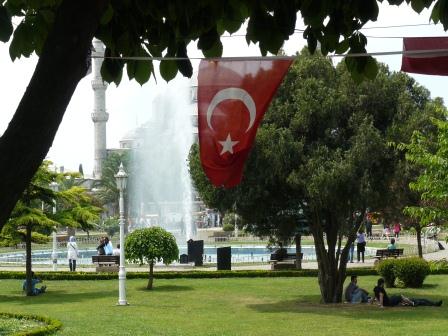
A new Ottoman Turkey – an unforgivable courage [O nouă Turcie Otomană – un curaj de neiertat]

Even before WWI ended in the autumn of 1918, The Ottoman Empire had been theoretically sliced by the Perfidious Albion, and France – the two world powers which had stood by the ailing empire (dubbed “the Sickman of Europe” by its greatest rival, Tsarist Russia) for a century before.

The former empire – whose rise and decadence shaped the history of the Eastern half of Europe since 1299 to the dawn of the 20th century – was supposed to be reduced to a third of Anatolia (97% of today’s Republic of Turkey).

Still, that would have been a remarkable survival of a moribund country that had beaten all bets against it, and should have collapsed under the burden of public debth some 45 years before.

By the mid 1800s, the Ottoman Empire was probably one of the least popular countries in Europe. “The Turks are coming!” had long before been a frightened scream heard in this part of the world, especially in Greece, Romania and in other realms in the Balkans.

Even the Austrians, some of the Europeans most vigorously opposed to Turkey’s Accession to the EU these days, probably used these words in 1529 and 1683.

Seen as backward, corrupt, yet still dangerous as any ailing predator, the Ottoman Empire had nothing good to offer, many believed.

Although the Ottoman Empire did not mean exclusively repeated savage attacks on civilians, plunders, mass abductions of children, desecration of Christian churches, suppression of religious identities (mainly of Greeks, Serbs, Albanians etc), these were the sad things that people rememebred over the centuries.

The Ottomans were probably no worse than the Romans or the Crusaders, and were certainly more religiously tolerant than Catholics and Protestants proved to be among themselves and to their Orthodox brethren or to Jews.

Yet no one remembered any ‘positive shades’ from the Sublime Porte’s history; it was a relic of the past just like the Austria-Hungary, and both were seen as ‘doomed’.

Industrial progress had erupted in Britain and was spreading from Germany towards the rest of the world, democratic ideals burst in the USA and France, while Russia was offering a glimpse of hope (albeit shadowed by wariness) to the Orthodox nations still regarded as ‘Ottoman subjects’ in Istanbul.

In the meantime, ‘The Sickman’ refused to die, because he was not let to die by his ‘quacks’ (the UK and France), who even dared putting their ‘medical skills’ at risk in the Crimean War and who were also his largest creditors.

In a way, supporting the Ottoman Empire in the 19th century by the great powers of the time was similar to supporting Gaddafi’s Libya against a presumed threat al-Qaeda (in the early 2000s) or Saddam Hussein’s Iraq against theocratic Iran (in the 1980s).

But that was over 100 years ago. ‘The Sickman’ refused to bow to the last blow (Treaty of Sèvres), and reborn from the ashes (Treaty of Lausanne + Proclamation of the Republic).

Thanks to Mustafa Kemal Atatürk’s aggressive secular reforms, Turkey was allowed to be, and underwent massive changes.

However, economic advancement was rather slow for a few decades marked by coup d’etats, and only the past 15-20 years have allowed the rise of a ‘Turkish miracle’ (if it’s not a bubble?!) comparable to what is hailed as a ‘Chinese miracle’.

Brought into NATO (in 1952, even before West Germany), Turkey would be kept up to these days in a humiliating antechamber of the EEC/EU… just until the country no longer needs, nor truly wishes to be part of the extremely ‘dizzy’ Union of today.

With the second armed forces in NATO, with an economy growing by 9% per year, having earned its place among the strongest economies of the world (G-20), with the fastest expanding population in Europe, Turkey has been showing signs that it is becoming a world actor to be reckoned with.

Nevertheless, almost no world power of our age would have considered Turkey’s growth a ‘threat’. At least not openly, as it would be ridiculous to believe that Moscow’s GRU and SVR didn’t assess the risk posed by the rebirth of a former archenemy.

Even the fact that Ankara befriended Teheran didn’t appear to be excessively worrisome, as long as Turkey was regarded as a staunch ally of the Western World.

But that’s no longer the case, and what has been a bewildering success story is rapidly turning into a geopolitical nightmare.

Turkey is now at odds with Israel (therefore with the USA), with the EU, while vigourously claiming back its influence over parts of the world that had been snatched from the Sublime Porte by its ‘friends’ almost a century ago: Cyprus (1878) and Egypt (1882) by the Perfidious Albion, Libya  (1912, by Italy) and Palestine (1917), by the UK again.

And let no wise leaders of today excuse themselves that they haven’t been warned! Let’s remember what Recep Tayyip Erdoğan said on the night when he won the third consecutive elections, this time by a landslide:

“Believe me, Sarajevo won today as much as Istanbul, Beirut won as much as Izmir, Damascus won as much as Ankara, Ramallah, Nablus, Jenin, the West Bank, Jerusalem won as much as Diyarbakir.”

He enumerated places that were once part of the Ottoman Empire. Obviously, Erdogan made no territorial claims, but a symbolic claim – that any change occuring in Turkey could only be for the better of the above mentioned places.

Aren’t all empires claiming that? Doesn’t Uncle Sam say that his democracy and his solutions are the best for the world? Wasn’t Adolf Hitler promising his peace for a thousand years?

Anyway, before Erdoğan’s words that can be (mis)interpreted as ‘imperialistic’, his Foreign Minister, Ahmet Davutoğlu, set the stage for the ‘New Ottoman Turkey’ shortly before the historic elections of June 2011 in a different tone.

At the United Nations’ 4th Conference on the Least Developed Countries (LDCs), held in Istanbul (9-13 May 2011), Davutoğlu launched a bold diatribe against the current world order:

“We don’t want to have political hierarchy in the world, where certain countries, certain nations, have more to say on the future of political order in the coming decades and centuries,” the minister said.

“There are permanent members in the U.N. Security Council, and permanent [means] they will decide what will be happening in the world [in the future], it means they have the right of veto,” Davutoğlu the explained, calling this system unjust and in need of change, according to Hurryiet newspaper.

This sounds like the position of a country whose leaders wish to lead a new ‘Non-Aligned Movement’ and to speak on the behalf of the opressed.

Or could they have in mind some kind of moderately secularised Ottoman Caliphate, as Davutoğlu’s book Alternative Paradigms theoretizes that a mix of Western-style democracy and Islam is perfectly feasible?

As an admirer of Turkey – I dare assuming that few Romanians who visited the country or made friends with ordinary Turks wouldn’t agree with my admiration – I can only say that this new Ottoman courage shall not be forgiven.

Irrespective whether it is morally right for Turkey to support Turkish Cypriots, irrespective of the fact that those sickened with Uncle Sam’s unilateralism need to have their voices heard in the world, no matter how logical is to break free from EU’s hypocrisy, Erdogan is not putting Turkey on a path to a better future.

On the contrary, he may be taking a huge gamble just like Hitler did in September 1939, when the Führer foolishly imagined that the UK and France wouldn’t react to his invasion of Poland.

Rather sooner than later, the current world order – just or unjust as it it, that can be debated but unchanged! – will punish Turkey.

Up until now, Erdoğan, Davutoğlu along with President Abdulah Gül have proved to be incomparably wiser than the former Austrian corporal of the Bavarian Army.

But we cannot cast aside the sad hypothesis that –  just like Muslims all over the world, irrespective of nationality, wisdom, wealth etc – they may have fallen into a tragic and implacable trap.

This trap is the reckeless assumption that ‘their Allah’ would eventually grant victory to those standing up against Israel.

I may not be offering an earthly (political, military, economic) argument but a religious one, yet here I say it – no human beings could ever beat a nation whose’s name is Israel, the one who wrestles with God.

Only the Lord will vanquish Israel, only when and how He finds it right. And that defeat may be only quantified in metaphysical terms, having nothing to do with ‘wiping Israel off the map’ as some of the newest friends of Turkey (Mahmoud Ahmadinejad) imagine.

[For all the posts on this blog go to/Pentru toate postările de pe acest blog mergi la: Contents/Cuprins]

Saturday, 17 September 2011

[EN] Hail to competing sites / [RO] Salutări siteurilor concurente (17)

[EN] To those craving after British foods, I recommend this online store, which promises to worldwide deliveries… [RO] Celor care râvnesc la alimente britanice, le recomand acest magazin online, care promite livrări în toată lumea…

[EN] …although only 23 countries are specified (Romania not included :-(, they have an interesting blog about Brit brands. [RO] …deşi numai 23 de ţări sunt specificate (România nu este inclusă :-(, au un blog interesant despre mărci britanice.

[EN] To Romanians in the UK missing Romanian foods or for any Briton curious to taste them, I recommend this store. [RO] Românilor din UK cărora le este dor de mâncăruri româneşti sau ori cărui britanic curios să le încerce le recomand acest magazin.

[EN] It’ worth reading a top of Romanian brands sold in the UK + a section of ‘Books and magazines’, mainly for children.  [RO] Merită citit un top al mărcilor româneşti vândute în UK + o secţiune de ‘Cărţi şi reviste’, mai ales pentru copii.

[For all the episodes of this series, and all the posts on this blog go to/Pentru toate episoadele din această serie şi toate postările de pe acest blog mergi la: Contents/Cuprins]