Showing posts with label Brussels. Show all posts

Sunday, 30 June 2013

Nimic nu e imposibil: Aducem Basarabia acasă! [Nothing’s impossible: Bringing Bessarabia home!]

Dacă, pe ce cale, când anume, cu ce preţ (şi plătit de cine?) va redeveni Basarabia parte a României pare la fel de imposibil de prezis precum în urmă cu 22 de ani, când devenea aşa-zis independentă Republica Moldova.

Dintre toate ipotezele, cea mai neplauzibilă este baliverna oficială a reunirii între graniţele comune ale UE şi sub umbrela NATO. De parcă românitatea are nevoie de confirmare şi de oblojire din partea vreunei entităţi suprastatale…

Mult mai important este că o armată de voluntari visează la acest ideal naţional, cu aceeaşi înflăcărare cu care, acum un secol, se visa la trecerea Carpaţilor pentru unirea cu Transilvania. Visul unui Octavian Goga şi al altora părea la fel de imposibil.

Rusia era tot uriaşă şi puternică în acest colţ de lume. Ca mereu, nimeni în Europa nu ar fi mişcat un deget pentru a repara nedreptăţile istorice suferite de alţii. Şi atunci, o bună parte din elita ţării era absorbită de bunul plac spoit sub forma unor găunoase viziuni politice.

Avem visătorii, avem atenţia stârnită (greu de crezut că or fi mulţi cei care să nu fi văzut scris, chiar şi pe la sate, “Basarabia e România” în ultimii doi ani) şi există şi o iniţiativă legislativă cetăţenească pentru care se cer semnături.

Iniţiatorii doresc o lege care să-i asimileze în bună măsură pe locuitorii Republicii Moldova cu cei ai României, să le faciliteze accesul la muncă şi studii. Pe scurt, să-i facă să se simtă cu adevărat acasă.

A dezlipi de pe aceşti oameni stigma unor cetăţeni de mâna a doua (cum erau în URSS, faţă de ruşi) sau a unor români second hand (cum sunt până azi, în România) este un pas esenţial pentru a le reda demnitatea şi libertatea de a se cunoaşte pe sine.

Astfel, le-ar fi mult mai uşor a se recunoaşte drept români (cum doar 2.2% au făcut-o la recensământul din 2004) , dar cum sunt şi ceilalţi 76.2% dintre locuitorii ţării vecine care s-au declarat moldoveni.

Nici nu e nimic greşit: n-or fi toţi românii moldoveni, dar toţi moldovenii (indiferent de care parte a Prutului, chiar şi cei de peste Nistru) sunt parte a naţiunii române!

Cu paşi mărunţi, mai întâi printr-o asemenea lege care nu pronunţă cuvântul unire – care ar isca scandal deopotrivă la Moscova, cât şi la Bruxelles sau Berlin – se va păşi către întoarcerea Basarabiei acasă.

Nici nu contează, pe termen scurt, cum se va face această unire din perspectivă politică. Peste noapte, oricând, din voia lui Dumnezeu, imperii se pot prăbuşi de parcă nici n-au fost.

Dar este vital ca românii din Republica Moldova să se simtă apreciaţi drept români, mai ales după decenii în care li s-a imprimat în mentalul colectiv tragedia părăsirii din 1940.

Aşadar, acolo unde găsiţi corturile cu inscripţiile “Semnează pentru Basarabia!” şi  “Aducem Basarabia acasă!”,  opriţi-vă şi semnaţi în favoarea legii!

Nu vă gândiţi la implicaţiile geopolitice ale gestului! Nici nu o să aţâţaţi Moscova mai tare asupra Republicii Moldova (ruşii oricum îşi urmează planurile lor), dacă semnaţi; nici nu o să-i temperaţi manevrele viclene, dacă nu veţi semna!

Nu vă bateţi capul despre cum va arăta legea sau cum, în ţara lui Vodă-Plagiatorul, chiar se va apleca cineva asupra acestei iniţiative a cetăţenilor, nici nu lăsaţi cinismul să vă roadă cu ideea “cum poate conta semnătura mea pentru unire?” sau altele!

Gândiţi-vă la ce mult puteţi schimba în bine viaţa unor oameni (întâmplător tot români) care vor putea călători mai simplu către România şi restul UE!

[Pentru toate postările de pe acest blog mergi la/For all the posts on this blog go to: Contents/Cuprins]

Friday, 2 November 2012

[EN] Punished smokers / [RO] Fumători pedepsiţi

[EN] I admit that sinful I sometimes can’t help enjoying when I watch the sad view of some ‘punished smokers’. [RO] Admit că păcătosul de mine uneori nu mă pot abţine a mă bucura când urmăresc trista de privelişte a unor ‘fumători pedepsiţi’.

[EN] I remember the long hours when I breathed in the sickening smoke... at school, at work, on the street, in pubs, sometimes even on beaches or in parks. [RO] Îmi amintesc lungile ore când am inspirat scârbosul fum… la şcoală, la serviciu, pe stradă, în localuri, uneori chiar şi pe plaje sau în parcuri.

[EN] Nevertheless, there’s nothing funny – neither I, nor anyone else should laugh at these enslaved people. [RO] Cu toate acestea, nu este nimic amuzant – nici eu, nici altcineva nu ar trebui să râdă de aceşti oameni înrobiţi.

[EN] None of us would look better if our power of will were diminished by nicotine and the tyranny of hedonism. [RO] Niciunul dintre noi nu ar arăta mai bine dacă puterea voinţei ne-ar fi diminuată de nicotină sau de tirania hedonismului.


[EN] This is how those once ‘cool’ smokers (like these teens drinkers) look when they grow up… pretty ‘un-cool’, I’d say… [RO] Aşa arată acei cândva ‘cool’ fumători (precum aceşti băutori adolescenţi) când cresc mari... destul de ‘ne-cool’ aş zice eu...

[EN] Sidelined: taken out of their daily routine, out of their work environment or even out of buildings. [RO] Marginalizaţi: scoşi din rutina zilnică, afară din mediu de lucru sau chiar afară din clădiri.

[EN] Smoking is no longer a comfortable experience in most of EU countries and the USA. It still is in China and Russia. [RO] Fumatul nu mai este o experienţă confortabilă în cele mai multe state UE şi în SUA. Este încă în China şi Rusia.

[EN] Lighting a cigarette has become something that must always be done outside… And not only outside the European Commission headquarters in Brussels (pic 1). [RO] Aprinderea unei ţigări a devenit ceva care trebuie făcut întotdeauna afară… Şi nu doar în afara sediului Comisiei Europene din Bruxelles (poza 1).


[EN] Smokers are compelled to go out in front of little stores in Brighton (2) or to descend 30-40-50 floors in New York City. [RO] Fumătorii sunt forţaţi să iasă afară în faţa unor mici prăvălii din Brighton ori să coboare 30-40-50 de etaje în New York City.

[EN] And that may not be the worst. They could be crammed into glass cubes like in the Airport of Munich (3)… [RO] Şi aceasta s-ar putea să nu fie cel mai rău. Ar putea fi înghesuiţi în cuburi de sticlă precum în Aeroportul din Munchen (3)...

[EN] Is it good? Is it bad? Is it discriminatory? Is it politically correct? What about the efficiency of these constraints? [RO] Este bine? Este rău? Este discriminatoriu? Este politic corect? Ce putem zice de eficienţa acestor constrângeri?

[EN] Maybe some good results will be observed over the decades, when other cause of death would seem insurmountable… [RO] Poate că unele rezultate bune vor fi observate peste decenii, când alte cauze ale morţii vor părea insurmontabile…

[For all the episodes of this series, and all the posts on this blog go to/Pentru toate episoadele din această serie şi toate postările de pe acest blog mergi la: Contents/Cuprins]

Monday, 8 October 2012

[EN] No comment / [RO] Fără comentarii (39) – Dog and child / Câine şi copil

[EN] Teach a dog not to bite, to be nice to children and how to wear sunglasses… [RO] Învaţă un câine să nu muşte, să fie drăguţ cu copiii şi cum să poarte ochelari de soare…


[EN] …and get easy money from their thrilled parents! [RO] …şi fă uşor bani de la părinţii lor încântaţi! 


[EN] Pics taken in the ‘European capital of begging’ – Brussels. [RO] Poze făcute în ‘capitala europeană a cerşetoriei’ – Bruxelles.

[For all the episodes of this series, and all the posts on this blog go to/Pentru toate episoadele din această serie şi toate postările de pe acest blog mergi la: Contents/Cuprins]

Tuesday, 18 September 2012

Comoara nevăzută [The unseen treasure]

“Îl interesau comorile îngropate în România, chiar înfiinţase un departament secret care se ocupa de acest lucru. Iar despre Constantin Brâncoveanu se spunea că dăduse peste o comoară imensă…” 

“Se bănuia că sub Aşezămintele Brâncoveneşti s-ar afla tuneluri secrete care ar putea duce la legendara comoară, şi că de aceea Ceauşescu ar fi hotărât demolarea acestor clădiri”.

Aceasta este mărturia fostul său operator de film despre mult prea regretatul (pentru a i se potrivi eticheta de‘tiran’) Nicolae Ceauşescu. Până şi asasinarea dictatorului ar putea fi explicată prin faptul că demolările sale i-au atras un blestem al urmaşilor lui Brâncoveanu.

C-o fi aşa, că n-o fi… contează mai puţin. Important este că această ipoteză istorică arată cum Ceauşescu, aidoma ceauşeilor (cu păr schimbat, dar nu şi năravuri), cocoţaţi la putere în urma sa, au ratat adevărata comoară imensă a naţiunii române.

O fi fost Constantin Brâncoveanu, într-adevăr, un om nespus de bogat, un Prinţ al Aurului (cum era poreclit de turci). Poate că averea lui era comparabilă cu a unor personaje biblice precum Avraam şi Iov.


Însă comoara lui cea mai de preţ este cea din ceruri, pe care şi-a agonisit-o încă înainte de a o fi sporit şi mai mult prin moartea martirică.

Din păcate, sub lupa istoricilor seculari, ba chiar şi a unor ‘fani’ de peste veacuri, dar care să nu le împărtăşească credinţa, Sfinţii Martiri Brâncoveni rămân de nepriceput.

Cum, să fi fost chiar atât de bogaţi, însă să nu fi negociat cumva eliberarea cu nesătulul Sultan şi hrăpăreţii săi slujitori de la Istanbul?! Aşa ceva pare de neconceput în zilele noastre!

În mod tragic pentru Ceauşescu, dar şi pentru noi toţi este faptul că el nu a rezonat decât parţial cu destinul istoric al românităţii. A despărţi acest destin, al istoriei omeneşti, de miezul său ortodox este lipsit de sens.

Nici fondatorului statului numit încă România, Alexandru Ioan Cuza, nu i-a fost dragă Ortodoxia, nici prea lăudatulului său urmaş, Regele Carol I – în vremea căruia au fost dărâmate mai multe sau cel puţin tot atâtea biserici*** precum în epoca lui Ceauşescu.


Nici nefericitul rege, venit la Gurile Dunării, ca să facă de strajă intereselor Germaniei, n-a înţeles destinul naţiunii române, ci a murit de inimă rea. Acest acest popor de opincari nerecunoscători – pe care socotea că îl scosese din beznă – nu voia să lupte de partea unei cauze pierdute de la început.

Bucură-se acum, căci un alt urmaş de-al său, Traian Băsescu, va pune şi ultimele găini cu ouă de aur tot în proţapul Germaniei! Dar nu se va bucura mult...

Alergarea către comorile pământeşti ale lui Cuza (în beneficiul stăpânilor masoni din Franţa), al lui Carol I (pentru scumpa lui Germanie), ale lui Ceauşescu (de dragul unei ficţiuni personale despre poporului român) sau a lui Băsescu (pentru păpuşarii din UE şi, iarăşi, Germania) nu va ţine decât până la mormânt.

Or, comoara credinţei dreptslăvitoare ţine mai mult decât viaţa de aici şi rămâne neatinsă de prădăciunile unor satrapi vremelnici, slugoi ţinuţi în jilţ de mai marii lor, odinioară de la Istanbul, azi de la Berlin, Bruxelles, Washington DC sau de aiurea.

Poate că, nu pentru (ne)meritele nevrednicilor de noi, ci prin voia Domnului şi jertfa mucenicilor Săi, de care a dat destui şi acest neam, comoara aceasta va rămâne până la sfârşitul vremurilor!

*** NOTĂ: Ar fi vorba, doar pentru Bucureşti, de 25 demolate în vremea lui Carol I, respectiv 23 – în timpul lui Ceauşescu. Desigur, aştept alte surse mai precise, care ar putea confirma sau infirma ceea ce am găsit eu.

[Pentru toate postările de pe acest blog mergi la/For all the posts on this blog go to: Contents/Cuprins]

Friday, 7 September 2012

Lay monuments pointing at the sky [Monumente laice arătând către cer]

Isn’t is fascinating to witness that most (if not all) secular societies’ monuments are still pointing at the sky?

Even after scrapping the idea of divine authority over the earth and distancing themselves from the very concept of God (deemed as obsolete, backward, useless today etc) people are looking up to the visible skies and beyond.

Fewer and fewer are those drawn to Christ’s love, while more and more are those eager to welcome aliens descending from UFOs.

Nevertheless, all people (religious or self-worshipping irreligious), from all places and all ages, have always been secretly yearning for some kind of salvation from a world whose progress has only put and tightened a noose around our necks.


Cathedrals and churches are still towering cities in many countries of the Old Continent (most of which is part of the secular EU).


Some are abandoned ruins (see pics from Scotland here or here), others are turned into cafés or stores, however, they are still here with us, getting in the way of those who banished from God their minds and reject His natural laws.


People can’t live without a certain innate aspiration to verticality, can they? Hardly any monumental work of art could express greatness horizontally. 


Followed either legitimately (“I am the Way, the Truth, the Life”) or illegitimately (through an anthropocentric Tower of Babel), this upward aspiration is inherent in human nature. 

[For all the posts on this blog go to/Pentru toate postările de pe acest blog mergi la: Contents/Cuprins]

Friday, 3 August 2012

Viitorul uitându-se în ochii noştri [The future looking into our eyes]

Viitorul  ne-a privit drept în faţă, mai înainte de a ne avânta noi în gâtlejul lui şi să ne fi devenit prezent. Am căscat ochii ca viţeii la poarta nouă. Firma era, ce-i drept, ispititoare: “La burta plină, garantat”.

Semăna, dar de unde să fi ştiut noi că n-avea să răsară nimic de după ceea ce speram noi că se va ivi dincolo de poarta unei ere noi, una de viaţă mai bună?

Despuiaţi de vise (“nimic nu merge în ţara aceasta”), cocoşaţi de griji (“de unde să scot banii?”) şi cu neuronii sfârâind de neputinţă (“ăştia fură atâta şi nu se mai satură!”), am intrat şi i-am cerut chelnerului să ne aducă ceva de mâncare.

Marţafoiul se uita chiorâş, dar hăhăia încurajator (“lasă, că te rezolvă băiatu’ imediat”), ca şmenarul acela de la care suntem bucuroşi să cumpărăm ţigări ieftine de peste Prut.

Ne era aşa de foame, de nici n-am avut răbdare să consultăm pe îndelete meniul. Ne-a luat ochii de lustruit ce era, sclipind în spelunca mucegăită. Litere dolofane şi apetisant înşirate în fraze care lăsau gura apă...

Numai delicatese erau trecute acolo – libertate, echitate, democraţie, respect, prosperitate, progres. Am zis că “toate tre’ să fie bune, haleală să fie”, aşadar am cerut “specialitatea casei”.

Stăteam în bomba aceea cu dinţii la stele, privind prin acoperişul care stădea deja să cadă... Ne închipuiam că l-am sfredelit puţin noi, cu idealurile noastre, dar că totul va fi bine. Şi cum să nu fie bine?! Hm... ce îmbietor mai mirosea de la bucătărie!

Aştepându-l pe ospătar ca pe Godot, am început să ne scârbim unii de alţii. Unii am zis, de la bun început, că este genul de jigodie care îţi scuipă în mâncare, alţii – că ar fi, chipurile, cel mai spălat dintre toţi jegoşii posibili. Alţii doar au pufăit, indiferenţi, plictisiţi, dispreţuitori.

Înverşunaţi – dar cu gândurile în toate zările (la banii de întreţinere, la rată, la viza de SUA etc), însă nu către noi înşine – ne-am sfârtecat din priviri şi cuvinte, până ce, într-un târziu, ni s-a azvârlit comanda pe masă.

Un coş de felii unse cu scârbă, lângă un blid cu o putredă opăritură din varză de Bruxelles. Că cică mai mult nu ne permitem, ca puturoşi şi înapoiaţi ce suntem.

Ba da, am mai ras vreo trei halbe de ciudă. Că era la autoservire şi, părând a fi aşezat ca ‘din partea casei’ butoiul, am zis că doar nu ne-o trece şi asta pe nota de plată.

Nici sătui, nici beţi, jumate dintre noi am ieşit să-l scoatem în şuturi pe chelner, dar ba ne-am codit, ba ne-am împleticit, că nu mai ştim ce s-a întâmplat de... s-a rupt filmul...

Cică n-am fost chiar o jumătate destulă. Ne-am trezit cu stomacul scurs printre dinţi – şi furaţi, şi bătuţi, deşi pare-se că, încă, nu chiar puşi în proţap. Ori suntem doar cruţaţi un pic pentru o calfteală şi mai zdravănă?!

Acu’, vorba ceea, prinde orbu’ scoate-i ochii… Pe cine să mai dai vina? Că doar nu pe viclenii bucătari, pe parşivii furnizorii de varză, pe hoţpătari...

Şi nici pe comesenii noştri care şi-au înghiţit voma, justificându-şi nobleţea nătăroaică (“doar nu era să votez iarăşi între două rele”), cu logică de hienă darwinistă (“l-am dat afară, cu ce era să-l cresc?”).

Decât să dăm vina, mai bine am căsca ochii! Pe măsură ce foamea roade mai tare, orbirea se va face şi mai adâncă, iar în bucătării insalubre, încă ni se coc budinci de răbdări prăjite. Şi de nu ne-om mai grăbi noi să le înfulecăm, riscăm să ni se vâre pe gât.

Viitorul ne ţinteşte, cu ochii săi sfredelitori, tot de unde ne privea mai deunăzi. Ca de moarte, nimeni nu va putea scăpa de el.

L-am prinde de coarne, dar nu ştim cum. Unchiul Sam n-o să-şi facă pomană cu noi să ne înveţe rodeo.

Am fugi, dar nu avem încotro. La înaltele porţi din UE nu mai dă nimeni o ceapă degerată pe nişte rupţi în cur care, într-atâta urându-se ei înşişi, nu se pot aştepta să fie iubiţi de cineva. De la Moscova – nu simţim decât aceiaşi fiori de veacuri.

Ferice de cine mai ştie de Dumnezeu. Să facă bine să-I ceară “gândul românului cel de pe urmă”, ca să poată sorbi paharul pe care cu toţii, buni şi răi, va fi să-l sorbim.

[Pentru toate postările de pe acest blog mergi la/For all the posts on this blog go to: Contents/Cuprins]

Monday, 9 July 2012

Coup d’état in Romania?! Or just an outburst of orange hysteria?[Lovitură de stat în România?! Sau doar o răbufnire de isterie portocalie?]

There are no tanks rolling down the streets of Bucharest, no one has been arrested or exiled, public gatherings are still taking place in the city centre. It’s Code Orange again – but not because of the political turmoil.

It’s the crazy weather once more – this time the scorching heat, not the heavy snowing and blizzards.

The ‘civilised world’ – the EU (especially Germany) + the USA & others – have expressed their concerns and preoccupation with the sad fact that their beloved orange hero of 2004 was wrongfully (so they claim) impeached a few days ago.

These high priests of democracy decry the fact that Băsescu could have been ‘executed’ by votes in the Romanian Parliament. But it’s all a hysterical reaction.

Votes are no bullets. These are the same votes that have recently installed an Islamist (albeit moderate) president in Egypt, the same that sent spirited Nicolas Sarkozy to early retirement, and the same that will probably oust Angela Merkel from power in 2013.

Happen what may – a bigger evil than Băsescu can always befall Romania; but this is no reason for not removing the current evil – I am siding with those that, on July 29, will vote YES to confirm his impeachment.

He has never been the honest fighter for democracy, the defender of an independent judiciary, the committed supporter of the rule of law, nor the reformist whom the foreign media kept portaying over the past decade.

He has been an authoritarian, abusive, antidemocratic, and arrogant president who could never put up with the imperfections of Romania’s Constitution.

As a matter of fact, back in 2004, he had promised that he wouldn’t be an neutral president, but a kind of “player-President.” And he surely kept his promise, and played aggressively.

Whether a man like him, considered to be a creation of the former Communist secret services, has already played all his trumps is difficult to say. Used to steering a 306-meter long oil tanker, Băsescu is skilled at turning adverse odds in his favour.

Exposing the plagiarism of the current Prime Minister only hastened his impeachment, although it wasn’t a decisive blow to his adversaries, that would assure the survival of his moribund orange regime.

The average voter doesn’t know what plagiarism is. But Băsescu may still have some aces left in his sleeves.

His orange supporters are enraged, desperately trying to convinge the Sublime Porte of 2012 – which is not Ottoman Istanbul anymore, but Brussels and Washington DC – that a coup d’état has taken place in Romania, thus a referendum would be illegitimate.

Some of their arguments are valid, yet so are many of those against Băsescu’s rule. He was not the enlightened reformist of democratic institutions often described by foreign fans and internal worshippers, but a rather constant saboteour of democracy.

Most of all, irrespective whether he did it constitutionally or not, he is a shameless liar – and his irresponsible lies amount to (if not even surpass) the gravity of high treason.

Out of his abundance of lies, it’s worth noting only those with catastrophical economic consequences. In the autumn of 2008, as the global economic crisis began breaking havoc elsewhere in the world, he said Romania would not be affected.

Even more so, he said the wages of teachers should be increased by 50% and accused the liberal Prime Minister of refusing to provide the funds for his irresponsible claims.

In the meantime, his orange clique (PDL) was promising a 6.5% percent economic growth for 2009. At the end of that year, the economy would contract by 7.2%.

A bit later, in January 2009, he said that Romania would not need an IMF loan. In May 2009, Romania loaned 20 billions euros from the IMF and the European Commission.

Where did the money go? In the coffers of foreign banks, in the pockets of ‘orange’ companies, but surely nowhere in the benefit of Romanians who refuse to bite the bullet.

Although prescribed as a life-or-death necessity, with obstinance and cynicism spit at the ‘lazy Romanians’, it is still arguable whether Romania was in a such desperate need of a bailout. Or was it more an experimetal medicine forced down our throats by Doctor Băsescu?

A year later, in May 2010, Băsescu subjected Romanians to a fierce austerity experiment – a 25% wage cut in the public sector, and a 5% VAT increase.

Some may argue that any of these are but inoffensive (to the degree they are ‘constitutional’) lies and a kind of inherent mistakes of democracy that can’t be punished in any democratic society.

What if they are not as innocent as we are told they are? Băsescu’s orange gang was one of cunning profiteers, thus most of his (and his regime’s) apparent mistakes look like sheer premeditated crimes.

A yesman of Washington DC, of Brussels, and of Berlin (where some of his most voiceful supporters are heard these days), he did nothing in favour of Romania – only in favour of the orange myriad of interests that he patronized.

He is a fake hero of democracy, an indecent patron of a corrupt regime whom most voters in Romania (hopefully – it’s risky to say anything more these days) don’t want as president anymore.

There’s no lack of easily corruptible yesmen in Romania, therefore no one in Washington DC, Brussels or Berlin should worry about Băsescu being thrown into the dustbin of history.  

Romanians should be as concerned about the democratic world’s crocodile tears for the fate of Romanian democracy as those cynics in the aforementioned capitals were worried when Băsescu was pushing this impoverished and abused nation through the steepest chasm of austerity ever seen in the EU.

[For all the posts on this blog go to/Pentru toate postările de pe acest blog mergi la: Contents/Cuprins]
Wednesday, 6 June 2012

Brussels, the European capital of begging? [Bruxelles, capitala europeană a cerşetoriei?]

Far from being ugly, Brussels probably isn’t  one of the first five most beautiful European cities, nor the biggest, either in terms of area, demographics or economic strength.

Yet it is one of the most politically influent cities in the world, as capital of the EU and headquarters of NATO. Sadly, it may deserve another not-so-flattering title.

It’s a sort of secular Mecca, except for the fact that the 500 million Europeans don’t have a religious duty to visit the ‘European shrines’.

As European citizens and taxpayers, they have the right to visit the EU’s institutions, mainly the European Parliament.

On the other hand, for all those exerting political power anywhere in Europe (at national, and sometimes even local level), visiting Brussels is compulsory.

For those in charge of a government, an important municipality, a big region, governing with their backs turned on Brussels has become impossible.

Not less than 75 to 85% (+ here, here) of the laws affecting every European’s life are fully enforced (as regulations) or initiated (as directives) from Brussels.

The fact that the process of turning a proposal of the European Commission into a legislative act passes through Strasbourg one week per month is irrelevant.

Big decisions are taken in Brussels, and the world’s largest corporations, best consultancies, professional associations or NGOs are pretty aware of that. 

It appears that around 3,000 such EU Affairs interest groups spend 158 million euro per year only on communication.

But that’s the glamourous part of Brussels and a deceptive indicator of the (presumably prosperous) state of the Union.

Beyond this glorious image, there’s a less appealing one that hasn’t ever struck me in other big cities of the world.

What cannot evade the eyes of tourists (even the richest ones, travelling by limousine) in the European capital is the number of beggars and homeless people.

With the exception of Bucharest, I haven’t seen as many beggars as in Brussels anywhere else in the world.

I didn’t see that many neither in London, nor in Paris, Berlin etc, and I hardly noticed any in Washington, DC.

One wouldn’t see beggars (only protesters – but that’s a different matter) near the White House, (Washington, DC) or Buckingham Palace (London).

Nevertheless, they are omnipresent near the European Commission (pics 3, 6), the European Parliament (pic 9) and Justus Lipsius building of the EU Council (pic 1).

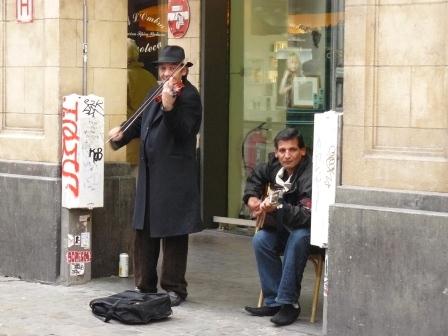
They are not the ingenious street buskers seen in other cities but relatively lousy players (= beggars) who wish to have their ‘performances’ rewarded by passersby.

As long as all important companies want to be seen in Brussels and try to have a say in the intricate EU legislative process, why wouldn’t the begging industry do the same?!

The saddest thing is that many of these destitute people – it’s arguable if begging is profitable or not – use Romanian to swear at photoholics like me :-(

[For all the posts on this blog go to/Pentru toate postările de pe acest blog mergi la: Contents/Cuprins]

Wednesday, 23 May 2012

Cranes over Bucharest [Macarale peste Bucureşti]

Since the fall of the Iron Curtain, Romania’s (not Hungary’s!) capital – Bucharest, not Budapest! – hasn’t seen as many cranes (pics 1, 3, 5, 7) as those visible these days.

They are not as omnipresent as they were in the late 1980s, nevertheless, their presence can’t remain unnoticed, to locals and visitors alike.

As if there were no global economic crisis and Romania were immune to the turmoil in the Eurozone, cranes leave their mark of optimism on Bucharest’s skyline.

So it was during Nicolae Ceauşescu’s last days, so it was in Patriarh Noah’s time. People were building as if there would be a guaranteed tomorrow.

It’s true that, in Brussels, where cranes (pics 2, 4, 6, 8) stood a few years ago, a new building has risen to accommodate the newest EU institition.

The European External Action Service (EEAS) has got a nice home now, but whether the EU has a common foreign policy is still arguable.

The same applies for Bucharest. It may have more and more visible tower cranes, however, the city still lacks a coherent development strategy.

Were the cranes in Brussels and are those in Bucharest a true earnest of a prosperous future?! I bet Ceauşescu thought the same about his cranes in 1989…

[For all the posts on this blog go to/Pentru toate postările de pe acest blog mergi la: Contents/Cuprins]