Wednesday, 14 September 2011

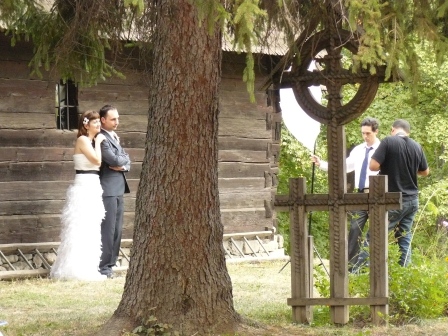
Crucea lui Hristos, semnul Adevărului [Christ’s Cross, the sign of the Truth]

De ar fi foar o oarecare linie orizontală peste una verticală (sau viceversa), la ce bun atâtea eforturi (de ani buni încoace) pentru a scoate Crucea lui Hristos din spaţiul public?

De nu i-ar ‘arde’ prezenţa ei şi a Celui despre Care aminteşte, de ce atâta înverşunare împotriva ei şi încercări de a demonstra indemonstrabilul...

...că ce stupizi, limitaţi, fricoşi, intoleranţi, nefericiţi, iraţionali şi mai ales nocivi pentru semeniii lor ar fi creştinii, în vreme ce singurii care ‘profită’ din toată ‘întobitocirea’ ar fi clericii.

De nu ar spune unicul adevăr mai presus de ce pot născoci minţile noastre drept aparente adevăruri  – că Hristos a înviat! – de ce ar deranja într-atâta?

Pentru că de la nivel individual până la naţiuni întregi, aproape în orice ocazie când ni se face o mustrare, când ni se spune adevărul, toţi sărim ca arşi.

Or, dacă este adevărat că Hristos a înviat, orice altceva am fi construit noi nu este decât o jalnică amăgire şi totul ar trebui să se rânduiască potrivit acestui Adevăr.

Nimeni nu este deranjat de Cruce numai aşa, din principiu, chipurile de dragul idealurilor democratice, de păstrare a unui spaţiu public*** neutru.

Arşi de prezenţa ei sunt doar cei care refuză Adevărul despre Care mărturiseşte. De aceea, cel mai confortabil lucru este negarea acestui Adevăr.

Iar îndelunga răbdare a Creatorului (ce a lăsat liberul arbitru fiecăruia) este luată drept ‘dovadă’ a inexistenţei ‘imaginarului Dumnezeu’.

Dar libertatea aceasta nu ţine mai departe de cimitire, marcate tot prin prezenţa Crucii, deşi unii ar dori să o scoată chiar şi de lângă morminte.

Prăpastia dintre cine VREA să creadă (sau caută cu adevărat Adevărul şi Îl va găsi) şi cine NU VREA să creadă nu se poate umple cu argumente logice.

Sf. Siluan Athonitul arată că mândria ne împiedică să-L cunoaştem pe Dumnezeu, deşi explicaţia acestei ‘nebunii’ ne-a fost lăsată încă de la Sf. Apostol Pavel:

“Căci cuvântul Crucii, pentru cei ce pier, este nebunie; iar pentru noi, cei ce ne mântuim, este puterea lui Dumnezeu.

Căci scris este: «Pierde-voi înţelepciunea înţelepţilor şi ştiinţa celor învăţaţi voi nimici-o».

Unde este înţeleptul? Unde e cărturarul? Unde e cercetătorul acestui veac? Au n-a dovedit Dumnezeu nebună înţelepciunea lumii acesteia?

Căci de vreme ce întru înţelepciunea lui Dumnezeu lumea n-a cunoscut prin înţelepciune pe Dumnezeu, a binevoit Dumnezeu să mântuiască pe cei ce cred prin nebunia propovăduirii.

Fiindcă şi iudeii cer semne, iar elinii caută înţelepciune, [nu tot astfel şi ateii caută ‘dovezi ştiinţifice’?]

Însă noi propovăduim pe Hristos cel răstignit: pentru iudei – sminteală; pentru neamuri – nebunie.
Dar pentru cei chemaţi, şi iudei şi elini: pe Hristos, puterea lui Dumnezeu şi înţelepciunea lui Dumnezeu.

Pentru că fapta lui Dumnezeu, socotită de către oameni nebunie, este mai înţeleaptă decât înţelepciunea lor şi ceea ce se pare ca slăbiciune a lui Dumnezeu, mai puternică decât tăria oamenilor.

Căci, priviţi chemarea voastră, fraţilor, că nu mulţi sunt înţelepţi după trup, nu mulţi sunt puternici, nu mulţi sunt de bun neam;

Dumnezeu Şi-a ales pe cele de neam jos ale lumii, pe cele nebăgate în seamă, pe cele ce nu sunt, ca să nimicească pe cele ce sunt”.

*** NOTĂ: Cele 22 de imagini au fost făcute în locuri publice din Scoţia şi România, pe unde m-a purtat Dumnezeu în ultimii cinci ani. Pentru o legendă foto detaliată, a se vedea primul comentariu.

[Pentru toate postările de pe acest blog mergi la/For all the posts on this blog go to: Contents/Cuprins]

Sunday, 11 September 2011

[EN] No comment / [RO] Fără comentarii (15) – Death on TV / Moartea la TV

[EN] September 11, 2001 – I won’t get into speculations about who (Osama bin Laden or others?!) did it. [RO] 11 septembrie, 2001 – nu voi intra în speculaţii despre cine (Osama bin Laden sau alţii?!) a făcut-o.

[EN] Thanks to explosion of information technology in the past decade, we have had access to all versions of the story. [RO] Datorită exploziei tehnologiei informaţiei în ultimul deceniu, am avut acces la toate versiunile poveştii.

[EN] The official one (here, here, here, here) + the alternative one (here, here, here, here). [RO] Cea oficială (aici, aici, aici, aici) + cea alternativă (aici, aici, aici, aici).

[EN] Adhering to one or the other is more a matter of faith than one of reason: “Having eyes, see ye not?” [RO] A adera la una sau la alta este mai mult o chestiune de credinţă decât de raţiune: “Ochi aveţi şi nu vedeţi?”

[EN] My pics from around Ground Zero have a different aim... [RO] Pozele mele din jurul Ground Zero au alt scop...

[EN] ...to show how Americans know to remember the departed from among them. [RO] ...să arate cum ştiu americanii să-şi amintească de cei plecaţi dintre ei.

[EN] To some, it’s probably ridiculous how Americans use teddy bears and other toys… [RO] Pentru unii, probabil că este ridicol cum americanii folosesc ursuleţi de pluş şi alte jucării…

[EN] I see it as a sort of consumerist requiem – but don’t take it pejoratively! What else could be done in an ultraconsumerist society do?! [RO] Eu o văd ca pe un soi de parastas consumist – dar nu o luaţi în sens peiorativ! Ce altceva s-ar putea într-o societate ultraconsumistă?!

[EN] It’s all so typically American, and so moving after all. [RO] Totul este atât de tipic american şi de mişcător până la urmă.

[EN] So are the pics of the dead on ad hoc memorials – similar to the way Americans adorn their fridges with images of dear ones. [RO] Precum sunt şi pozele celor morţi pe memorialele ad hoc – similare felului în care americanii îşi decorează frigiderele cu imagini ale celor dragi.

[EN] Finally, it’s worth observing how untouched by the tragedy remained the little graveyard across Ground Zero. [RO] În fine, merită observat cât de neatins de tragedie a rămas micul cimitir de vizavi de Ground Zero.

[EN] To the dead, it doesn’t matters who did it, nor do they need ideological explanations about why it happened. [RO] Pentru cei morţi, nu contează cine a făcut-o, nici nu au nevoie de explicaţii ideologice despre de ce s-a întâmplat.

[EN] If only we’d see death on TV remembering that any second we could be next! We’d be on the narrow path to sainthood! [RO] Măcar de-am vedea moartea la TV amintindu-ne că în orice secunde am putea urma! Am fi pe calea strâmtă către sfinţenie!

[EN] From this perspective, we’re the most privileged human beings in history – we see death (our only certitude) every day. [RO] Din această perspectivă, suntem cele mai privilegiate fiinţe umane din istorie – vedem moartea (singura noastră certitudine) în fiecare zi.

[EN] Therefore, how come we the most reckless people that ever lived on the face of the earth? [RO] Aşadar, cum se face că suntem cel mai probabil cei mai nesăbuiţi oameni care au trăit vreodată pe faţa pământului?

[For all the episodes of this series, and all the posts on this blog go to/Pentru toate episoadele din această serie şi toate postările de pe acest blog mergi la: Contents/Cuprins]

Thursday, 8 September 2011

God’s place in a humanist society (19) [Locul lui Dumnezeu într-o societate umanistă]

I assume that it’s no surprise to any constant reader of this blog that, from a religious point of view, I saw Brighton as being a sort of ‘spiritual flea market’ – all choices available for the weirdest of ‘consumers’ (see here or here).

One such choice is this so-called Religious Society of Friends, a self-proclaimed Christian (?!) movement, whose members are better known as Quakers.

I haven’t personally met any believer, and even if I had done so, I should refrain from judging that person. Which won’t prevent me from dimissing this heresy, made up of a concoction of beliefs as far from Christ’s message as any other ‘man-made’ religions.

Fed up with the disarray and countless moral flaws within the Church of England (CoE), as well as with the brutality of the English Civil War in Oliver Cromwell’s troubled times, these ‘friends’ came up with some simple and appealing ideas.

Humans need no priest between them and the Lord, no ordained and paid clergy, neither an ‘established Church’, the founder of the sect (George Fox) said.

Guided by ‘inner voices’ (Orthodox Holy Fathers give a precise diagnosis reagarding whose voices are these), Fox claimed that, instead of ‘organised religion’, what matters is the ‘inner light’ that believers in Christ can find in themselves.

They may speak on His behalf, however, they surely don’t know Christ, as they don’t revere – like most Protestant denominations – the Mother of God (Theotokos) whose birth we are celebrating today.

There’s no proper understanding of Salvation without understanding the Theotokos’ unique role in God’s plans. No one can be ‘attracted’ to Christ and remain ‘indifferent’ to His Mother.

Anyway, I could’t have anything against these people – only the Lord will judge each of us. At least these ‘friends’ are pacifists (refusing to take arms and swear oaths), their ‘services’ consist of mostly silent meetings, and some of their ancestors were victims of cruel acts perpetrated by other self-entitled Christians.

To the extent they are living by their convictions (although there is no Quaker ‘creed’ at all; there are only some books used for guidance) , they seem to be harmless, unlike many aggressive sects.

What I find worthy of considerations are the troubled times that would determine George Fox to channel his frustrations towards creating this sect.

When Fox began preaching (1647), there had been 581 years since 1066 (Norman Invasion of England), and 593 since the Great Schism. In its death throes today, the CoE was already in a grave condition back then.

The Church of England could have been shredded to pieces – because of the many English Dissenters – had it not been for the Civil War, for Cromwell’s iron grip on power, and for the fact that most of these sects would eventually move (forcibly or by their choice) to the New World.

Not that I’d agree with the harsh methods used against them, but we must acknowledge the fact that, some 350 years ago, English Dissenters could be easily silenced by the state religion.

Today, any dissenter within the CoE would be granted protection by the secular and politically correct state. It often happens that this ‘church’ changes for the sake of the dissenter.

In the meantime, from the outside of this ailing organisation, Anglicans in the UK are steadily being out numbered by Muslims, while all religious people would be soon a minority in a country where irreligiousness is valued positively, and religion is frowned upon.

Social and political turmoil, festering in a swamp of consumerism, make up the ideal habitat of false prophets like George Fox.

Most people today prefer to dive deeper into the mire, using these false prophets as evidence for their “there’s-no-God-but-my-own-will” creed. Few take comfort in the deceitful peace and meanings of sects, which keep mushrooming like in 17 century England.

Even fewer throw themselves into the arms of the Mother of God, knowing what path (the Royal Path of Orthodoxy) to take towards her.

As long as even our Saviour nestled in her arms, that should be the safest place to put one’s soul in these mad times. 
.
[For all the episodes of this series, and all the posts on this blog go to/Pentru toate episoadele din această serie şi toate postările de pe acest blog mergi la: Contents/Cuprins]

Monday, 5 September 2011

[EN] No comment / [RO] Fără comentarii (14) – Dreadful Septembers / Cumplite septembrii


[EN] This is where the mess started four years ago, although the dirt had been swept under the carpet for long before. [RO] De aici a pornit mizeria acum patru ani, deşi gunoiul era ascuns sub preş cu mult înainte.

[EN] In September 2007, Northern Rock (pictured here in Brighton), one of the top five British mortgage lenders, reached the brink of bankruptcy. [RO] În septembrie 2007, Northern Rock (pozată aici în Brighton), unul dintre primii cinci creditori ipotecari britanici) a ajuns la un pas de faliment.

[EN] G. Clown’s Government saved the bank by nationalisation, a process finalised in early 2008. [RO] Guvernul lui G. Clown a salvat banca prin naţionalizare, un proces finalizat la începutul lui 2008.

[EN] The same solution would be applied a year later (October 2008), to prevent the downfall of the entire British banking system. [RO] Aceeaşi soluţie a fost aplicată un an mai târziu (octombrie 2008), pentru a preveni căderea întregului sistem bancar britanic.

[EN] The nationalisation in the UK had been precipitated by the eruption of the biggest crisis of our times on Wall Street (in September 2008). [RO] Naţionalizarea din UK fusese precipitată de erupţia celei mai mari crize din vremea noastră pe Wall Street (în septembrie 2008).

[EN] Then, the fourth American investment bank (Lehman Brothers) was not not propped up but left to die… [RO] Atunci, cea de-a patra bancă de investiţii americană (Lehman Brothers) nu a fost susţinută, ci lăsată să moară…

[EN] These days, more and more economic ‘soothsayers’ foresee a worsening of the ongoing crisis (+ here, here, here). [RO] În aceste zile, tot mai mulţi ‘ghicitori’ economici prevăd o înrăutăţire a crizei în desfăşurare (+ aici, aici, aici).

[EN] Some go as far as naming name the next big victim: Bank of America (pictured here in California) – an alleged ‘target’ of WikiLeaks. [RO] Unii merg până într-acolo, încât numesc următoarea mare victimă: Bank of America (pozată aici în California) – o presupusă ‘ţintă’ a WikiLeaks.

[EN] Ten years after September 11, 2001, it’s apparently the best time for the death of another financial dinosaur, for another dreadful September. [RO] La zece ani după 11 septembrie 2001, se pare că este cel mai bun timp pentru moartea altui dinozaur financiar, pentru alt septembrie de groază.

[EN] Sept 15 (1992) was the Black Wednesday of the pound sterling (GBP), Sept 14 (2007) – the liquidity crisis of Northtern Rock, Sept 15-16 (2008) – the end of Lehman Brothers… [RO] Sept 15 (1992) a fost Miercurea Neagră a lirei sterline (GBP), sept 14 (2007) – criza de lichidităţi a Northern Rock, sept 15-16 (2008) – sfârşitul Lehman Brothers...

[EN] Were all these coincidences? Could we add  Sept 1-3 (1939), Sept 12 (1944), Sept 11 (1973) or even Sept 2-7 (1792) ? [RO] Au fost toate acestea coincidenţe? Am putea adăuga sept 1-3 (1939), sept 12 (1944), sept 11 (1973) sau chiar sept 2-7 (1792)?

[EN] According to Orthodox Tradition, September was the month when the Holy Trinity created the world. [RO] Potrivit Tradiţiei ortodoxe, septembrie a fost luna când Preasfânta Treime a creat lumea.

[EN] In our times, September seems to be the month when someone is trying to re-create the world for the worse. [RO] În vremurile noastre, septembrie pare luna când cineva încearcă să re-creeze lumea în mai rău.

[EN] We can’t be sure if and what exactly will happen; let’s not fool ourselves that anyting to come is undeserved! [RO] Nu putem fi siguri dacă şi ce anume se va întâmpla; să nu ne amăgim că orice stă să vină este nemeritat!

[EN] And if it won’t be Bank of America, could it be the worst (so far) or the last September of the Eurozone?  [RO] Şi dacă n-o fi să fie Bank of America, ar putea fi cel mai rău (de până acum) sau ultimul septembrie al Eurozonei?
.
[EN] And if it’s not another ‘financial blow’, could it be another terrorist attack? Or a war? Which of our idols,  prosperity or peace, be hit this time? [RO] Şi dacă nu este o altă ‘lovitură financiară’, ar putea fi un alt atac terorist? Sau un război? Care dintre idolii noştri, pacea sau prosperitatea va fi lovit de data aceasta?

[EN] Politically speaking, we should be aware that the death of the certitudes mankind has been resting on since the end of the Cold War is unavoidable. [RO] Din punct de vedere politic, ar trebui să fim conştienţi că moartea certitudinilor pe care a stat lumea de la sfârşitul Războiului Rece este inevitabilă.

[EN] States, economies, businesses and people’s lives are no longer based on realities (work, innovation, entrepreneurship etc) but on a big lie – the world of credit. [RO] Statele, economiile, afacerile şi vieţile oamenilor nu se mai bazează pe realităţi (muncă, inovaţie, antreprenoriat etc), ci pe o mare minciună – lumea creditului.

[EN] On spiritual terms, we are haversting the fruits of the ‘paradise on earth’ we dreamed of, turning our backs to our Maker and denying Him copyrights for His Creation. [RO] În termeni spirituali, culegem fructele ‘paradisului pe pământ’ la care am visat, întorcând spatele Creatorului nostru şi negându-I drepturile de autor asupra Creaţiei Sale.

[EN] Let’s see how or science, humanist values, hedonist goals, and moral relativism will save us now! [RO] Să vedem cum ştiinţa, valorile umaniste, scopurile hedoniste şi relativismul moral ne vor mântui acum!

[For all the episodes of this series, and all the posts on this blog go to/Pentru toate episoadele din această serie şi toate postările de pe acest blog mergi la: Contents/Cuprins]

Thursday, 1 September 2011

Din raidurile mele prin inima Scoţiei (22) [From my forays into Scotland's heartland]


Unora, poate că le-o părea încă o postare trivială, despre bani făcuţi uşor (easy money) pe spinarea turiştilor. Dar dacă altora le va da o idee de aplicat şi în România?!

Nu-s specifice exclusiv Scoţiei (văd că în SUA sunt şi mai cunoscute: aici, aici, aici), dar acolo (la Edinburgh şi Inverness) am dat eu peste aceste maşinării de... produs suveniruri pe loc.

Introduci o monedă un penny într-o fantă, printr-una de alături plăteşti costul operaţiunii (50 pence), presezi un buton sau o manetă şi, în câteva secunde...

...obţii o plăcuţă inscripţionată (pozele 2, 4, 6). Instant, valoarea (emoţională, ca suvenir) piesei de metal creşte peste cât ar valora să colecţionezi un penny, cea mai mică diviziune a lirei (GBP).

Operaţiunea este mai sigură, iar valoarea estetică a monedei presate este mai mare decât în cazul unui hobby similar pe care îl aveau puştii în România anilor 1980.

Pe atunci, monede de un leu erau puse pe şinele de tramvai, apoi culese cu chiote – fie de bucurie copilărească, fie de usturime, pentru că bucăţile de metal se încingeau teribil.

Ce ar fi să presezi monede cu chipul politicienilor ‘preferaţi’, bune de agăţat la zgarda câinelui? Sau să faci etichete pentru chei cu sigla hotelului?

[Pentru toate episoadele din această serie şi toate postările de pe acest blog mergi la/ For all the episodes of this series, and all the posts on this blog go to: Contents/Cuprins]