Showing posts with label BMW. Show all posts

Thursday, 30 August 2012

Mănăstirea Putna – “Ierusalimul neamului românesc” [Putna Monastery – “Romanian nation’s Jerusalem”]


N-or fi nici 150 de ani scurşi de când Mihai Eminescu socotea Mănăstirea Putna, ctitoria aproape să împlinească 550 de ani a Dreptcredinciosului Voievod Ştefan cel Mare şi Sfânt, ca fiind “Ierusalimul neamului românesc”.

Vorbe prea mari, din cărţi pe care în zilele noastre nu le mai deschide nimeni?! O sintagmă pompoasă, dar desuetă, care nu rezonează cu manelele a căror bogăţie stilistică ţine hangul sărăciei sufleteşti a celor care se adapă cu ele?!
Mai poţi vorbi de ceva sfânt – căci în acest sens era folosită de Eminescu ideea de Ierusalim, de ceva care să le fie sfânt tututor românilor – în România?

Ce mai este sfânt şi pentru câţi dintre locuitorii unei ţări relativ creştine, unde cele care par a se preţui mai mult sunt fie sfântuleţul smartphone, ba sfântul BMW, ori sfântul cont bancar, sau sfântul tupeu şi unde toţi ne bălăcim într-o sfântă ipocrizie?!

Până să calci pe la Putna, este inevitabil să nu ţi se gârbovească mintea sub povara multor temeiuri care să crediteze dureroase îndoieli precum cele mai sus. 
Odată ce te-a binecuvântat Dumnezeu să ajungi pe acolo, nu că ţi s-ar preschimba subit amarul zilnicelor dezamăgiri în dulceaţa nădejdilor senine, dar măcar revii întrucâtva pe linia de plutire, te restabileşti în credinţă, cutezi să mai speri.
Mai poţi nădăjdui că noaptea nu poate să fie absolut neagră, câtă vreme o armată de oameni în straie negre încă mai luptă, ca să răzbată către noi lumina adusă de Hristos în lume.

După ce ai străbătut aproape întreaga porţiune de dealuri din jumătatea rămasă românească a Bucovinei, spre nordul judeţului Suceava (SV), ajungi la Putna, într-un luminiş duhovnicesc din ceea ce fusese cândva un ocean păduros. 
Încă de la intrarea, prin trei rânduri de porţi (care arată cât s-a extins mănăstirea de-a lungul veacurilor), surprinde plăcut sobrietatea locului. Treptat, eşti îndemnat să laşi lumea aceasta învolburată în urmă, să intri în pridvorul celeilalte, cea veşnică.

Nici urmă de bâlci, de tarabe cu magneţi de frigider, covoraşe, brelocuri, căniţe, mici, bere sau îngheţată. Cum, din păcate, se mai găsesc în jurul altor mănăstiri, chiar din Bucovina.

Mai pe urmă, biserica şi zidurile înalte arată a bastion al credinţei, o dovadă vie că lupta – pentru sufletele fiecăruia dintre noi şi sufletul neamului în sine – încă se poată, după cinci veacuri de la punerea cu botul pe labe a turcilor otomani. 
Mormântul lui Ştefan cel Mare – cel fără de care nici Moldova (aşa ciopârţită cum a rămăs azi), nici România, ba poate nici vreo Uniune Europeană (ci un mare califat?!) nu ar fi existat – nu poate să nu-i impresioneze pe cei care mai au o licărire de cuget sănătos asupra istoriei.

La fel de impresionante sunt comorile de artă bisericească din muzeu şi icoanele calde dincolo de zidurile austere, ca de fortăreaţă militară. 
Dincolo de aceste impresii, care, măcar parţial, s-or putea desprinde şi din fotografii, ceea ce impresionează este atmosfera duhovnicească – întreaga dedicare a monahilor pentru orice ascultare ar avea şi deschiderea lor deopotrivă spre lume, cât mai ales faţă de Dumnezeu.

Desigur, şi în alte colţuri ale ţării, şi în alte mănăstiri mai puţin faimoase, sunt monahi care îşi ţin cu acrivie voturile, între care or fi şi sfinţi în devenire. Sunt şi alte locuri unde să te simţi binevenit, iubit, nu doar îngăduit ca vizitator. 
Totuşi, la Putna parcă simţi cum o întreagă oştire (una dintre cele mai numeroase comunităţi monahale din România, de 105 suflete) se află în lupta nevăzută cu puterile întunericului.

Iar din vâlvătaia încleştării, de parcă ar fi o ascultare în plus aplicabilă tuturor – de la cioban, la ghizii din muzeu, vânzători la pangar etc – fiecare astfel de luptător trebuie să facă în aşa fel, încât cu nimic să nu rănească, ci să-i odihnească pe vizitatori. 
Aceşti urmaşi ai Sfântului Ştefan cel Mare nu îşi mai poartă luptele cu buzdugane, nici cu săbii şi arcuri cu săgeţi, ci cu arme duhovniceşti şi, mai ales, cu zâmbetul pe buze. 

N-am văzut monah care să nu-ţi răspundă amabil, în condiţiile în care a-ţi păstra până şi răbdarea cea mai de suprafaţă, darămite liniştea necesară îndeletnicirilor duhovniceşti, este o uriaşă provocare în această mănăstire.

Sute de oameni (ba chiar mii – în zilele de sărbătoare) calcă pragurile mănăstirii zi de zi, cei mai mulţi ca turişti, vag sau deloc îmbisericiţi, alţii ca pelerini însetaţi de un cuvânt de folos, unii cu familia, alţii în grupuri mari, unii în excursie, alţii în vizite oficiale…


Vizitatori din toate colţurile ţării sau ale lumii, fiecare cu dorinţele ori, poate, chiar ifosele sale. Iar fiecăruia, turist gălăgios ori credincios evlavios, român (probabil) ortodox sau străin eterodox, monahii trebuie să le arate aceeaşi atenţie.

Şi la o întrebare tâmpă, şi la una cu miez duhovnicesc, şi în faţa unuia care te ia tare (ca pe un funcţionar de la ghişeu), şi în faţa unuia care nu-şi găseşte cuvintele (din cauza sfielii sau a cine-ştie-căror poveri de pe inimă), monahul de la Putna trebuie să se străduiască a rămâne în duhul de blândeţe a lui Hristos. 


Unii tineri se fac corporatişti (corporate people) şi îşi vând sufletele unor găunoase idealuri care se spulberă ca praful în vânt în faţa mormântului ori chiar mai devreme.

Alţii se fac monahi la Putna, acceptând invitaţia Mântuitorului de a prelua jugul Său, aşadar de a se face blânzi şi smeriţi cu inima. O fi zbanghie comparaţia, dar, pe cât de frapantă, pe atât îmi pare de relevantă.


Şi unii, şi ceilalţi, lucrează pe rupte. Dar ce imensă diferenţă de rost, între a munci ca o rotiţă în maşinăria capitalistă, ca o pregustare a muncilor veşnice, şi a lucra în slujba semenilor, ca pentru Hristos şi în nădejdea odihnei în Hristos!

De hram şi nu numai, Putna devine un furnicar supus unor constrângeri logistice comparabile cu cele pe care le înfruntă mari companii în goana lor după profit. 


Doar că aici nu se caută profitul în sens lumesc, ci păstrarea roadelor Duhului Sfânt, chiar şi în condiţii aparent potrivnice, de permanent du-te-vino, agitaţie, gălăgie, tulburare, valuri şi valuri de turişti şi pelerini.

Se înşală cine o crede că ordinea şi zâmbetul pe buzele pot fi păstrate doar cu o disciplină de colegiu iezuit, că monahii pot fi instruiţi să fie amabili şi gata. 


Inevitabil, te întrebi… Oare monahii aceştia când mai au timp să se dedice rugăciunii fără de care nu ar fi decât cuiere umblătoare pentru haine negre?

O fac în orele de rugăciune nocturnă, poate rupându-şi din puţinele ore de somn rămase, sau, care or fi mai sporiţi, poate că se roagă chiar când stau de vorbă cu noi. Când şi cum o fac, cum anume se păstrează legaţi de Dumnezeu, rămâne o taină.


Însă este neîndoielnic că fiinţe umane, trăind în condiţii atât de solicitante precum la Putna, nu şi-ar putea păstra dragostea de aproapele fără să rămână în legătură cu Hristos.

Dragostea şi pacea pe care le resimt cei care trec porţile mănăstirii nu pot fi obţinute prin dresarea sau autosugestia monahilor, ci ele sunt primite 
(ca să poată fi dăruite mai departe vizitatorilor) de la Duhul Sfânt, după rugăciuni stăruitoare. 

[Pentru toate postările de pe acest blog mergi la/For all the posts on this blog go to: Contents/Cuprins
]

Tuesday, 22 May 2012

[EN] No comment / [RO] Fără comentarii (29) – Smiling cars / Maşini zâmbăreţe

[EN] There’s couldn’t be a complete smile without a smiling glance, is it? [RO] Nu ar putea exista un zâmbet complet fără o privire zâmbitoare, nu-i aşa?

[EN] Thus, eyelashes should count as much as cheek muscles in... smile making[RO] Aşadar, genele ar trebui să conteze la fel de mult precum muşchii obrajilor în... facerea zâmbetelor.

[EN] What about cars? Is there a new car tuning fashion? Here are some suprise-pics from unsmiling Bucharest. [RO] Dar pentru maşini? Este vreo nouă modă de tuning? Iată nişte poze-supriză din nezâmbitorul Bucureşti.

[EN] It takes little to humanize Daewoo Matiz cars. And even BMWs! [RO] Nu îţi trebuie mult pentru a umaniza maşini Daewoo Matiz. Şi chiar BMW!

[For all the episodes of this series, and all the posts on this blog go to/Pentru toate episoadele din această serie şi toate postările de pe acest blog mergi la: Contents/Cuprins]

Tuesday, 20 December 2011

UK’s motor vanity fair (24) [Bâlciul deşertăciunilor cu motor din UK]

Although I dedicated another episode to this legendary British car, I feel that there’s a little more to say before exhausting (or maybe not?!) the topic.

In tune with the season, these images (taken by my reader C.L.) are meant to illustrate the good news of 2011 for England’s motor industry.

The Chinese owners of MG have kept their word, and seem more determined to succeed than the previous German owners (BMW).

Not only that they reopened a former MG plant in Birmingham, yet the result of their work could be seen on British roads as of April 2011.

The (re-named) ‘Modern Gentleman’ is back. A new model (MG6 1.8T Fastback) was launched in spring, for a starting price of £ 15,495.

Obviously, many could argue that this ‘renaissance’ of the motor industry in Britain is rather symbolic, having a negligeable impact (whats more fragile than air bridges? :-) on the whole of UK’s economy.

Over 75% of the ‘new MG’ is build in Shanghai, shipped to Britain, and finished by less than 100 skilled British specialists.

Anyway, irrespective of the adverse global economic climate, why wouldn’t we hail any little success, in this world so flooded with bad news about the automotive industry?

It took 16 years for the brand’s fans (some of their car clubs: here, here and here) to see a new MG and their patience was rewarded.

There are less than 10 years since no new ARO left the assembly plant in the Romanian municipality of Câmpulung-Muscel, Argeş county (AG).

MG has always been an elitistic brand, such as it’s birthplace (Oxford) is. Still, we are witnessing its resurrection.

Would it be so exaggerate to dream that ARO – a ‘SUV for the masses’, exported to over 110 countries – could be reborn thanks to its current British owner of Romanian descent?

[For all the episodes of this series, and all the posts on this blog go to/Pentru toate episoadele din această serie şi toate postările de pe acest blog mergi la: Contents/Cuprins]

Friday, 21 October 2011

UK’s motor vanity fair (23) [Bâlciul deşertăciunilor cu motor din UK]

Apart from a brief trip to Berlin (some pictures of it on this blog), I didn’t have the chance to know how German cars ‘fit’ into the landscape of German cities.

However, I must say that they surely fit on the streets of an elegant British city like Edinburgh  where I saw hundreds of them and I wish I knew why most were either black or grey?! :-)

While even an iconic brand like the Mini is produced under German management (+ technical leadership, I presume), there’s no doubt that Brits love German cars.

Just like Americans who – irrespective of their patriotism requiring them to give a helping hand to their national car manufactures – keep buying German and Japanese brands.

The same ‘love story’ between motorists and German cars can be witnessed in Eastern Europe, although, with some typically ‘Oriental’ features.

In several countries neighbouring the EU, these cars are stolen from richer countries like some men used to kidnap their wives some no longer than a century or so ago.

Then, most of these cars are second hand vehicles, nevertheless, sometimes considered better than brand new cars like Dacia.

And there’s one more peculiarity of these cars – they are quite often driven by a particularly kind of people, the ‘manelists’, devout listeners of ‘manele’.

[For all the episodes of this series, and all the posts on this blog go to/Pentru toate episoadele din această serie şi toate postările de pe acest blog mergi la: Contents/Cuprins]

Friday, 23 September 2011

[EN] No comment / [RO] Fără comentarii (16) – BMW Obsession / Obsesie BMW

[EN] BMW – a German probably as loved in the UK (pics 1 + 4) as it is in Romania, at least according to what I could see. [RO] BMW – o maşină germană probabil pe atât de iubită în UK (pozele 1 + 4) precum şi în România, cel puţin din ce am putut vedea.

[EN] Indeed, Britons have some big BMW car clubs (+ here, here, here), but they seem far from the ‘BMW obsession’ from Romania. [RO] Într-adevăr, britanicii au nişte mari cluburi auto BMW (+ aici, aici, aici), dar par a fi departe de ‘obsesia BMW’ din România.

[EN] In the 2nd pic: a BMW-inspired urban ‘work of art’ in Bucharest. [RO] În cea de-a 2-a poză: o ‘operă de artă’ urbană din Bucureşti inspirată de BMW :-)

[EN] In the 3rd pic: an old Romanian Dacia tuned up with a BMW bonnet.*** [RO] În cea de-a 3-a poză: o veche Dacie românească tunată cu o capotă de BMW :-)

*** [EN] NOTE: ...as Britons call it, while Americans say ‘hood’. [RO] NOTĂ: ...cum o numesc britancii, iar americanii îi spun hood’.

[For all the episodes of this series, and all the posts on this blog go to/Pentru toate episoadele din această serie şi toate postările de pe acest blog mergi la: Contents/Cuprins]

Wednesday, 1 December 2010

UK’s motor vanity fair (19) [Bâlciul deşertăciunilor cu motor din UK]

I guess it was in Brussels (in March 2008), when the idea of this blog series popped into my mind.

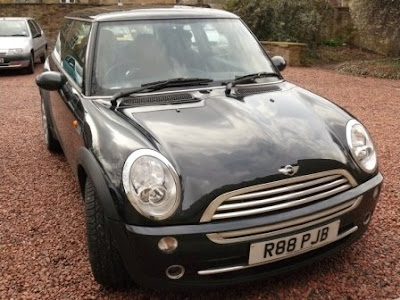
And it’s very likely that it was while taking the above picture of the above Mini – the Brit car that received a lot of good publicity (here or here) on this site…

…while I haven’t got any penny for that :-( Maybe it’s never too late for anything, and I could keep dreaming on :-)

And it was still in Brussels where I recently caught a glimpse of a 4-door Mini (other descriptions: here, here and here), the latest innovation of the German-British automaker.

Would this so-called ‘mini-SUV’ ever prove to at least remotely popular as the older Minis?

…or is it more likely to remain an oddity? Given the current dreadful state of the automotive industry, could anyone afford to make it a mere experiment?

[For all the episodes of this series, and all the posts on this blog go to/Pentru toate episoadele din această serie şi toate postările de pe acest blog mergi la: Contents/Cuprins]

Wednesday, 21 July 2010

UK’s motor vanity fair (17) [Bâlciul deşertăciunilor cu motor din UK]

Any two-seat car is more of an instrument of having fun than a proper means of transport, and there’s no doubt that these MG cars make no exception.

Since 1924, the Brits could buy these automobiles for showing-off, and driving them would have probably meant “I may not be rich, but I can certainly afford it, I’ve got no worries, I am free, I’m Brit, so get out of my way!” :-)

I don’t know of any such ‘official motto’; I just imagined it, seeing how these cars appeared to be screaming “look at me”, especially while I was walking on the streets of Edinburgh.

Obviously, I did look at them, but didn’t find them neither useful (bigger that a Smart car or even a VW Beetle, therefore not saving too much parking space), nor particulary beautiful (feel free to disagree!), as I think Minis are (see here & here).

They didn’t seem as ugly as the creations of Saab Automobile, yet the later models surely lack personality compared to the ones from the 1920s to the early 1950s.

The good news from the company was that, after leaving BMW’s portofolio, it was brought back to life by a Chinese firm. In China, the old name (MG = Morris Garages) wouldn’t have meant anything, so they turned it into MG = Modern Gentlemen.

[For all the episodes of this series, and all the posts on this blog go to/Pentru toate episoadele din această serie şi toate postările de pe acest blog mergi la: Contents/Cuprins]

Monday, 17 May 2010

UK’s motor vanity fair (16) [Bâlciul deşertăciunilor cu motor din UK]

Apart from the Congestion Charge making London such a liveable city compared to other metropolises, the UK’s capital is on the way to becoming “the electric car capital of Europe.”

This is the ambition of its Tory mayor, Boris Johnson, who announced over a year ago that he’s planning to invest £ 20 million in this ‘green project’.

Back then, Gordon Brown had promised that the UK Government would give the rest up to £ 60 million, as London couldn’t afford the entire investment.

But that was before the country’s finances went from bad to worse. Would David Cameron’s Government keep Brown’s commitment?

According to Johnson, cars like those in these images – the pics 3 & 4 being provided by C.L., a reader of this blog – should evolve from a mere peculiarity on London’s streets into being an ‘easy choice’ for Londoners.

Even his administration (Greater London AuthorityGLA) is supposed to replace at least 1,000 of its fleet with electric vehicles.

It’s very likely that not all of them will be as little as those shown here, rivaling in size with most other small cars.

Actually, this G-Wiz car is smaller than Daimler’s Smart, and BMW’s Mini, and it’s obviously a strange type of vehicle (but already having a car club).

Meant to be driven almost exclusively within cities, not on motorways or country roads, such a car is sold for an average price of £ 7,000 – more than Tata MotorsNano :-)

A G-Wiz promises savings of over £ 9,000 per year, and has no carbon footprint… in case some buyers may still be fooled by this (anthropogenic) Global Warming swindle.

Some 100,000 electric cars should appear on London’s streets in a few years, and Johnson promises to build 25,000 charging points.

Not for the sake of reducing carbon emissions, but because such cars would make London even a more pleasant city, I wish Johnson’s ambition would turn into reality!

[For all the episodes of this series, and all the posts on this blog go to/Pentru toate episoadele din această serie şi toate postările de pe acest blog mergi la: Contents/Cuprins]

Sunday, 17 January 2010

UK’s motor vanity fair (14) [Bâlciul deşertăciunilor cu motor din UK]

Irrespective of the fact that silly I don’t remember having noticed at least one Mini in the USA, the BMW-owned brand has some really good news at the beginning of this year – the US is now Mini’s best market, as the Americans have fallen in love with it.

After a year (and how many more to come?!) with bad news for the auto industry, the fact that there were 45,000 Minis sold in the US in 2009 is really amazing. Only 39,000 were sold in the UK.

Is this offering evidence that Americans are probably fed-up with American cars and not with cars in general?! Given the huge distances one has to go through even for shopping or commuting, you can’t be ‘anti-motor’ in America.

But you could get tired with the lack of imagination of the Big Three, and the Mini possibly fulfills a need for another perspective. A car mustn’t look like a typical American car in order to be a good car.

I could hardly believe that, thoughout such a bad year as 2009 has been for the whole automotive industry, mere marketing tricks could have contributed to the Mini’s success in America.

Americans probably bowed to German quality just like the Brits did: uncompromised quality, not deprived of creativity. Don’t these Mini Crossover and Mini Beachcomber look very promising?

[For all the episodes of this series, and all the posts on this blog go to/Pentru toate episoadele din această serie şi toate postările de pe acest blog mergi la: Contents/Cuprins]

Friday, 12 June 2009

UK’s motor vanity fair (11) [Bâlciul deşertăciunilor cu motor din UK]

If there were a British car that I like, that wouldn’t be a luxurious Jaguar, Aston Martin, Bentley or Rolls-Royce. What I would like to drive – and probably not just as an ‘experience’ but as an owner, using the vehicle every day – is a Mini.

Not that I’d be any auto expert, but I really find this car to be – either the original Mini or the newer BMW Mini – a masterpiece of British (and German, since 2001) craftmanship. I guess any of the fans in this British Mini car club would agree with me.

Anyone knowing me could easily imagine I’m not crazy about fancy vehicles, and even if I had the amount of necessary money, I wouldn’t throw it on a car as a ’motor idol’. But I’d like to have a Mini as a useful (and also pleasing) object.

In my view, given the prices of today in Europe, I guess one could buy a good car with a maximum of 15,000 euros. Spending more would be such a waste, in my opinion.

Sadly, according to the price lists (that can be seen here, here, here for the UK or here for Romania), this little car is not quite cheap. Buying a fully optioned version would take the cost well beyond my artificially set limit of 15,000 euros.

Considering the beauty of the car and it’s technical specifications, I’d say it’s a fair price. The only problem is posed by it’s size. It seems to be too small for a family car... However, weren’t the VW Beetle or the Fiat 500 also small? Still, whole families (4-5 people) got into them...

If the future of Vauxhall and Saab (maybe Jaguar as well, as I was writing in a previous episode) doesn’t seem to be bright these days, I hope the that the takeover of Mini by BMW (a decade old this year) was a good deal, and will continue to be so.
.
In 1945, the Brits were too narrow-minded to foresee the future of the Beetle, which they could freely steal from the part of Germany they were occupying, and set productions lines in the UK. It’s good to see that BMW was not equally stupid to let the Mini perish.

Of course, the current Mini only bears some exteriour similarities to the Mini that Mr Bean drove, and it’s a completely different motorized beast on the inside. God willing, maybe one day I’ll drive such a car, although there’s no way this could ever be a ‘priority’ of mine…

[For all the episodes of this series, and all the posts on this blog go to/Pentru toate episoadele din această serie şi toate postările de pe acest blog mergi la: Contents/Cuprins]