Showing posts with label Hoax of Democracy. Show all posts

Friday, 21 September 2012

Life after prosperity [Viaţă după prosperitate]

For decades, generation after generation of people in the ‘freeWestern world have been brainwashed to believe that, as long as they work hard, they can succed in life, and… have it all.

We’re entering the fifth year of Global Economic Crisis and the twelveth year of War on Terror (after two knock-out Septembers, in 2001 and 2008), yet there’s no sign that the world would ever be prosperous again.

After having spent so many years in schools and universities, young people in Ireland, Spain, Italy, Portugal, Greece or Romania find themselves to be part of a ‘lost generation’.


Not that the future looks much brighter for American, British, German or French youngsters. No matter how many newer and newer smartphones and other gadgets appear, the future looks dumber and dumber for everyone.

Our world – closely connected and flooded with often useless information – is nothing but a madhouse.

A giant suverillance society, where people are force-fed the dreams they should dream and the aspirations they should have. Apparently free, all of us are allowed to believe in whatever we want, and do what ever we want.


Anything is negotiable, everything is relative. There is no God, nor any supreme good. There are alternatives to everything one man considers to be an ultimate truth.

Everything but two dogmas are to be challenged. The moral superiority of democracy and capitalism shouldn’t be put into question. Dare to doubt these, and you’ll considered an extremist and gradually outcast, disenfranchised, liquidated!

Free (?!) education systems are still preparing people for a free (?!) world, where democratic values were supposed to guarantee the right to a prosperous life for everyone.


But that world is not more. So what are young people to believe? They have been learning about a world of peace, universal human values, and endless economic opportunities. No word about the afterlife, about what truly matters beyond all these fictions.

Everything they learned about was how to become the perfect cannon fodder for ideological and economic wars, to find the meaning of life in consumerism, lured by the fata morgana of prosperity.

Today, the chances of peace are deteriorating rapidly, and human rights are often abused within the temples of democracy that preach them…


As for the idols of prosperous economy, there have all “fell on their faces, shattered and broke into pieces.” The world is not a comfortable place to live in anymore.

There’s no fun, no delight, no pleasure, and no confidence in a marvelous future with major wars (Israel-Iran, Turkey-Cyprus, China-Japan), as well as famine, ecological and economic disasters looming ahead of us.

There must be life after prosperity, but how would that life be?! People (especially youngsters) are not ready to cope with this (not simply unfamiliar but outrightly) hostile new world.

[For all the posts on this blog go to/Pentru toate postările de pe acest blog mergi la: Contents/Cuprins]

Friday, 3 August 2012

Viitorul uitându-se în ochii noştri [The future looking into our eyes]

Viitorul  ne-a privit drept în faţă, mai înainte de a ne avânta noi în gâtlejul lui şi să ne fi devenit prezent. Am căscat ochii ca viţeii la poarta nouă. Firma era, ce-i drept, ispititoare: La burta plină, garantat”.

Semăna, dar de unde să fi ştiut noi că n-avea să răsară nimic de după ceea ce speram noi că se va ivi dincolo de poarta unei ere noi, una de viaţă mai bună?

Despuiaţi de vise (nimic nu merge în ţara aceasta”), cocoşaţi de griji (de unde să scot banii?”) şi cu neuronii sfârâind de neputinţă (ăştia fură atâta şi nu se mai satură!”), am intrat şi i-am cerut chelnerului să ne aducă ceva de mâncare.

Marţafoiul se uita chiorâş, dar hăhăia încurajator (lasă, că te rezolvă băiatu’ imediat”), ca şmenarul acela de la care suntem bucuroşi să cumpărăm ţigări ieftine de peste Prut.

Ne era aşa de foame, de nici n-am avut răbdare să consultăm pe îndelete meniul. Ne-a luat ochii de lustruit ce era, sclipind în spelunca mucegăită. Litere dolofane şi apetisant înşirate în fraze care lăsau gura apă...

Numai delicatese erau trecute acolo – libertate, echitate, democraţie, respect, prosperitate, progres. Am zis că toate tre’ să fie bune, haleală să fie”, aşadar am cerut specialitatea casei.

Stăteam în bomba aceea cu dinţii la stele, privind prin acoperişul care stădea deja să cadă... Ne închipuiam că l-am sfredelit puţin noi, cu idealurile noastre, dar că totul va fi bine. Şi cum să nu fie bine?! Hm... ce îmbietor mai mirosea de la bucătărie!

Aştepându-l pe ospătar ca pe Godot, am început să ne scârbim unii de alţii. Unii am zis, de la bun început, că este genul de jigodie care îţi scuipă în mâncare, alţii – că ar fi, chipurile, cel mai spălat dintre toţi jegoşii posibili. Alţii doar au pufăit, indiferenţi, plictisiţi, dispreţuitori.

Înverşunaţi – dar cu gândurile în toate zările (la banii de întreţinere, la rată, la viza de SUA etc), însă nu către noi înşine – ne-am sfârtecat din priviri şi cuvinte, până ce, într-un târziu, ni s-a azvârlit comanda pe masă.

Un coş de felii unse cu scârbă, lângă un blid cu o putredă opăritură din varză de Bruxelles. Că cică mai mult nu ne permitem, ca puturoşi şi înapoiaţi ce suntem.

Ba da, am mai ras vreo trei halbe de ciudă. Că era la autoservire şi, părând a fi aşezat ca din partea casei’ butoiul, am zis că doar nu ne-o trece şi asta pe nota de plată.

Nici sătui, nici beţi, jumate dintre noi am ieşit să-l scoatem în şuturi pe chelner, dar ba ne-am codit, ba ne-am împleticit, că nu mai ştim ce s-a întâmplat de... s-a rupt filmul...

Cică n-am fost chiar o jumătate destulă. Ne-am trezit cu stomacul scurs printre dinţi – şi furaţi, şi bătuţi, deşi pare-se că, încă, nu chiar puşi în proţap. Ori suntem doar cruţaţi un pic pentru o calfteală şi mai zdravănă?!

Acu’, vorba ceea, prinde orbu’ scoate-i ochii… Pe cine să mai dai vina? Că doar nu pe viclenii bucătari, pe parşivii furnizorii de varză, pe hoţpătari...

Şi nici pe comesenii noştri care şi-au înghiţit voma, justificându-şi nobleţea nătăroaică (doar nu era să votez iarăşi între două rele”), cu logică de hienă darwinistă (l-am dat afară, cu ce era să-l cresc?”).

Decât să dăm vina, mai bine am căsca ochii! Pe măsură ce foamea roade mai tare, orbirea se va face şi mai adâncă, iar în bucătării insalubre, încă ni se coc budinci de răbdări prăjite. Şi de nu ne-om mai grăbi noi să le înfulecăm, riscăm să ni se vâre pe gât.

Viitorul ne ţinteşte, cu ochii săi sfredelitori, tot de unde ne privea mai deunăzi. Ca de moarte, nimeni nu va putea scăpa de el.

L-am prinde de coarne, dar nu ştim cum. Unchiul Sam n-o să-şi facă pomană cu noi să ne înveţe rodeo.

Am fugi, dar nu avem încotro. La înaltele porţi din UE nu mai dă nimeni o ceapă degerată pe nişte rupţi în cur care, într-atâta urându-se ei înşişi, nu se pot aştepta să fie iubiţi de cineva. De la Moscova – nu simţim decât aceiaşi fiori de veacuri.

Ferice de cine mai ştie de Dumnezeu. Să facă bine să-I ceară gândul românului cel de pe urmă”, ca să poată sorbi paharul pe care cu toţii, buni şi răi, va fi să-l sorbim.

[Pentru toate postările de pe acest blog mergi la/For all the posts on this blog go to: Contents/Cuprins]

Tuesday, 24 July 2012

Ringhişpil de ură [Merry-go-round of hatred]

Oricâte argumente ar căuta, şlefui şi pune în vitrină oricare dintre tabere – în favoarea acestui fals erou al democraţiei, Traian Băsescu, sau împotriva lui – ele nu mai contează în aceste zile.

A încerca să convingi pe cineva care îl vrea dus pe Dictachior ori pe un băsist portocaliu şi în cerul gurii de valabilitatea a măcar 5% dintre ideile susţinute de cealaltă parte are tot atâtea şanse de izbândă precum a câştiga Marele Premiu la Loto 6 din 49.

Atât cei care îl vor plecat (eventual şi la puşcărie) pe Traian Băsescu, cât şi cei care îl vor înapoi la Cotroceni au cam înţeles că ora dezbaterilor a trecut. De fapt, cu valul de isterie băsistă nici nu s-ar fi putut discuta nimic.

Comparând Parlamentul României cu Parlamentul Republicii de la Weimar, care a favorizat ascensiunea lui Adolf Hitler, şi trimiţând şarje de delaţiuni la Bruxelles, oamenii preşedintelui cred că dreptatea este de partea lor.

Numai că Dreptatea nu a fost niciodată de partea mârlăniei, aroganţei, şantajului, violenţei de limbaj, ipocriziei, minciunilor neruşinate, furtişagului ridicat la nivel de excelenţă şi altor metehne care au caracterizat cei ultimii opt ani de domnie băsistă.

Cei care urlă că înlăturarea idolului lor este ‘lovitură de stat’ sau ‘atac asupra instituţiilor statului’ refuză să vadă cât de găunos este personajul pe care l-au pus pe un piedestal al democraţiei.

Băsescu are de dat răspunsuri despre dispariţia flotei comerciale a României, despre aducerea trenurilor cu mineri în iunie 1990, despre mascarada răpirii jurnaliştilor români în Irak (2005) şi despre punerea ţării pe masa de disecţie a FMI (2009).

Poate mai mult decât orice, el trebuie să răspundă despre ce s-a ales de promisiunile sale de erou al luptei anticorupţie din 2004. Cum se face de caracatiţa roşie, atribuită lui Adrian Năstase, a fost înlocuită de o mai lacomă şi mai neruşinată caracatiţă portocalie?

Dincolo de propaganda auto-intitulaţilor inteligenţi, democraţi, europeni etc, există destule argumente pentru a susţine că DA, Băsescu trebuie să plece – citiţi aici, aiciaiciaici, aici, aici, aici, aici, aici, aici, aici, aici, aici sau aici.

Doar că nu mai este timp de argumente, în aceste ultime zile dintr-un război al nervilor. Este o încleştare nebună care poate fi numai preludiul unui şi mai înverşunat război dacă Băsescu revine în funcţie. Şi n-o mai poate face decât la masa verde.

Fiecare parte pune gaz pe foc, încercând să aţâţe suficientă ură. Pentru ca cei care îl urăsc pe Băsescu să se mobilizeze la urne, în ciuda caniculei şi a perioadei concediilor. Sau, de cealaltă parte, pentru ca susţinătorii lui să stea departe de secţiile de votare.

Strâmbând din nas în faţa duhorilor democraţiei – pe care şi-or fi închipuind-o vreo zeiţă fără de cusur?! – unii simandicoşi sceptici zic că nimic bun n-a ieşit din ură şi deplâng faptul că românii iarăşi votează (sau nu o fac) mânaţi de ură.

Dar n-ar fi cazul să ne simţim ruşinaţi de aşa ceva. Dacă acceptăm premisa că mobilizarea masivă la vot este posibilă doar ca urmare a mobilizării urii, ar reieşi că mai nimic de la Revoluţia franceză încoace nu s-a clădit pe altceva decât pe ură.

Toate idealurile măreţe şi principiile generoase au fost scrise după ce au curs valuri de sânge şi s-au adunat stive de capete tăiate. Or, acum nici vorbă de aşa ceva. Românii vor doar să scape de Băsescu, cum au vrut să scape şi de Ceauşescu. Dar nu cu gloanţe, ci cu voturi.

Nici în 1989 nu şi-o fi dorit nimeni din România vărsare de sânge şi asasinarea dictatorului în ziua de Crăciun. Dar au vrut alţii în locul nostru, orchestrând acel proces stalinist. Acum, de ce să ni-l vrea alţii pe Băsescu?

Să fi avut românii şansa de a-l da jos pe Carol al II-lea încă din primăvara anului 1940, poate că acea tragică vară din istoria României ar fi arătat altfel. Poate că încă nu era prea târziu ca pierderile să fi fost mai mici.

Să fi avut şansa de a-l trimite pe Ceauşescu la o blândă puşcărie (ca pe Todor Jivkov) sau într-un autoimpus exil (ca pe Erich Honecker), poate că şi istoria ultimilor 23 de ani ar fi fost mai blândă cu noi.

A-l da pe Băsescu afară de la Cotroceni nu înseamnă că, automat, în locul regimului său fals proslăvit drept unul justiţiar (?!) se va instala un regim injust (?!) controlat de plagiatorul Victor Ponta, cum urlă vuvuzelele portocalii.

Băsescu nu este întruchiparea justiţiei imparţiale, nici garantul democraţiei funcţionale şi nici catalizatorul unei economii prospere. Fără el, poate că ceva-ceva s-ar putea să fie mai bine; dar cu el – sigur nimic nu poate să fie bine.

Cu Băsescu – rămânem în buzunarul Germaniei, iar birul către Marele Licurici va creşte, căci va trebui să pluseze pentru a cumpăra bunăvoinţa Unchiului Sam, care pare (oricum, să nu ne luăm după aparenţe!) gata să-l lase din braţe.

Cu Băsescu – nu avem nicio libertate de mişcare la rangul de al şaptelea stat ca mărime în UE, ci suntem slugoi, arvuniţi deja pentru a face parte dintr-o Eurozonă, de unde unii (Grecia) nu ştiu cum să scape, iar alţii se felicită că n-au intrat (Suedia).

Poate că aceasta este democraţia şi nimic mai mult – un carusel al urii, în care nu suim cu toţii, odată la alegerile la termen sau mai des (în caz de referendum). Ne învârtim ce ne învârtim, ameţim şi, la finalul cursei, îl aruncăm peste bord pe indezirabili.

Nu tăiem capete, nu exilăm pe nimeni, ci doar ne bucurăm că îi dăm afară din terenul de joc pe cei care ne-au devenit nesuferiţi şi le râdem în nas susţinătorilor lor, dintre care destui au profitat din plin cât au fost ai lor la putere.

Este o bucurie primitivă, care nu poate aduce nimănui un plus de fericire, nici nu ne abslovă de vinovăţii personale, cum niciun ţap ispăşitor nu o poate face. Atâta ne poate dărui democraţia, un rău fără de care ne-ar putea fi şi mai rău.

[Pentru toate postările de pe acest blog mergi la/For all the posts on this blog go to: Contents/Cuprins]

Tuesday, 12 June 2012

Leacuri pentru mahmureala de după alegeri [Cures for the post elections hangover]

Gata alte alegeri locale în România! Câştigători întâmplători (mulţi dintre ei cam nepotriviţi, dar candidând la scrutinul potrivit) şi pierzători care şi-o merită cu vârf şi îndesat.

Şi unora, şi celorlalţi, dar mai ales alegătorilor le recomand câteva ziceri ale lui Napoleon Bonaparte, cel cu statut de erou’ doar pentru că alţii de teapa lui au scris istoria.

Şi au urmat definiţia idolului lor, care zicea că istoria este o versiune a evenimentelor din trecut asupra căreia oamenii au decis să cadă de acord”.

Nu că ar fi fost o neprihănită, căci se scăldase deja în sângele a zeci de mii de victime, dar corsicanul Bonaparte a fost cel care a siluit (democratica?!) Republică franceză.

Şi avea să o transforme în Imperiu, să treacă Europa prin foc şi sabie, să împrăştie cu tunul idealuri democratice, tot aşa cum alţii le propagă azi cu... bombe inteligente.

Să luăm aminte la ideile cinice ale acestui Bonaparte şi să nu ne mirăm că, imediat ce s-au cocoţat în fruntea unor instituţii aşa-zis democratice, şi alţii gândesc şi fac asemenea lui:

Oamenii sunt mai uşor guvernaţi prin viciile decât prin virtuţile lor.

În politică, niciodată să nu dai înapoi, să nu retractezi, să nu admiţi o greşeală.

Dacă vrei să ai succes în lume, promite totul, dar nu îndeplini nimic.

Cea mai sigură cale de a rămâne sărac este să fii un om cinstit.

Un lider este un comerciant de speranţă.

Sunt uneori o vulpe şi alteori un leu. Secretul guvernării constă în a şti când să fii una sau alta”.

[Pentru toate postările de pe acest blog mergi la/For all the posts on this blog go to: Contents/Cuprins]

Friday, 8 June 2012

[EN] No comment / [RO] Fără comentarii (31) – Elections in Bucharest /Alegeri în Bucureşti

[EN] No trace of tough political battles.

[RO] Nici urmă de dure bătălii politice.

[EN] Just pathetic clashes of images and words on billboards.

[RO] Doar patetice încleştări de cuvinte şi imagini pe panouri.

[EN] No vibrant electoral rallies.

[RO] Nu reuniuni electorale vibrante.

[EN] Good or bad PR. But just PR.

[RO] PR bun sau prost. Însă doar PR.


[EN] An ominous slumber of democracy.

[RO] Un somn al democraţiei rău-prevestitor.

[For all the episodes of this series, and all the posts on this blog go to/Pentru toate episoadele din această serie şi toate postările de pe acest blog mergi la: Contents/Cuprins]

Thursday, 29 March 2012

A message to Big Brother: We’re photographers, not terrorists! [Un mesaj către Big Brother: Suntem fotografi, nu terorişti!]

One of the oddities of our troubled times is the fact that, the more people expose themselves without any moral boundaries, the more restrictions are imposed on taking pictures.

In the free and so-called civilised patch of the world where we were born, everyone is free to wear tattoes, to turn themselves into walking bilboards, to fall drunk on the pavement, to undress for ‘good causes’ and sometimes to walk naked on the streets.

Then, people can exert the liberty to dispose of their own image, even by giving up the rights over their pics (+ here, here) when they post them on Facebook.

Nevertheless, it seems that everyone – from amateur photoholics to professional photojournalists – should be aware of growing inconveniences, restrictions and risks. Taking pics is no longer as free as it was five or ten years ago.

Anyone carrying a camera in Britain (but not only there!) can be stopped, have his pictures ‘checked’ and even have his memory cards seized or erased.

Such situations occur here, in our self-proclaimed democratic world, not in Iran, North Korea or China – where policemen were persistently looking at me everywhere I was taking pics, yet none of them approached me in a big city like Shanghai.

In the UK, photographers have put their outcry on this issue on a website taking attitude:

Photography is under attack. Across the country it that seems anyone with a camera is being targeted as a potential terrorist, whether amateur or professional, whether landscape, architectural or street photographer.

The threat to press freedom should be obvious to anyone, but if this crackdown on picture taking goes on, a greater risk looms ahead:

Not only is it corrosive of press freedom but creation of the collective visual history of our country is extinguished by anti-terrorist legislation designed to protect the heritage it prevents us recording.

They may be exaggerating, as everyone in our age of Information Technology does it, in order to ehnance the receptivity of a message in a world overwhelmed with stories.

Since most readable stories that have an impact today are about risks, threats, dangers, hazards and so forth, I can’t blame anyone for considering the limitations imposed on photographers as unwelcome constrains on our democratic societies.

As a matter of fact, I do believe that this is a risk. And may I have the right to speak in defence of democratic principles, not of my photoholism :-)

I’m aware that taking pictures often proves to be intruding, annoying and unnecessary for the immediate welfare of society. But it’s a (little, bearable, tolerable) distress that democratic societies should learn to cope with.

Apart from some legitimate privacy concerns, why is taking pictures in shopping centres forbidden in many parts of the world, thus some of my images*** are illegal?

What about Big Brother’s monopoly on taking pics?  Isn’t it strange that nothing can be limited today because of public morality, whilst almost anything can be restricted on grounds of public security?

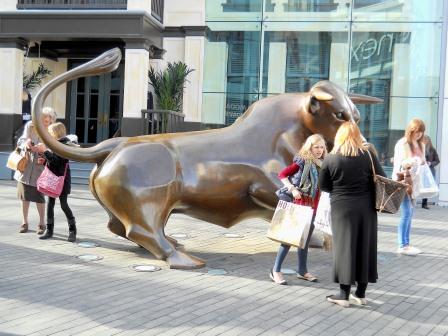
*** NOTE: Pic 2 – from inside the Churchill Square Shopping Centre, Brighton; pic 4 – from inside the Pentagon City Mall, on the outskirts of Washington D.C., near the Pentagon.

[For all the posts on this blog go to/Pentru toate postările de pe acest blog mergi la: Contents/Cuprins]

Friday, 10 February 2012

Democraţie românească în 2012: taxare fără reprezentare [Romanian democracy in 2012: taxation without representation]

Noul Guvern de la Bucureşti a fost instalat de o coaliţie şi de un preşedinte, Traian Băsescu, a căror susţinere (aprobare, simpatie etc) nu depăşeşte 25% în sondaje. Şi la acest procentaj s-ar ajunge de-abia cumulat, ba încă şi prin jonglerii statistice.

S-a mai văzut şi la alţii, ar zice unii. Da, admit eu, şi chiar îmi vine în minte cel puţin un exemplu din istoria relativ recentă – ultimele două cabinete laburiste din UK.

T. Bliar and G. Clown primiseră un pic peste 35% din totalul voturilor exprimate în mai 2005, scor graţie căruia s-au menţinut la putere până în 2010.

Era vorba de un singur partid, nu de o strânsură conjuncturală. Şi de un executiv proaspăt instalat după un scrutin, nu cu nouă luni înaintea unor alegeri generale.

Felicitat de preşedintele Comisiei Europene, de trimisul Unchiului Sam în România cât şi de cel al Perfidului Albion, noul Guvern român are tot atâta legitimitate cât avea Guvernul Majestăţii sale în coloniile nord americane pe la anii 1770.

Supuşii britanici care aveau să devină cetăţeni americani, se plângeau de “taxare fără reprezentare”, cum reclamă în zilele noastre inscripţiile de pe taxiurile din Washington D.C., teritoriul federal fără putere de vot în Congresul SUA.

Fix de acelaşi lucru, de nereprezentare – în ciuda birurilor plătite – se plâng milioane de români. Mai rău decât toţi – cei lăsaţi să moară sub nămeţi în aceste zile.

Explozia nemulţumirii de dincolo de Atlantic în urmă cu vreo 235 de ani avea să ducă la grave răzmeriţe,  insurgenţă, apoi la un Război de Independenţă, respectiv la naşterea SUA.

Ceea ce ar putea exploda în România este încă ţinut la rece, sub temperaturi polare. Dar şi când va fi să explodeze tot ce s-a acumulat, nu-s deloc semne că are ce să se nască ceva bun.

Oare ce s-ar mai putea naşte’ dintr-o naţiune muribundă, care a pierdut într-un deceniu de pace mai mulţi locuitori decât totalul celor decedaţi în războaie de la proclamarea independenţei (1877) până acum?

[Pentru toate postările de pe acest blog mergi la/For all the posts on this blog go to: Contents/Cuprins]

Tuesday, 17 January 2012

Romanians to their former ‘orange’ hero: “Come out, ordinary mutt!” [Românii către fostul lor erou ‘portocaliu’: “Ieşi afară, javră ordinară!”]

What has been a common sight of the past years – in some corners of the EU (Greece, Italy), in countries from EU’s periphery (Georgia), in several Arab states (Egypt, Libya) and to a lesser extent in Russia – is finally taking place in Romania.

People are taking their anger to the streets, a few for senseless rioting (like in England), some others simply to shout that they’ve had enough of the current Government and especially of the incumbent president since December 2004.

Many of those contested learders around the world had always been villains, but Traian Băsescu – just like Mikheil Saakashvili, in Georgia, and Ukraine’s former president Viktor Yuschenko – was portrayed as an anti-communist and anti-totalitarian hero not so long ago (by the mid 2000s).

It was a ridiculous image, as he was a merchant marine captain, in charge of the largest vessel in the commercial fleet of communist Romania, and he had never hid (nor had he ever seemed ashamed of) his communist past.

Far from winning elections  in landslide victories – and many believe he couldn’t have won at all without Uncle Sam’s help – he was, nevertheless, regarded as a hero’ by his fanatic supporters, as well as by the mainstream media of the Western world.

In spite of this pedestal of respectability on which he was put and of his ceaseless rethoric against the corruption and presumed authoritarianism of others, his regime proved to be even more malignous than the previous ones in post-communist Romania.

Eager to get richer, as the former communists had done before them in the early 1990s, the orange gang around Băsescu has engaged in parasiting on the Romanian economy.

That was nothing new for democratic Romania. What would eventually draw the ire of many was the aggressive manner in which he understood to exert his prerogatives, as if the political establishment could be steered like the oil tanker that was once under his command.

Unlike his predecessors – a shrewd former commmunist, always able to build consensus, and a politically weak geology professor, who refused to run for a second term, admitting that he had been defeated by the system” – Băsescu appears to be at ease only when at war with someone.

Because of his stubbornness and arrogance, the orange hero’ would soon be vehemently contested. Halfway into his first term, the Parliament voted for his impeachment. According to the Constitution, he was suspendend, the President of the Senate temporarily replaced him, and Romanian voters were called to approve or nulify the decision of their representatives.

Back then, Romanians were to bee too blind to see that the bogus anti-system hero, promising to tread on all enemies of democracy and prosperity, was himself the product of a despicable system. Thus, he won the referendum confirming him in office by 70%.

It would be simplistic to believe foreign media reports (+ herethat the protests on the streets have to do with the VAT increase (from 19% to 24%) or with some of the harshest austerity measures taken anywhere in the EU: a 25% wage cut of public employees, and a 15% tax on pensions. The decisions were taken in May-July 2010, and Romanians bit the bullet.

Maybe not even the incident that ignited the protests – in the second week of January 2012, Băsescu arrogantly took on the chief of the Romanian emergency rescue service (SMURD), accusing him of opposing a controversial health reform – should be overestimated.

Nevertheless, it was the spark that enraged many, among the millions in whose hearts the ‘Orange Revolution’ (a term which was not as much used in Romania as it was in Ukraine, while the colour was equally widespread) into an ‘orange plague’.

People are angry with a lot of things in this country, among which Băsescu’s divisive manner of leadership and resentful attitude rise above any other reasons of discontent.

The president who promised “to turn to the people” (in his war against a corrupt system) has turned his back on the people that put their hopes in him.

Only insiders from the system who knew exactly when to dress in orange are better off, while many of Băsescu’s fans, his reluctant supporters (who thought he was a lesser evil), the mass of politically indifferent Romanians, and those how never voted for him are worse off.

Although demonstations were held in many cities (some 60) apart from Bucharest, very few are those protesting on the streets these days, compared to the level of discontent in Romania.

Most protesters are against the entire ruling class, the opposition (former communists + liberals) is united only in weakenesses, while most other law abiding citizens are  ‘protestingon Facebook and blogs or cynically mock those on the streets.

It seems unlikely – but I like to never say never! :-) – that Băsescu and the Government he supports would resign and call earlier elections (as 2012 is electoral year anyway). Not even blocking unpopular reforms appears probable for now.

This happens because – thanks to the very same putrid system that he often criticized –  Băsescu has managed to forge a ruling coalition. His party (PDL) is propped up by a new party (UNPR) made up of dissenters  from the main opposition party (PSD).

With a popular support of 10%, Băsescu’s regime is currently a sort of elected dictatorship. The widespread (but far from being massive until now) protests and the president’s reaction to them will be one of the most serious test for the post-1989 Romanian democracy.

All in all, the hero of 2004-2009 has turned into public enemy number one. Like so often before in history, the same man who once personified so many hopes for the better became the personification of bitter disappointment.

Sadly, irrespective of all the anger and despair of many, there’s no true feeling of revolution in the air, as if everyone knew that, with of without ‘captain Băsescu, Romania would be still floating adrift boundlessly... As if only hitting an iceberg could possibly help this aimless nation come to its senses...

[For all the posts on this blog go to/Pentru toate postările de pe acest blog mergi la: Contents/Cuprins]