Showing posts with label Consumerism. Show all posts

Monday, 14 April 2014

The Slaughter [Măcelul]

Many months after Christmas, there were still many traces of a massive slaughter that had taken place in Bucharest around what is essentially a celebration of life – Christ’s birth.

Undoubtedly, the same happened in other capitals of the ‘civilised world’, although I bet they are better at covering up such crime scenes.

Every one or two little streets or every 400-500 meters on a large boulevard, there was such a tree corpse to be found, lying obscenely near garbage bins.

The images are just saddneing, not shocking. There was no blood, no stench of death, and surely no mourners around them. Nobody cared.

And how should anyone care, in a city immune to caring about the cohorts of beggars, stray dogs, lousy political leaders and so on?

Generally speaking, we’re not used to caring about anything else, but our senseless worries and hedonist aspirations in Bucharest. Maybe it’s the same everywhere else.

There’s no way that I could claim to be better than others for having decorated a plastic made-in-China Christmas tree…

What I feel the urge to confess is that the photoholic I simply couldn’t pass by these slain trees and not take pics of them.

Far from being a hysteric ecologist, I can’t help feeling the noose of progress tightening around my neck as I watch them.

Like any slaughters of such scale (including the industrial killing animals for human consumption) this is another token of the progressive world we live in.

I wonder if for people living some 100-150 years ago – before this tradition became a worldwide commercial success – it made any sense to cut so many trees.

Just for fun. Just for the sake of making Christmas more enjoyable. It’s but a sacrifice on the altar of a ‘Christmas spirit’ which has nothing to do with Christ.

Like almost everything else during the contemporary consumerist Winter Holidays Season that hasn’t got anything to do with Him.

Well, I’d rather refrain from invoking religious reasons for taking action against the killling of trees for Christmas.

Sadly enough, they are present in many Othodox churches, along other so-called churches, shopping malls, public institutions, big and small firms, and homes.
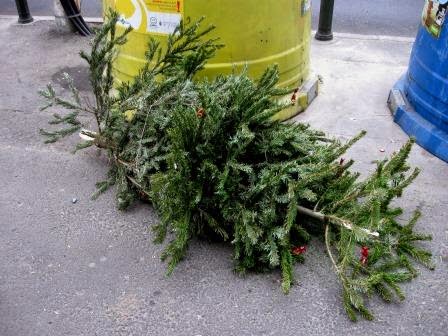
It’s just that – be it from an ecological or just ethical perspective – I dislike this waste of tree life. Why should so many trees be chopped?

Who can correctly anticipate the volume of sales and guaranteee that there won’t be millions of trees cut worlwide, but remain unsold for Christmas?

Is there any environmentally friendly and economically sound solution for disposing of these trees and possibly turning them into something useful?

Indeed, big trees from city squares can be turned into something useful. But what about the countless little ones like those noticed by me throughout Bucharest?

They aren’t good for furniture, probably not for fuel either, nor for making paper. So what could be done with them?

As long as we were forced to use ecological light bulbs, why shouldn’t sellers and buyers be compelled to trade exclusively trees grown in Christmas tree farms?

I’d make cutting Christmas trees from forests (irrespective of who owns the forest), selling and buying them a serious crime, punishable by severe fines and/or imprisonment.

If the price of farmed Christmas trees skyrocketed, would that be a problem? More tree farms would mean more competition.

Such a restriction will be a boost for those manufacturing ecological Christmas trees, as I’d also forbdid unrecyclable plastic trees. Would anyone agree with me?

[For all the posts on this blog go to/Pentru toate postările de pe acest blog mergi la: Contents/Cuprins]

Wednesday, 27 March 2013

[EN] Grave and unpleasant readings / [RO] Lecturi grave şi neplăcute (11)

[EN]Hey, man, where did you buy that child from?” In regard to these pics taken a few days ago in Bucharest, it’s but an imaginary question, of course…

[RO]Hei, omule, de unde ai cumpărat acel copil?” În ce priveşte aceste imagini făcute acum câteva zile în Bucureşti, este doar o întrebare imaginară, desigur...


[EN] However, many treat children (either born or unborn) as… sale and shopping items. Sad stories from contemporary Romania: here, here and here.

[RO] Totuşi, mulţi tratează copiii (fie născuţi sau nenăscuţi) drept… articole de vândut şi cumpărat. Poveşti triste din România contemporană: aici, aici şi aici.

[For all the episodes of this series, and all the posts on this blog go to/Pentru toate episoadele din această serie şi toate postările de pe acest blog mergi la: Contents/Cuprins]

Friday, 14 December 2012

The end of toys?! [Sfârşitul jucăriilor?!]

Among so many ‘blessings’ of contemporary civilisation, one is the steady suprimation of the beautiful toys of yore.

Children are pushed into a forever incomplete growth, and the toys they wish for are but soulless consumer goods.


They are not the little treasures they once were, cherished along the years and passed on to younger siblings or to grandchildren.

On the one hand, the replacement of healthy toys made of wood or clay with plastic versions (often but not exclusively ‘made in China’), has been taken place for decades.


Who remembers the lovely Matchbox little diecast vehicles ‘made in England’, now found only on eBay, in toy museums or in rare personal collections?

On the other hand, there’s an accelerated process of removing toys altogether from childhood and replacing them with all sorts of gadgets and video games.


Instead of simple instruments for stirring creativity and fostering intelligence, children are taught to yearn for objects that rush them into a false adulthood.

Most fashionable toys of today are devices that need electricity to work. Unplug them, and they’re a bunch of useless electronic junk!


A child can rarely break such gadgets and repair them. All that the brat can to is to cry and drive the parents mad, so that they buy another device of a newer generation.

They also run on softwares that impose prefabricated universes on children and impede their creative thinking.


Inventing new games and putting imagination at work are no longer at hand, as children are mesmerized with gadgets that apparently do everything by themselves.

It’s good to know that at least Lego is not doing too bad… But can the family owned company from Denmark reverse the tide that is taking toys out of childhood?

[For all the posts on this blog go to/Pentru toate postările de pe acest blog mergi la: Contents/Cuprins]

Wednesday, 17 October 2012

Falşi potenţatori de productivitate a muncii [False work productivity enhancers]

Mă tot uit la aceşti oameni cum lucrează... De mai bine de o lună, îi vezi că fac ceva cu adevărat, fie înfruntând ultimele zvâcniri de arşiţă de prin septembrie, fie printre stropii de ploaie, deocamdată timizi, şi adieri tot mai reci.

Nu par a fi nişte naşparlii incurabili precum colegii lui Dorel (+ aici, aici). E drept că, atunci când vine ploaia, o lasă mai moale. Cu toate acestea, n-aş zice putea că nu se străduiesc.

Nu pot judeca eu dacă or fi trebuit să termine de multişor sau dacă lentoarea aparentă (care îi exasperează pe locuitorii din zonă, pe şoferi sau trecători zilnici) o fi vreo constrângere impusă de considerente tehnice.

Indiscutabil, nu are cum să fie uşor să dai la târnăcop sau lopată, să tragi de cabluri şi nici să stai toată ziua în miniexcavator nu este ca o plimbare cu bărcuţa.

Date fiind vremurile (şi salarile!) oribile din România, a munci este – n-o spun deloc cu ironie – un act eroic. Mai ales în condiţiile în care mai toată lumea ia în derâdere munca fizică. N-o fi ea de pus pe piedestaluri, ca în manualele comuniste, dar nici de batjocorit.

Nimic de râs privind activitatea în sine, poate nici de compătimit, însă nu acelaşi lucru l-aş putea spune despre falşii potenţatori de productivitate a muncii folosiţi.

După ce că se fac din greu puţinii bani, după ce şi aşa organismul este solicitat din plin, la ce bun să-i risipeşti pe primii şi să-ţi istoveşti trupul suplimentar cu otrăvitoare delicii precum ţigări, bere (nu 2-3 pahare, ci mulţi litri) şi băuturi răcoritoare?!

Este o tristă înrobire – faţă de obiceiurile consumiste ale lumii care cere să fim în rând cu ea, cât şi faţă de reclamele care intră în subconşient şi te învaţă să bei şi să fumezi.

De fiecare dată când auzim ectenia “pentru cei bolnavi, pentru cei robiţi şi pentru mântuirea lor, Domnului să ne rugăm”, să nu ne închipuim că este ceva desuet a te mai ruga pentru ‘robi’ (că “doar nu ne mai calcă turcii să ne înrobească”, am zice noi), ci să pomenim în gând un astfel de rob!

[Pentru toate postările de pe acest blog mergi la/For all the posts on this blog go to: Contents/Cuprins]

Monday, 15 October 2012

The most beautiful park I’ve ever seen... [Cel mai frumos parc pe care l-am văzut vreodată...]

The most beautiful (and anti-consumerist) park I’ve ever seen…

…is the Caffarella Park, in Rome (a bit of it in the 2nd pic), Italy.


Briefly mentioned before on MunteanUK, I think it is…

…one of the most wonderful places in the world.


Of course, I haven’t seen too many countries of the world…


…thus not quite so many parks :-(


However, I dare holding on to my opinion.


There are several pedestrian alleys and bicycle paths...


...albeit unpaved and unmarked (11).


Some sheep (7), and a farmhouse (6, 8) from the 1500s.


Some villas (12) and ruins (4) from the time of the Romans.


And at least one metal bridge and a metal water pump.


Everything else is almost completely natural, unspoilt, peaceful.


As it has been just made by God.

[For all the posts on this blog go to/Pentru toate postările de pe acest blog mergi la: Contents/Cuprins]

Thursday, 4 October 2012

Un gând la moarte [A thought on death]


Punându-l pe idolul-om şi capriciile sale drept etalon (permanent relativ) al tuturor lucrurilor de pe lume, omenirea din ultimele veacuri, pare să cadă de acord cu adevărul fundamental sintetizat de René Descartes: “Mă îndoiesc, deci cuget (Dobito ego cugeto). Cuget, deci exist (Cogito ergo sum)”.

Totuşi, cum se face că oamenii refuză să îşi mai amintească şi de cea de-a treia parte a butadei filosofului francez, care adaugă: “Eu sunt, deci Dumnezeu este” (Sum ergo Deus est) şi fug mereu de cunoaşterea Creatorului?

Iar dacă de evidenţa prezenţei Lui te mai poţi ascunde cumva, sub voaluri ţesute din ceţoase concepţii despre ‘totul’ care ar fi apărut din ‘nimic’, ce te faci cu evidenţa evidenţelor, cu moartea? Până acolo, poţi să faci ce vrei, cum vrei, cât vrei, să-şi tot gândeşti şi răzgândeşti sensul vieţii după cum pofteşti...

Dar ce mai poţi zice dincolo de pragul morţii? Când şi aşa este preaplină de parametrii incontrolabili viaţa aceasta, ce te faci în cea de dincolo, de apoi? Dacă lucrurile sunt infinit mai puţin controlabile precum aici?

 
Aşa-zişi oameni deştepti, cugetă toată ziua câte în lună şi în stele, declarând că dincolo nu mai este nimic precum nici înainte n-ar fi nimic, motivând cu uşurinţă măcelărirea nenăscuţilor oameni. Şi îşi pierd timpul gândindu-se la tot soiul de imposibilităţi, lăsându-şi propria moarte să-i prindă pe negândite...

Ce poate fi mai tragic în stupizenia sa decât omul modern care îşi petrece viaţa gândindu-se la infime posibilităţi (“Ce-ar fi să câştig la Loto?”) fără să-şi oprească vreun mic răgaz spre a a se gândi la cel mai cea mai mare probabilitate a vieţii sale?

Refuzul evidenţelor este, adesea, jalnicul rezultat al gândirii aşa-zis libere şi se arată a fi suprema valoare umanistă a omenirii contemporane. Omul civilizat al zilelor noastre – blindat pe dinafară de ştiinţă şi tehnologie şi căptuşit pe dinăuntru cu o cultură fără valoare, consumistă şi hedonistă – este despuiat.

Uitând că este muritor, omul civilizat poate înfăptui crime de neconceput în cele mai înapoiate triburi din Amazonia sau Africa. Uitându-şi nemurirea, îmbogăţit în nimicuri, omul care şi-a uitat moartea este cel mai de plâns dintre toţi. Dar cine să-l mai plângă?

[Pentru toate postările de pe acest blog mergi la/For all the posts on this blog go to: Contents/Cuprins]

Tuesday, 25 September 2012

One of the most shameless consumerist deceits: ‘soft’ drinks [Una dintre cele mai neruşinate înşelăciuni consumiste: băuturile ‘răcoritoare’]

Sold everywhere from the poorest countries in Africa to the richest countries in the EU, these so-called ‘soft’ drinks are nothing but tasty doses of poison.

Why are they called soft? They surely aren’t soft on anyone’s teeth, stomach, liver, pancreas or colon!


If they drank such drinks on a regular basis, even Robocop or Terminator would eventually suffer massive (and possible unrepairable) damage.

Why are they sometimes called refreshing? Who does truly feel refreshed after ingesting so much sweetness?

How healthy is to drink up to 50% of the entire recommended daily amount of sugar in just a portion of 250 ml? And who has had enough after just one portion?

Why do they dare to claim that they quench people’s thrist? I bet I’m not the only one to feel thirstier and thirstier after having a sweet drink?

Maybe drinking them 
is less dangerous (?!) than smoking, but isn’t drinking soft drinks at least equally addictive?

Would the revenue of producers significantly drop if these drinks were as heavily taxed as tobacco products? And would there be health benefits?

Why do all heavy drinkers of these light beverages pretend that they are happier on advertising posters or in video commercials?

At least those who drink alcohol feel a form of elation, don’t they? But who has ever found happiness while gulping down a soda or any (industrial, not home made) juice?

[For all the posts on this blog go to/Pentru toate postările de pe acest blog mergi la: Contents/Cuprins]

Friday, 21 September 2012

Life after prosperity [Viaţă după prosperitate]

For decades, generation after generation of people in the ‘freeWestern world have been brainwashed to believe that, as long as they work hard, they can succed in life, and… have it all.

We’re entering the fifth year of Global Economic Crisis and the twelveth year of War on Terror (after two knock-out Septembers, in 2001 and 2008), yet there’s no sign that the world would ever be prosperous again.

After having spent so many years in schools and universities, young people in Ireland, Spain, Italy, Portugal, Greece or Romania find themselves to be part of a ‘lost generation’.


Not that the future looks much brighter for American, British, German or French youngsters. No matter how many newer and newer smartphones and other gadgets appear, the future looks dumber and dumber for everyone.

Our world – closely connected and flooded with often useless information – is nothing but a madhouse.

A giant suverillance society, where people are force-fed the dreams they should dream and the aspirations they should have. Apparently free, all of us are allowed to believe in whatever we want, and do what ever we want.


Anything is negotiable, everything is relative. There is no God, nor any supreme good. There are alternatives to everything one man considers to be an ultimate truth.

Everything but two dogmas are to be challenged. The moral superiority of democracy and capitalism shouldn’t be put into question. Dare to doubt these, and you’ll considered an extremist and gradually outcast, disenfranchised, liquidated!

Free (?!) education systems are still preparing people for a free (?!) world, where democratic values were supposed to guarantee the right to a prosperous life for everyone.


But that world is not more. So what are young people to believe? They have been learning about a world of peace, universal human values, and endless economic opportunities. No word about the afterlife, about what truly matters beyond all these fictions.

Everything they learned about was how to become the perfect cannon fodder for ideological and economic wars, to find the meaning of life in consumerism, lured by the fata morgana of prosperity.

Today, the chances of peace are deteriorating rapidly, and human rights are often abused within the temples of democracy that preach them…


As for the idols of prosperous economy, there have all “fell on their faces, shattered and broke into pieces.” The world is not a comfortable place to live in anymore.

There’s no fun, no delight, no pleasure, and no confidence in a marvelous future with major wars (Israel-Iran, Turkey-Cyprus, China-Japan), as well as famine, ecological and economic disasters looming ahead of us.

There must be life after prosperity, but how would that life be?! People (especially youngsters) are not ready to cope with this (not simply unfamiliar but outrightly) hostile new world.

[For all the posts on this blog go to/Pentru toate postările de pe acest blog mergi la: Contents/Cuprins]

Wednesday, 8 August 2012

[EN] Worth trying in the UK / [RO] Merită încercat în UK (25)

[EN] They won’t quench anyone’s thirst – I plan to write a diatribe against all so-called ‘soft’ drinks! – but it’s worth trying these ones. [RO] Nu vor potoli setea nimănui – plănuiesc să scriu o diatribă împotriva tuturor aceste aşa-zise băuturi răcoritoare’! – dar acestea merită încercate.

[EN] Because these drinks made by a British company have savory exotic flavours: guava, mango, pomengranate, passion fruit... [RO] Pentru că aceste băuturi făcute de o companie britanică au delicioase arome exotice: guava, mango, rodie, fructul pasiunii...

[EN] I wouldn’t guarantee how healthy (see the 3rd pic!) it is to drink more than one can and more often than once in a while… [RO] N-aş garanta cât de sănătos (vezi poza a 3-a!) este să bei mai mult de o cutie şi mai des decât din când în când...

[EN] But Rubicon Exotic have fabulous tastes, especially when compared to the offer of giants of this industry like Coca-Cola. [RO] Dar Rubicon Exotic au nişte gusturi fabuloase, în special în comparaţie cu oferta unor giganţi ai industriei precum Coca-Cola.

[EN] This extremely hot summer, I noticed that they are available in Bucharest and, probably, in other parts of Romania. [RO] În această vară extrem de fierbinte am remarcat că sunt disponibile în Bucureşti şi, probabil, în alte părţi din România.

[EN] One can (330 ml) of such a ‘premium’ drink costs 2.99-3.49 lei in supermarkets, that is no more than 0.61 GBP. [RO] O cutie (330 ml) dintr-o astfel de băutură premium’ costă 2.99-3.49 lei în supermarketuri, adică nu mai mult de 0.61 GBP.

[For all the episodes of this series, and all the posts on this blog go to/Pentru toate episoadele din această serie şi toate postările de pe acest blog mergi la: Contents/Cuprins]

Friday, 13 July 2012

[EN] No comment / [RO] Fără comentarii (35) – Friday, 13 / Vineri, 13

[EN] Around the world, more and more people don’t believe in God… It’s not fashionable anymore… [RO] În întreaga lume, din ce în ce mai mulţi oameni cred în Dumnezeu... nu mai este la modă...

[EN] But as the so-called irrational belief in God fades, crappish beliefs – and surely irrational fears! – flourish. [RO] Dar, pe măsură ce aşa-zisa credinţă iraţională în Dumnezeu se stinge, credinţe prosteşti – şi temeri iraţionale! – înfloresc.

[EN] In many parts of the world, people (albeit ‘civilised’ – not practicing Shamanism or Wicca) are afraid of number 13. [RO] În multe părţi ale lumii, oamenii (altfel ‘civilizaţi’ – nu practicanţi de Shamanism sau Wicca) se tem de numărul 13.

[EN] Its called triskaidecaphobia. When it’s Friday, 13, the fear is at it’s worst – some don’t even live their houses on such a day. [RO] Se cheamă triskaidecafobie.  Când este vineri 13, frica este cea mai rea – unii nici nu-şi părăsesc casele într-o astfel de zi.

[EN] In New York City, rich people – who would have descrided themselves as rational – were not afraid to rise skyscrapers… [RO] În New York City, oameni bogaţi – care s-ar fi descris drept raţionali – nu s-au temut să ridice zgârie-nori…

[EN] But they did not dare to name a 13th floor… This custom is as alive there as it was at the dawn of the last century. [RO] Dar nu au îndrăznit să numească un al 13-lea etaj. Acest obicei este la fel de viu acolo precum era la început de secol 20.

[EN] From the USA to EU countries and Russia, millions of people live with this fear – in milder or pathological forms. [RO] Din SUA până în ţări UE şi Rusia, milioane de oameni trăiesc cu această frică – în forme mai blânde sau patologice.

[EN] Few of them may be ‘practicing pagans’. Most are blind consumers of popular beliefs, wearing the noose of progress. [EN] Puţini dintre ei or fi ‘păgâni practicanţi’. Cei mai mulţi sunt consumatori orbi de credinţe populare, purtând laţul progresului.

[For all the episodes of this series, and all the posts on this blog go to/Pentru toate episoadele din această serie şi toate postările de pe acest blog mergi la: Contents/Cuprins]

Monday, 25 June 2012

[EN] No comment / [RO] Fără comentarii (33) – Tasteless fruits / Fructe fără gust

[EN] As perfectly rounded as wax fruits, but often tasting like moist cardboard. [RO] La fel de perfect rotunjite precum fructele de ceară, dar adesea având gust de carton umed.

[EN] Strawberries, kiwis and grapes... all with the same imprecise taste. [RO] Căpşuni, kiwi şi struguri... toate cu acelaşi gust imprecis.

[EN] Appealing colours, absent flavours, disappointing tastes. [RO] Culori atrăgătoare, arome absente, gusturi dezamăgitoare.

[EN] The same industrial fruits in London, as in Washington DC, Paris or Istanbul... [RO] Aceleaşi fructe industriale la Londra, precum în Washington DC , Paris sau Istanbul...

[EN] (A pleasant exception – the fruits I ate in Portugal’s capital, Lisbon.) [RO] (O plăcută excepţie – fructele pe care le-am mâncat în capitala Portugaliei, Lisabona.)

[EN] No wonder that today’s children don’t like fruits. [RO] Nu-i de mirare că nu le plac fructele copiilor de azi.

[EN] They are more likely to see cloned mamouths in their lifetime than the good fruits of yore. [RO] Mai probabil vor vedea mamuţi clonaţi în timpul vieţii lor decât fructele bune de odinioară.

[EN] Not knowing what they are missing, they may be happy to live in these progressive times. [RO] Neştiind ce pired, or fi fericiţi că trăiesc în aceste vremuri progresiste.

[For all the episodes of this series, and all the posts on this blog go to/Pentru toate episoadele din această serie şi toate postările de pe acest blog mergi la: Contents/Cuprins]

Tuesday, 19 June 2012

[EN] No comment / [RO] Fără comentarii (32) – Consumerist oddity / Ciudăţenie consumistă

[EN] Some would say that this could only happen when shopping  in America… [RO] Unii ar zice că aceasta nu s-ar putea întâmpla decât la cumpărături în America...

[EN] I’d say we’ve got absolutely no guarantee that this is not happening everywhere in our consumerist world. [RO] Eu aş zice că nu avem absolut nicio garanţie că aceasta nu se întâmplă peste tot în lumea noastră consumistă.

[EN] At least these Californian ‘packagers’ are honest, aren’t they? Are others hypocrites?! [RO] Cel puţin aceşti ambalatori’ californieni sunt oneşti, nu-i aşa? Sunt alţii ipocriţi?!

[EN] They admit that their jelly gums can be “a product of USA or Mexico or Brazil or Czech Republic or China or Indonesia.[RO] Ei admit că bomboanele lor gumate pot fi “un produs din SUA sau Mexic sau Brazilia sau Republica Cehă sau Indonezia”.

[For all the episodes of this series, and all the posts on this blog go to/Pentru toate episoadele din această serie şi toate postările de pe acest blog mergi la: Contents/Cuprins]