Showing posts with label Flea Market. Show all posts

Monday, 3 September 2012

Masaj pe stradă?! [Massage on the street?!]

Aparent mult mai pudică decât statele înfrăţite în destrăbălare din UE, America m-a surprins cu o practică nu neapărat obscenă, dar categoric neobişnuită... masajul pe stradă.

Aş fi zis că tre’ să fie vreo practică importată de prin Asia, chiar şi fără să-i fi văzut pe unii dintre prestatori. Semăna cu o prestaţie stradală (street busking), mai practică şi, poate, mai rentabilă.
 

Taman în mijlocul unui târg cu profil preponderent agricol (poza 2), lângă judecătoria din Des Moines (Iowa), respectiv într-un soi de talcioc (flea market) vizavi de Primăria din New York City


Pentru $ 10, primeai zece minute – $ 15 (16 min), $ 20 (22 min) etc – de ‘sănătate curată’, un masaj care promitea accelerarea circulaţiei sângelui şi o generală stare de bine.

Dacă cineva crede că-s bani făcuţi uşor (easy money) pe care nu i-ar merita maseurii, să se uite cu atenţie la imagini! Parcă unii clienţi necesită un efort mai consistent…

Oare în Bucureşti sau altundeva în România ar avea succes masajul în spaţii publice, la bâlciuri şi picnicuri sau prin parcuri? Nu s-o fi gândit nimeni să facă un ban cinstit în acest fel?!

[Pentru toate postările de pe acest blog mergi la/For all the posts on this blog go to: Contents/Cuprins]

Friday, 16 December 2011

Când locomotivele stabileau ‘standarde’ de viteză... [When locomotives set speed ‘standards’…]

…parcă lumea nu era atât de grăbită, călătoriile erau mai bine pregătite, destinaţiile – mai îndelung aşteptate, gările – mai elegante, vremurile – mai domoale, iar oamenii – mai blânzi şi mai înţelegători unii cu alţii.

Nu era rival al trenului pe pământ (sau pe cer), nici nu existau atâtea jucărele electronice (gadgets) cu care oamenii să-şi care pseudoviaţa de pe Facebook până şi în tren.

Călătoria pe liniile de fier era prilej de socializare autentică. Şi aş zice că încă mai este, în comparaţie chiar şi cu avioanele – care, inclusiv la business class, sunt suficient de incomode pentru a stingheri conversaţiile.

Nu gonea trenul ca gândul, dar măcar îţi dădea prilej de aşezare a gândurilor – care nu mai erau păstrate în împrăştiere, cu ajutorul tehnologiei informaţiei.

Călătoria era un răgaz, fie de a sta doar cu tine privind pe geam (aveai ce vedea, că nu erau trenuri-glonţ), fie de interacţiune cu alţii – poate plăcută, poate forţată de vreun pasager agasant de vorbăreţ.

Astăzi, nu doar că totul se desfăşoară mult mai repede, dar nici măcar în interiorul acestei repeziciuni nu mai găseşti clipe doar pentru sufletul tău.

Tot timpul, omul vremurilor noastre este cu ochii într-un ecran (foto), cu căşti în urechi şi cu degetele încleştate până la durere şi deformare pe butoanele unui joc video sau pe minuscule tastaturi.

Într-o astfel de lume, oricâte puteri virtuale ţi-ar da sloganurile ideologice sau publicitare din jur, nu controlezi nicidecum lumea; nu ea este a ta, ci tu al ei.

În acest paradis al nebunilor se trăieşte (sau către el se tinde) în lumea aşa-zis civilizată, unde se oamenii nu doar că mânâncă, ci şi gândesc, visează ori se joacă prefabricat. Puţini mai facem ceva liber; mai toţi răspundem la o ofertă.

Nu există niciun control asupra realităţii reale – pe care doar Dumnezeu îl poate avea, oricât se amăgesc unii că pot stăpâni lumea – dar nici al realităţilor fictive.

Visăm şi ne jucăm cu ce prefabricate (sau pre-rumegate) ni se oferă – în schimbul banilor sau a altor jertfe aduse de noi idolului economie’. Avem o tot mai mică reală libertate, cu cât avem mai multe alegeri.

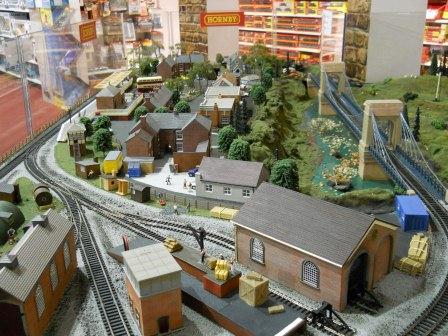
O frântură de iluzie că mai poţi construi o lume de vis care să îţi rămână doar a ta o mai au pasionaţii de trenuleţe – de la nepoţi la străbunici.

Este tot o deturnare a omului dinspre cele către care ar trebui să tindă, dar parcă – aş zice eu şi cred că şi cititorul meu Mihai Gociu (care mi-a oferit pozele 2, 4, 7) – dar cumva mai benignă.

O graniţă între un sănătos hobby şi o dăunătoare patimă trebuie să existe şi orice pasionat poate risca să treacă dincolo de ceea ce îi este de folos, după cum arăta Sf. Apostol Pavel.

Totuşi, aş zice că într-o lume atât de înnebunitoare precum cea în care trăim, un hobby poate avea un important rol profilactic. Dar puţini sunt cei care au răbdarea unui hobby, care este altceva mult decât prea căutata şi lipsita de sens distracţie...

Mulţi ar zice că sunt bani aruncaţi. În magazinele din UK – poate or fi mai ieftine în talciocuri (flea markets) – preţurile dădeau dureri de cap.

N-am văzut locomotivă mai ieftină de £ 80, vagoanele erau vreo £ 15-20 şi o singură cabină telefonică tipic britanică făcea £ 4. Două cutii poştale, iarăşi tipic britanice, făceau £  2.75, iar casele (cam vile, nu căsuţe) erau cam £ 16-25.

Două containere cu deşeuri le luai la £ 5.50 – cam cât era (£ 5.52) salariul minim pe oră la vremea când am ajuns eu în UK.

Pe de altă parte, a construi o lume virtuală a trenuleţelor îţi exersează răbdarea, atenţia şi perseverenţa şi îţi mai îngăduie să visezi. Şi să-ţi pui mintea la contribuţie. Doar colecţionarii foarte bogaţi îşi cumpără (de aici, aici sau aici) chiar toate accesorile, în timp ce mulţi şi le fac singuri.

În afara motoarelor de locomotivă (engines) şi a şineleor (tracks) cam orice altceva se poate construi de către pasionaţi, din resturi provenite de la te-miri-ce.

Nici eu n-aş da nici cel-mai-ultra-nu-ştiu-cum joc video sau gadget pe astfel de jucării pe care să le poţi atinge şi îmbunătăţi. Îţi construieşti lumea aceasta virtuală cum vrei, unde orice dezastru feroviar este reversibil.

Pe când, într-un joc video – să-i recunoaştem meritul de a fi mai interactiv decât holbatul la televizor – cine poate schimba scenariul?

Cine poate schimba regulile jocului la jucăriile electronice ale zilelor noastre? Nimeni, căci orice preferinţe nu pot fi exprimate decât optând pentru lucruri presetate de creatori. Pe când, rolul creator în construcţia dioramelor nu îţi este ştirbit.

Poate este o iluzie, dar îmi vine a crede că pasionaţii de trenuleţe (nu cunosc personal niciunul) sunt oameni (ceva mai) buni şi ştiu exact ce cadouri vor de Crăciun :-)

[Pentru toate postările de pe acest blog mergi la/For all the posts on this blog go to: Contents/Cuprins]

Thursday, 8 September 2011

God’s place in a humanist society (19) [Locul lui Dumnezeu într-o societate umanistă]

I assume that it’s no surprise to any constant reader of this blog that, from a religious point of view, I saw Brighton as being a sort of ‘spiritual flea market’ – all choices available for the weirdest of ‘consumers’ (see here or here).

One such choice is this so-called Religious Society of Friends, a self-proclaimed Christian (?!) movement, whose members are better known as Quakers.

I haven’t personally met any believer, and even if I had done so, I should refrain from judging that person. Which won’t prevent me from dimissing this heresy, made up of a concoction of beliefs as far from Christ’s message as any other ‘man-made’ religions.

Fed up with the disarray and countless moral flaws within the Church of England (CoE), as well as with the brutality of the English Civil War in Oliver Cromwell’s troubled times, these ‘friends’ came up with some simple and appealing ideas.

Humans need no priest between them and the Lord, no ordained and paid clergy, neither an ‘established Church’, the founder of the sect (George Fox) said.

Guided by ‘inner voices’ (Orthodox Holy Fathers give a precise diagnosis reagarding whose voices are these), Fox claimed that, instead of ‘organised religion’, what matters is the ‘inner light’ that believers in Christ can find in themselves.

They may speak on His behalf, however, they surely don’t know Christ, as they don’t revere – like most Protestant denominations – the Mother of God (Theotokos) whose birth we are celebrating today.

There’s no proper understanding of Salvation without understanding the Theotokos’ unique role in God’s plans. No one can be ‘attracted’ to Christ and remain ‘indifferent’ to His Mother.

Anyway, I could’t have anything against these people – only the Lord will judge each of us. At least these ‘friends’ are pacifists (refusing to take arms and swear oaths), their ‘services’ consist of mostly silent meetings, and some of their ancestors were victims of cruel acts perpetrated by other self-entitled Christians.

To the extent they are living by their convictions (although there is no Quaker ‘creed’ at all; there are only some books used for guidance) , they seem to be harmless, unlike many aggressive sects.

What I find worthy of considerations are the troubled times that would determine George Fox to channel his frustrations towards creating this sect.

When Fox began preaching (1647), there had been 581 years since 1066 (Norman Invasion of England), and 593 since the Great Schism. In its death throes today, the CoE was already in a grave condition back then.

The Church of England could have been shredded to pieces – because of the many English Dissenters – had it not been for the Civil War, for Cromwell’s iron grip on power, and for the fact that most of these sects would eventually move (forcibly or by their choice) to the New World.

Not that I’d agree with the harsh methods used against them, but we must acknowledge the fact that, some 350 years ago, English Dissenters could be easily silenced by the state religion.

Today, any dissenter within the CoE would be granted protection by the secular and politically correct state. It often happens that this ‘church’ changes for the sake of the dissenter.

In the meantime, from the outside of this ailing organisation, Anglicans in the UK are steadily being out numbered by Muslims, while all religious people would be soon a minority in a country where irreligiousness is valued positively, and religion is frowned upon.

Social and political turmoil, festering in a swamp of consumerism, make up the ideal habitat of false prophets like George Fox.

Most people today prefer to dive deeper into the mire, using these false prophets as evidence for their “there’s-no-God-but-my-own-will” creed. Few take comfort in the deceitful peace and meanings of sects, which keep mushrooming like in 17 century England.

Even fewer throw themselves into the arms of the Mother of God, knowing what path (the Royal Path of Orthodoxy) to take towards her.

As long as even our Saviour nestled in her arms, that should be the safest place to put one’s soul in these mad times. 
.
[For all the episodes of this series, and all the posts on this blog go to/Pentru toate episoadele din această serie şi toate postările de pe acest blog mergi la: Contents/Cuprins]

Thursday, 5 August 2010

God’s place in a humanist society (10) [Locul lui Dumnezeu într-o societate umanistă]

Contemporary God-less societies in this secular EU stubbornly reject what was obvious to their forefathers maybe less than 100-130 years ago – that our ‘civilisation’ is inherently tied to the birth of Christianity.

We open the mobile phone (I wanted to say the morning paper :-), and read the year we’re in: 2010. That is 2,010 years after the birth of Jesus Christ, Whose Transfiguration (one of the clearest certifications of His being the Son of God) is celebrated tomorrow.

At the dawn of the 20th century, even in the UK – albeit in a rather diluted form, because of so many Protestant beliefs stepping astray from the Truth – I think that most people acknowledged that Christ was somehow fundamental for their world.

Maybe even some 20-30 years ago, He may have been already the Ignored One – invoked when one is astonished, shocked or suffering a little physical pain – yet He was there.

No laws, traditions, customs, formal or informal regulations, aspirations, moral values, likes and dislikes wouldn’t have made sense without Him. Although the British society was no longer Christocentric, people couldn’t just scrap Him.

Sadly, I feel that these days they just want to take Him out of everything. Out of everything His, as the world itself is kept alive by His interceding with the Father.

Over the past centuries, He was gradualy banished from the British culture. Today, countless pop culture characters are better known than Him, and atheists foolishly rejoice seeing this as His defeat.

On the contrary, I’d say; it’s the defeat of the very society which imagines it is better off without Him. In the absence of the Ignored One, divorces, adulteries, promiscuity, abortions, binge drinking and other ills of civilisation are sky-rocketing.

Any ‘big culture’ developing itself independently, supposedly ‘liberated’ from Him, remains nothing else but a nauseating flea market – a meaningless concoction of humanist values, of satanic ‘I-do-what-I-want’-s guised as forms of cultural diversity.

Blasphemous ‘manifests’ like the one painted above a shop in Brighton are not worse than what He was given ever since He came in this world: suspicion, mockery, rejection, disdain, spits in the face…

Like the Jews 2,000 years ago, these people don’t know Whose face they are slapping. For the past decades, poking fun at the Son of Lord and anything Christian has become ‘trendy’ in today’s civilised UK and EU.

Unlike making fun of Islam’s Prophet, it’s thousand of times ‘safer’ to laugh at Jesus these days. Nevertheless, the more comfortable without Him contemporary societies become, the less safer they will be when the Day of Reckoning will strike.

That’s only a superstition,” would say the same people who consider that the unborn child having a soul is a ‘superstition’ as well. They are the same who say that marriage should not be ‘restricted’ to a man and woman.

They are the ones who desperately need to see Chirst taken out of all His, so that they could proclaim their ‘I-do-what-I-want’-s as values. They are wolves dressed in wolves’ clothing (also known as democracy, liberty, prosperity) who despise the Good Shepherd.

But there is an afterlife (true life, actually), and there will come a Judgement day, I say. Time will tell if those claiming this truth (or absurdity in this hedonist world’s eyes) were right or them – today’s fashionable thinkers.

Those who say that life is just ‘here and now’ have no other evidence than holding on to their ‘I-do-what-I-want’-s. For those of us who trust in Christ, we have His Transfiguration as one of many facts proving that life is more than the ‘here and now’ our egoism would want it to be.

[For all the episodes of this series, and all the posts on this blog go to/Pentru toate episoadele din această serie şi toate postările de pe acest blog mergi la: Contents/Cuprins]