Showing posts with label Washington DC. Show all posts

Tuesday, 18 September 2012

Comoara nevăzută [The unseen treasure]

Îl interesau comorile îngropate în România, chiar înfiinţase un departament secret care se ocupa de acest lucru. Iar despre Constantin Brâncoveanu se spunea că dăduse peste o comoară imensă…” 

Se bănuia că sub Aşezămintele Brâncoveneşti s-ar afla tuneluri secrete care ar putea duce la legendara comoară, şi că de aceea Ceauşescu ar fi hotărât demolarea acestor clădiri”.

Aceasta este mărturia fostul său operator de film despre mult prea regretatul (pentru a i se potrivi eticheta de‘tiran’) Nicolae Ceauşescu. Până şi asasinarea dictatorului ar putea fi explicată prin faptul că demolările sale i-au atras un blestem al urmaşilor lui Brâncoveanu.

C-o fi aşa, că n-o fi… contează mai puţin. Important este că această ipoteză istorică arată cum Ceauşescu, aidoma ceauşeilor (cu păr schimbat, dar nu şi năravuri), cocoţaţi la putere în urma sa, au ratat adevărata comoară imensă a naţiunii române.

O fi fost Constantin Brâncoveanu, într-adevăr, un om nespus de bogat, un Prinţ al Aurului (cum era poreclit de turci). Poate că averea lui era comparabilă cu a unor personaje biblice precum Avraam şi Iov.


Însă comoara lui cea mai de preţ este cea din ceruri, pe care şi-a agonisit-o încă înainte de a o fi sporit şi mai mult prin moartea martirică.

Din păcate, sub lupa istoricilor seculari, ba chiar şi a unor ‘fani’ de peste veacuri, dar care să nu le împărtăşească credinţa, Sfinţii Martiri Brâncoveni rămân de nepriceput.

Cum, să fi fost chiar atât de bogaţi, însă să nu fi negociat cumva eliberarea cu nesătulul Sultan şi hrăpăreţii săi slujitori de la Istanbul?! Aşa ceva pare de neconceput în zilele noastre!

În mod tragic pentru Ceauşescu, dar şi pentru noi toţi este faptul că el nu a rezonat decât parţial cu destinul istoric al românităţii. A despărţi acest destin, al istoriei omeneşti, de miezul său ortodox este lipsit de sens.

Nici fondatorului statului numit încă România, Alexandru Ioan Cuza, nu i-a fost dragă Ortodoxia, nici prea lăudatulului său urmaş, Regele Carol I – în vremea căruia au fost dărâmate mai multe sau cel puţin tot atâtea biserici*** precum în epoca lui Ceauşescu.


Nici nefericitul rege, venit la Gurile Dunării, ca să facă de strajă intereselor Germaniei, n-a înţeles destinul naţiunii române, ci a murit de inimă rea. Acest acest popor de opincari nerecunoscători – pe care socotea că îl scosese din beznă – nu voia să lupte de partea unei cauze pierdute de la început.

Bucură-se acum, căci un alt urmaş de-al său, Traian Băsescu, va pune şi ultimele găini cu ouă de aur tot în proţapul Germaniei! Dar nu se va bucura mult...

Alergarea către comorile pământeşti ale lui Cuza (în beneficiul stăpânilor masoni din Franţa), al lui Carol I (pentru scumpa lui Germanie), ale lui Ceauşescu (de dragul unei ficţiuni personale despre poporului român) sau a lui Băsescu (pentru păpuşarii din UE şi, iarăşi, Germania) nu va ţine decât până la mormânt.

Or, comoara credinţei dreptslăvitoare ţine mai mult decât viaţa de aici şi rămâne neatinsă de prădăciunile unor satrapi vremelnici, slugoi ţinuţi în jilţ de mai marii lor, odinioară de la Istanbul, azi de la Berlin, Bruxelles, Washington DC sau de aiurea.

Poate că, nu pentru (ne)meritele nevrednicilor de noi, ci prin voia Domnului şi jertfa mucenicilor Săi, de care a dat destui şi acest neam, comoara aceasta va rămâne până la sfârşitul vremurilor!

*** NOTĂ: Ar fi vorba, doar pentru Bucureşti, de 25 demolate în vremea lui Carol I, respectiv 23 – în timpul lui Ceauşescu. Desigur, aştept alte surse mai precise, care ar putea confirma sau infirma ceea ce am găsit eu.

[Pentru toate postările de pe acest blog mergi la/For all the posts on this blog go to: Contents/Cuprins]

Friday, 7 September 2012

Lay monuments pointing at the sky [Monumente laice arătând către cer]

Isn’t is fascinating to witness that most (if not all) secular societies’ monuments are still pointing at the sky?

Even after scrapping the idea of divine authority over the earth and distancing themselves from the very concept of God (deemed as obsolete, backward, useless today etc) people are looking up to the visible skies and beyond.

Fewer and fewer are those drawn to Christ’s love, while more and more are those eager to welcome aliens descending from UFOs.

Nevertheless, all people (religious or self-worshipping irreligious), from all places and all ages, have always been secretly yearning for some kind of salvation from a world whose progress has only put and tightened a noose around our necks.


Cathedrals and churches are still towering cities in many countries of the Old Continent (most of which is part of the secular EU).


Some are abandoned ruins (see pics from Scotland here or here), others are turned into cafés or stores, however, they are still here with us, getting in the way of those who banished from God their minds and reject His natural laws.


People can’t live without a certain innate aspiration to verticality, can they? Hardly any monumental work of art could express greatness horizontally. 


Followed either legitimately (“I am the Way, the Truth, the Life”) or illegitimately (through an anthropocentric Tower of Babel), this upward aspiration is inherent in human nature. 

[For all the posts on this blog go to/Pentru toate postările de pe acest blog mergi la: Contents/Cuprins]

Monday, 9 July 2012

Coup d’état in Romania?! Or just an outburst of orange hysteria?[Lovitură de stat în România?! Sau doar o răbufnire de isterie portocalie?]

There are no tanks rolling down the streets of Bucharest, no one has been arrested or exiled, public gatherings are still taking place in the city centre. It’s Code Orange again – but not because of the political turmoil.

It’s the crazy weather once more – this time the scorching heat, not the heavy snowing and blizzards.

The ‘civilised world’ – the EU (especially Germany) + the USA & others – have expressed their concerns and preoccupation with the sad fact that their beloved orange hero of 2004 was wrongfully (so they claim) impeached a few days ago.

These high priests of democracy decry the fact that Băsescu could have been executed’ by votes in the Romanian Parliament. But it’s all a hysterical reaction.

Votes are no bullets. These are the same votes that have recently installed an Islamist (albeit moderate) president in Egypt, the same that sent spirited Nicolas Sarkozy to early retirement, and the same that will probably oust Angela Merkel from power in 2013.

Happen what may – a bigger evil than Băsescu can always befall Romania; but this is no reason for not removing the current evil – I am siding with those that, on July 29, will vote YES to confirm his impeachment.

He has never been the honest fighter for democracy, the defender of an independent judiciary, the committed supporter of the rule of law, nor the reformist whom the foreign media kept portaying over the past decade.

He has been an authoritarian, abusive, antidemocratic, and arrogant president who could never put up with the imperfections of Romania’s Constitution.

As a matter of fact, back in 2004, he had promised that he wouldn’t be an neutral president, but a kind of player-President.” And he surely kept his promise, and played aggressively.

Whether a man like him, considered to be a creation of the former Communist secret services, has already played all his trumps is difficult to say. Used to steering a 306-meter long oil tanker, Băsescu is skilled at turning adverse odds in his favour.

Exposing the plagiarism of the current Prime Minister only hastened his impeachment, although it wasn’t a decisive blow to his adversaries, that would assure the survival of his moribund orange regime.

The average voter doesn’t know what plagiarism is. But Băsescu may still have some aces left in his sleeves.

His orange supporters are enraged, desperately trying to convinge the Sublime Porte of 2012 – which is not Ottoman Istanbul anymore, but Brussels and Washington DC – that a coup d’état has taken place in Romania, thus a referendum would be illegitimate.

Some of their arguments are valid, yet so are many of those against Băsescu’s rule. He was not the enlightened reformist of democratic institutions often described by foreign fans and internal worshippers, but a rather constant saboteour of democracy.

Most of all, irrespective whether he did it constitutionally or not, he is a shameless liar – and his irresponsible lies amount to (if not even surpass) the gravity of high treason.

Out of his abundance of lies, it’s worth noting only those with catastrophical economic consequences. In the autumn of 2008, as the global economic crisis began breaking havoc elsewhere in the world, he said Romania would not be affected.

Even more so, he said the wages of teachers should be increased by 50% and accused the liberal Prime Minister of refusing to provide the funds for his irresponsible claims.

In the meantime, his orange clique (PDL) was promising a 6.5% percent economic growth for 2009. At the end of that year, the economy would contract by 7.2%.

A bit later, in January 2009, he said that Romania would not need an IMF loan. In May 2009, Romania loaned 20 billions euros from the IMF and the European Commission.

Where did the money go? In the coffers of foreign banks, in the pockets of ‘orange’ companies, but surely nowhere in the benefit of Romanians who refuse to bite the bullet.

Although prescribed as a life-or-death necessity, with obstinance and cynicism spit at the ‘lazy Romanians’, it is still arguable whether Romania was in a such desperate need of a bailout. Or was it more an experimetal medicine forced down our throats by Doctor Băsescu?

A year later, in May 2010, Băsescu subjected Romanians to a fierce austerity experiment – a 25% wage cut in the public sector, and a 5% VAT increase.

Some may argue that any of these are but inoffensive (to the degree they are constitutional’) lies and a kind of inherent mistakes of democracy that can’t be punished in any democratic society.

What if they are not as innocent as we are told they are? Băsescu’s orange gang was one of cunning profiteers, thus most of his (and his regime’s) apparent mistakes look like sheer premeditated crimes.

A yesman of Washington DC, of Brussels, and of Berlin (where some of his most voiceful supporters are heard these days), he did nothing in favour of Romania – only in favour of the orange myriad of interests that he patronized.

He is a fake hero of democracy, an indecent patron of a corrupt regime whom most voters in Romania (hopefully – it’s risky to say anything more these days) don’t want as president anymore.

There’s no lack of easily corruptible yesmen in Romania, therefore no one in Washington DC, Brussels or Berlin should worry about Băsescu being thrown into the dustbin of history.  

Romanians should be as concerned about the democratic world’s crocodile tears for the fate of Romanian democracy as those cynics in the aforementioned capitals were worried when Băsescu was pushing this impoverished and abused nation through the steepest chasm of austerity ever seen in the EU.

[For all the posts on this blog go to/Pentru toate postările de pe acest blog mergi la: Contents/Cuprins]

Monday, 25 June 2012

[EN] No comment / [RO] Fără comentarii (33) – Tasteless fruits / Fructe fără gust

[EN] As perfectly rounded as wax fruits, but often tasting like moist cardboard. [RO] La fel de perfect rotunjite precum fructele de ceară, dar adesea având gust de carton umed.

[EN] Strawberries, kiwis and grapes... all with the same imprecise taste. [RO] Căpşuni, kiwi şi struguri... toate cu acelaşi gust imprecis.

[EN] Appealing colours, absent flavours, disappointing tastes. [RO] Culori atrăgătoare, arome absente, gusturi dezamăgitoare.

[EN] The same industrial fruits in London, as in Washington DC, Paris or Istanbul... [RO] Aceleaşi fructe industriale la Londra, precum în Washington DC , Paris sau Istanbul...

[EN] (A pleasant exception – the fruits I ate in Portugal’s capital, Lisbon.) [RO] (O plăcută excepţie – fructele pe care le-am mâncat în capitala Portugaliei, Lisabona.)

[EN] No wonder that today’s children don’t like fruits. [RO] Nu-i de mirare că nu le plac fructele copiilor de azi.

[EN] They are more likely to see cloned mamouths in their lifetime than the good fruits of yore. [RO] Mai probabil vor vedea mamuţi clonaţi în timpul vieţii lor decât fructele bune de odinioară.

[EN] Not knowing what they are missing, they may be happy to live in these progressive times. [RO] Neştiind ce pired, or fi fericiţi că trăiesc în aceste vremuri progresiste.

[For all the episodes of this series, and all the posts on this blog go to/Pentru toate episoadele din această serie şi toate postările de pe acest blog mergi la: Contents/Cuprins]

Wednesday, 6 June 2012

Brussels, the European capital of begging? [Bruxelles, capitala europeană a cerşetoriei?]

Far from being ugly, Brussels probably isn’t  one of the first five most beautiful European cities, nor the biggest, either in terms of area, demographics or economic strength.

Yet it is one of the most politically influent cities in the world, as capital of the EU and headquarters of NATO. Sadly, it may deserve another not-so-flattering title.

It’s a sort of secular Mecca, except for the fact that the 500 million Europeans don’t have a religious duty to visit the ‘European shrines’.

As European citizens and taxpayers, they have the right to visit the EU’s institutions, mainly the European Parliament.

On the other hand, for all those exerting political power anywhere in Europe (at national, and sometimes even local level), visiting Brussels is compulsory.

For those in charge of a government, an important municipality, a big region, governing with their backs turned on Brussels has become impossible.

Not less than 75 to 85% (+ here, here) of the laws affecting every European’s life are fully enforced (as regulations) or initiated (as directives) from Brussels.

The fact that the process of turning a proposal of the European Commission into a legislative act passes through Strasbourg one week per month is irrelevant.

Big decisions are taken in Brussels, and the world’s largest corporations, best consultancies, professional associations or NGOs are pretty aware of that. 

It appears that around 3,000 such EU Affairs interest groups spend 158 million euro per year only on communication.

But that’s the glamourous part of Brussels and a deceptive indicator of the (presumably prosperous) state of the Union.

Beyond this glorious image, there’s a less appealing one that hasn’t ever struck me in other big cities of the world.

What cannot evade the eyes of tourists (even the richest ones, travelling by limousine) in the European capital is the number of beggars and homeless people.

With the exception of Bucharest, I haven’t seen as many beggars as in Brussels anywhere else in the world.

I didn’t see that many neither in London, nor in Paris, Berlin etc, and I hardly noticed any in Washington, DC.

One wouldn’t see beggars (only protesters – but that’s a different matter) near the White House, (Washington, DC) or Buckingham Palace (London).

Nevertheless, they are omnipresent near the European Commission (pics 3, 6), the European Parliament (pic 9) and Justus Lipsius building of the EU Council (pic 1).

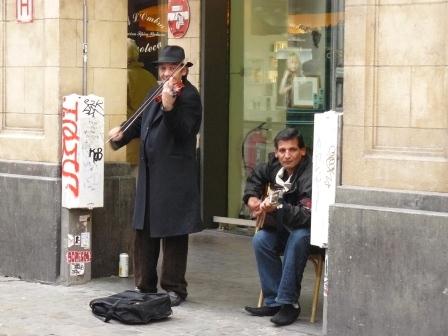
They are not the ingenious street buskers seen in other cities but relatively lousy players (= beggars) who wish to have their ‘performances’ rewarded by passersby.

As long as all important companies want to be seen in Brussels and try to have a say in the intricate EU legislative process, why wouldn’t the begging industry do the same?!

The saddest thing is that many of these destitute people – its arguable if begging is profitable or not – use Romanian to swear at photoholics like me :-(

[For all the posts on this blog go to/Pentru toate postările de pe acest blog mergi la: Contents/Cuprins]

Thursday, 29 March 2012

A message to Big Brother: We’re photographers, not terrorists! [Un mesaj către Big Brother: Suntem fotografi, nu terorişti!]

One of the oddities of our troubled times is the fact that, the more people expose themselves without any moral boundaries, the more restrictions are imposed on taking pictures.

In the free and so-called civilised patch of the world where we were born, everyone is free to wear tattoes, to turn themselves into walking bilboards, to fall drunk on the pavement, to undress for ‘good causes’ and sometimes to walk naked on the streets.

Then, people can exert the liberty to dispose of their own image, even by giving up the rights over their pics (+ here, here) when they post them on Facebook.

Nevertheless, it seems that everyone – from amateur photoholics to professional photojournalists – should be aware of growing inconveniences, restrictions and risks. Taking pics is no longer as free as it was five or ten years ago.

Anyone carrying a camera in Britain (but not only there!) can be stopped, have his pictures ‘checked’ and even have his memory cards seized or erased.

Such situations occur here, in our self-proclaimed democratic world, not in Iran, North Korea or China – where policemen were persistently looking at me everywhere I was taking pics, yet none of them approached me in a big city like Shanghai.

In the UK, photographers have put their outcry on this issue on a website taking attitude:

Photography is under attack. Across the country it that seems anyone with a camera is being targeted as a potential terrorist, whether amateur or professional, whether landscape, architectural or street photographer.

The threat to press freedom should be obvious to anyone, but if this crackdown on picture taking goes on, a greater risk looms ahead:

Not only is it corrosive of press freedom but creation of the collective visual history of our country is extinguished by anti-terrorist legislation designed to protect the heritage it prevents us recording.

They may be exaggerating, as everyone in our age of Information Technology does it, in order to ehnance the receptivity of a message in a world overwhelmed with stories.

Since most readable stories that have an impact today are about risks, threats, dangers, hazards and so forth, I can’t blame anyone for considering the limitations imposed on photographers as unwelcome constrains on our democratic societies.

As a matter of fact, I do believe that this is a risk. And may I have the right to speak in defence of democratic principles, not of my photoholism :-)

I’m aware that taking pictures often proves to be intruding, annoying and unnecessary for the immediate welfare of society. But it’s a (little, bearable, tolerable) distress that democratic societies should learn to cope with.

Apart from some legitimate privacy concerns, why is taking pictures in shopping centres forbidden in many parts of the world, thus some of my images*** are illegal?

What about Big Brother’s monopoly on taking pics?  Isn’t it strange that nothing can be limited today because of public morality, whilst almost anything can be restricted on grounds of public security?

*** NOTE: Pic 2 – from inside the Churchill Square Shopping Centre, Brighton; pic 4 – from inside the Pentagon City Mall, on the outskirts of Washington D.C., near the Pentagon.

[For all the posts on this blog go to/Pentru toate postările de pe acest blog mergi la: Contents/Cuprins]

Friday, 10 February 2012

Democraţie românească în 2012: taxare fără reprezentare [Romanian democracy in 2012: taxation without representation]

Noul Guvern de la Bucureşti a fost instalat de o coaliţie şi de un preşedinte, Traian Băsescu, a căror susţinere (aprobare, simpatie etc) nu depăşeşte 25% în sondaje. Şi la acest procentaj s-ar ajunge de-abia cumulat, ba încă şi prin jonglerii statistice.

S-a mai văzut şi la alţii, ar zice unii. Da, admit eu, şi chiar îmi vine în minte cel puţin un exemplu din istoria relativ recentă – ultimele două cabinete laburiste din UK.

T. Bliar and G. Clown primiseră un pic peste 35% din totalul voturilor exprimate în mai 2005, scor graţie căruia s-au menţinut la putere până în 2010.

Era vorba de un singur partid, nu de o strânsură conjuncturală. Şi de un executiv proaspăt instalat după un scrutin, nu cu nouă luni înaintea unor alegeri generale.

Felicitat de preşedintele Comisiei Europene, de trimisul Unchiului Sam în România cât şi de cel al Perfidului Albion, noul Guvern român are tot atâta legitimitate cât avea Guvernul Majestăţii sale în coloniile nord americane pe la anii 1770.

Supuşii britanici care aveau să devină cetăţeni americani, se plângeau de “taxare fără reprezentare”, cum reclamă în zilele noastre inscripţiile de pe taxiurile din Washington D.C., teritoriul federal fără putere de vot în Congresul SUA.

Fix de acelaşi lucru, de nereprezentare – în ciuda birurilor plătite – se plâng milioane de români. Mai rău decât toţi – cei lăsaţi să moară sub nămeţi în aceste zile.

Explozia nemulţumirii de dincolo de Atlantic în urmă cu vreo 235 de ani avea să ducă la grave răzmeriţe,  insurgenţă, apoi la un Război de Independenţă, respectiv la naşterea SUA.

Ceea ce ar putea exploda în România este încă ţinut la rece, sub temperaturi polare. Dar şi când va fi să explodeze tot ce s-a acumulat, nu-s deloc semne că are ce să se nască ceva bun.

Oare ce s-ar mai putea naşte’ dintr-o naţiune muribundă, care a pierdut într-un deceniu de pace mai mulţi locuitori decât totalul celor decedaţi în războaie de la proclamarea independenţei (1877) până acum?

[Pentru toate postările de pe acest blog mergi la/For all the posts on this blog go to: Contents/Cuprins]

Monday, 24 October 2011

Din raidurile mele prin inima Scoţiei (23) [From my forays into Scotland's heartland]

De cum le-am descoperit, am lăudat suvenirurile din Londra, ca fiind un pic cu mai multe plusuri decât minusurile pe care le găseşti la astfel de obiecte în alte părţi ale lumii.

Iată că aşa s-a nimerit ca, după mai multă vreme, să apuc să le laud şi pe cele găsite în Edinburgh, un ‘oraş-acasă-ideală’ vizitat de trei ori până acum.

La fel ca în Londra sau în orice altă capitală a lumii (inclusiv în Washington DC, Paris, Roma sau Berlin!), mai dai şi aici peste suveniruri made in China’.

Ba chiar am aflat şi m-am grăbit să cumpăr (pentru inscripţiile cu Scotland şi drapelul cu Crucea Sf. Andrei) şi peste nişte tricouri  made in Haiti’ (poza 5).

Mare ţeapă am luat, căci deşi erau de bumbac 100% (şi după ce scria pe etichetă, şi la atingere), aveau o duhoare de parcă ar fi fost produse într-o tăbăcărie :-(

Aceasta a fost singura experienţă negativă. Restul suvenirurilor văzute, pipăite şi cumpărate au fost toate de nota zece.

Mai ales cele cu adevărat made in Scotland’, din lână locală (plovăre, fulare, căciuli, fuste, şepci etc), sau biscuiţii de ovăz (4) – şi gustoşi, şi buni pentru digestie.

De la deja clasicele brelocuri şi magneţi de frigider (3) sau căni (2) până la rechizite cu însemne scoţiene (1), toate mi-au plăcut.

Iar acestea erau, în mare, lucrurile de găsit pretudindeni în oraş, pe când cele mai bune suveniruri (dar şi mai usturătoare ca preţ) se găsesc la Edinburgh Castle.

Oferta este foarte bogată, toate produsele sunt, efectiv, realizate în Scoţia, dar şi de o calitate care îşi merită banii şi nici nu te face de râs dacă îţi decorezi casa cu ele.

Astfel de obiecte chiar frumoase, nu doar bune de a te da mare că le ai din Scoţia sunt tapiţeriile tradiţionale (6), mai interesante decât clasicele Răpiri din Serai :-) zic eu...

Dacă nu-ţi permiţi una de perete, te poţi mulţumi cu o faţă de masă sau semn de carte (9) sau cu un joc de şah (10), deşi destul de costisitor (£ 50).

Faţă de cănile de duzină din oraş, la castel găseşti unele şi mai frumoase, şi de 4-5 ori mai scumpe (13).

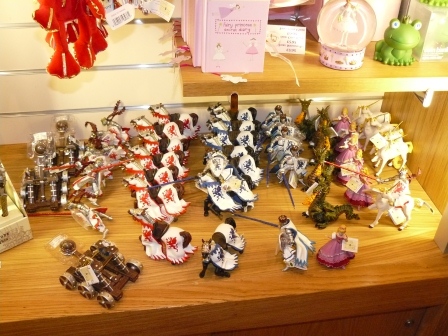
Mai poţi cumpăra cărţi de joc cu imagini din Scoţia (14) , bijuterii (12), săpunuri (13), săbii şi diademe pentru copii (8) şi jucării pentru colecţionari de toate vârstele (7).

[Pentru toate episoadele din această serie şi toate postările de pe acest blog mergi la/For all the episodes of this series, and all the posts on this blog go to: Contents/Cuprins]