Showing posts with label Riots. Show all posts

Tuesday, 17 January 2012

Romanians to their former ‘orange’ hero: “Come out, ordinary mutt!” [Românii către fostul lor erou ‘portocaliu’: “Ieşi afară, javră ordinară!”]

What has been a common sight of the past years – in some corners of the EU (Greece, Italy), in countries from EU’s periphery (Georgia), in several Arab states (Egypt, Libya) and to a lesser extent in Russia – is finally taking place in Romania.

People are taking their anger to the streets, a few for senseless rioting (like in England), some others simply to shout that they’ve had enough of the current Government and especially of the incumbent president since December 2004.

Many of those contested learders around the world had always been villains, but Traian Băsescu – just like Mikheil Saakashvili, in Georgia, and Ukraine’s former president Viktor Yuschenko – was portrayed as an anti-communist and anti-totalitarian hero not so long ago (by the mid 2000s).

It was a ridiculous image, as he was a merchant marine captain, in charge of the largest vessel in the commercial fleet of communist Romania, and he had never hid (nor had he ever seemed ashamed of) his communist past.

Far from winning elections  in landslide victories – and many believe he couldn’t have won at all without Uncle Sam’s help – he was, nevertheless, regarded as a hero’ by his fanatic supporters, as well as by the mainstream media of the Western world.

In spite of this pedestal of respectability on which he was put and of his ceaseless rethoric against the corruption and presumed authoritarianism of others, his regime proved to be even more malignous than the previous ones in post-communist Romania.

Eager to get richer, as the former communists had done before them in the early 1990s, the orange gang around Băsescu has engaged in parasiting on the Romanian economy.
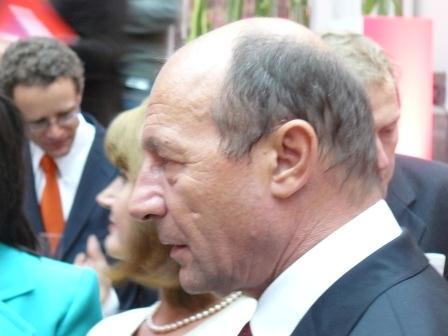
That was nothing new for democratic Romania. What would eventually draw the ire of many was the aggressive manner in which he understood to exert his prerogatives, as if the political establishment could be steered like the oil tanker that was once under his command.

Unlike his predecessors – a shrewd former commmunist, always able to build consensus, and a politically weak geology professor, who refused to run for a second term, admitting that he had been defeated by the system” – Băsescu appears to be at ease only when at war with someone.

Because of his stubbornness and arrogance, the orange hero’ would soon be vehemently contested. Halfway into his first term, the Parliament voted for his impeachment. According to the Constitution, he was suspendend, the President of the Senate temporarily replaced him, and Romanian voters were called to approve or nulify the decision of their representatives.

Back then, Romanians were to bee too blind to see that the bogus anti-system hero, promising to tread on all enemies of democracy and prosperity, was himself the product of a despicable system. Thus, he won the referendum confirming him in office by 70%.

It would be simplistic to believe foreign media reports (+ herethat the protests on the streets have to do with the VAT increase (from 19% to 24%) or with some of the harshest austerity measures taken anywhere in the EU: a 25% wage cut of public employees, and a 15% tax on pensions. The decisions were taken in May-July 2010, and Romanians bit the bullet.

Maybe not even the incident that ignited the protests – in the second week of January 2012, Băsescu arrogantly took on the chief of the Romanian emergency rescue service (SMURD), accusing him of opposing a controversial health reform – should be overestimated.

Nevertheless, it was the spark that enraged many, among the millions in whose hearts the ‘Orange Revolution’ (a term which was not as much used in Romania as it was in Ukraine, while the colour was equally widespread) into an ‘orange plague’.

People are angry with a lot of things in this country, among which Băsescu’s divisive manner of leadership and resentful attitude rise above any other reasons of discontent.

The president who promised “to turn to the people” (in his war against a corrupt system) has turned his back on the people that put their hopes in him.

Only insiders from the system who knew exactly when to dress in orange are better off, while many of Băsescu’s fans, his reluctant supporters (who thought he was a lesser evil), the mass of politically indifferent Romanians, and those how never voted for him are worse off.

Although demonstations were held in many cities (some 60) apart from Bucharest, very few are those protesting on the streets these days, compared to the level of discontent in Romania.

Most protesters are against the entire ruling class, the opposition (former communists + liberals) is united only in weakenesses, while most other law abiding citizens are  ‘protestingon Facebook and blogs or cynically mock those on the streets.

It seems unlikely – but I like to never say never! :-) – that Băsescu and the Government he supports would resign and call earlier elections (as 2012 is electoral year anyway). Not even blocking unpopular reforms appears probable for now.

This happens because – thanks to the very same putrid system that he often criticized –  Băsescu has managed to forge a ruling coalition. His party (PDL) is propped up by a new party (UNPR) made up of dissenters  from the main opposition party (PSD).

With a popular support of 10%, Băsescu’s regime is currently a sort of elected dictatorship. The widespread (but far from being massive until now) protests and the president’s reaction to them will be one of the most serious test for the post-1989 Romanian democracy.

All in all, the hero of 2004-2009 has turned into public enemy number one. Like so often before in history, the same man who once personified so many hopes for the better became the personification of bitter disappointment.

Sadly, irrespective of all the anger and despair of many, there’s no true feeling of revolution in the air, as if everyone knew that, with of without ‘captain Băsescu, Romania would be still floating adrift boundlessly... As if only hitting an iceberg could possibly help this aimless nation come to its senses...

[For all the posts on this blog go to/Pentru toate postările de pe acest blog mergi la: Contents/Cuprins]

Friday, 11 November 2011

[EN] No comment / [RO] Fără comentarii (18) – War and peace / Război şi pace

[EN] The so-called ‘war to end all wars’ finished 93 years ago – at the 11th hour, of the 11th day, of the 11th month of 1918.  [RO] Aşa-zisul ‘război pentru a sfârşi toate războaiele’ s-a încheiat acum 93 de ani – la a 11-a oră, a celei de-a 11-a zi, a celei de-a 11 luni a lui 1918.

[EN] The whole world would change a lot, yet wars didn’t come to an end. [RO] Lumea întreagă avea să se schimbe mult, dar războialele nu s-au sfârşit.

[EN] Is the illusion that made soldiers charging senselessly towards certain death, over and over again, still present today ? [EN] Este această iluzie care i-a făcut pe soldaţi să şarjeze fără sens către moarte sigură, iarăşi şi iarăşi, încă prezentă azi?

[EN] I guess so; there are even more blood thirsty pacifists in our times as in 1914… [RO] Cred că da; sunt chiar mai mulţi pacifişti însetaţi de sânge în zilele noastre decât în 1914…

[EN] Aren’t peace activists very agggressive in our times? Can peace be preached with clenched fists and riots? [RO] Nu sunt activiştii pentru pace foarte de agresivi în vremurile noastre? Poate fi pacea predicată cu pumnii încleştaţi şi răzmeriţe?

[EN] Today – armed with iPods, smartphones, skilled with information technology. [RO] Azi – înarmaţi cu iPod-uri, smartphones, iscusiţi într-ale tehnologiei informaţiei.

[EN] Tomorrow – cannon fodder, ‘knowing’ death from horror movies, unaware of and unprepared for eternity. [RO] Mâine – carne de tun, ‘ştiind’ moartea din filme de groază, neştiutori şi nepregătiţi de eternitate.

[EN] Many of those dying in 1914-1918 (pic 1) had a warm sense of afterlife[RO] Mulţi dintre cei care mureau în 1914-1918 (poza 1) aveau un cald simţ al vieţii veşnice

[EN] Those who will die tomorrow – in wars ending the world, not all wars – are cold as statues (pic 2). [RO] Cei care vor muri mâine – în războaie ce-or sfârşi lumea, nu războaiele – sunt reci ca statuile (poza 2)…

[EN] Will death change anything for those who are already spiritually dead? [RO] Va mai schimba ceva moartea pentru cei care sunt deja morţi spiritual?

[For all the episodes of this series, and all the posts on this blog go to/Pentru toate episoadele din această serie şi toate postările de pe acest blog mergi la: Contents/Cuprins]

Saturday, 27 August 2011

[EN] A few wonders from the UK / [RO] Câteva minunăţii din UK (24)


[EN] A very beautiful spot of London, Belgravia, where the Romanian Cultural Centre (ICR – London, pictured here) is located.

[RO] Un foarte frumos loc din Londra, Belgravia, unde Centrul Cultural Român (ICR – Londra, pozat aici) este localizat.

[EN] Inaccesible to common mortals, it is one of the richest neighbourhoods of the world, where most houses (up to 99%) are incredibly white.

[RO] Inaccesibil muritorilor de rând, este unul dintre cele mai bogate cartiere ale lumii, unde cele mai multe case (până la 99%) sunt incredibil de albe.

[EN] Is the money of most notable residents (like Roman Abramovich) where equally white?!

[RO] Sunt şi banii celor mai notabili rezidenţi (precum Roman Abramovici) la fel de albi?!

[EN] Although spared of rioters’ fury, it is not spared of crime, however, people living there can afford paying for little private armies.

[RO] Deşi ferit de furia răsculaţilor, nu este chiar ferit de criminalitate, totuşi, oamenii care locuiesc acolo îşi permit să plătească pentru mici armate private.

[For all the episodes of this series, and all the posts on this blog go to/Pentru toate episoadele din această serie şi toate postările de pe acest blog mergi la: Contents/Cuprins]

Friday, 12 August 2011

Răzmeriţele din Anglia – faţa hâdă a nihilismului [Riots in England – the hideous face of nihilism]


Într-o lume în care oamenii nu ştiu de unde vin şi nici unde se duc, trăind doar pentru ‘aici şi acum’, cei mai mulţi păstrează, totuşi, convenţiile care fac suportabilă viaţa în societate.

În afară de ‘a se simţi bine’ nimic nu are sens pentru omul contemporan, de parcă ‘aici şi acumul’ ar ţine o veşnicie. Doar că majoritatea se menţin între limitele a ceea ce numim civilizaţie, ştiind că ceea ce ţie nu-ţi place, altuia nu-i face.

Aşa or fi şi cei mai mulţi dintre britanici sau măcar cei cu care am interacţionat eu. În ciuda amoralităţii, a aroganţei şi a ateismului exprimat mai mult sau mai puţin agresiv, în UK se păstrează aparenţa regulilor sociale.

Toţi se amăgesc că lucrurile au rost, câtă vreme există cariere care să hrănească slava deşartă, vise (prefabricate sau nu, căci cine mai visează pe cont propriu în ziua de azi?) care să îţi dea sentimentul că viaţa ta contează, plus zeci de locuri de vizitat într-o viaţă, mii de filme de văzut, infinite bunuri de cumpărat, plăceri şi distracţii.

Pentru a avea acces la toate acestea, convenţia socială larg răspândită şi însuşită este că tre’ să pui osul la treabă – să respecţi regulile şi cutumele sociale, să înveţi, să te duci la serviciu, să faci bani în mod legal (de alte scrupule de ordin moral rar se ţine seama în zilele noastre) şi să-i cheltuieşti astfel, încât să nu lezezi drepturile altora.

Mai sunt însă şi alţii, care dau de pâmânt cu toate regulile amintite, răbufnind precum în aceste zile, într-un val de violenţe nu fără precedent în Anglia.

Deşi, în trecut, răzmeriţe similare au avut conotaţii rasiale, iar eşecul multiculturalismului este una dintre cauze, dimensiunea etnică a turbulenţelor nu este covârşitoare.

Între huligani se află oameni de toate rasele şi etniile, încă şi din alte pături sociale decât cele mai defavorizate. La fel, între victime şi cei care au ieşit să apere proprietăţile vandalizate s-au numărat şi indieni, pakistanezi, turci sau români.

Pe de altă parte, se poate subscrie eşecului multiculturalismului faptul că cei ieşiţi pe străzi formează o cultură aparte, nihilistă, care a fost nu doar tolerată, ci şi încurajată.

Este vorba de cele 6-7 milioane de britanici care trăiesc din ajutoare sociale – din care, cel puţin înainte de criză, îşi permiteau chiar şi vacanţe low cost în Grecia sau Turcia – care nu au lucrat nicăieri din din tată în fiu (fiind la a treia generaţie de şomeri).

Aceşti nefericiţi cred că toate idealurile nihiliste – acest ‘mă simt bine, aici şi acum, fac ce vreau’ al cetăţenilor oneşti (care îşi plătesc cu ore de muncă şi alte constrângeri asumate distracţiile râvnite) – li se cuvin. Pentru că aşa au fost învăţaţi.

Trăiesc în locuinţe de la primărie (council estates), trec prin şcoală ca gâsca prin apă (fără şanse intelectuale şi/sau financiare de a urma studii universitare), ajung să îşi petreacă multe nopţi prin şanţuri de beţi ce sunt, umplu închisorile, dar şi spitalele, cu probleme cauzate de obezitate, alcoolism şi fumat.

Se întâmplă şi ca un asemenea asistat social să conceapă 10 copii cu 10 femei diferite sau chiar 15 copii cu 13 femei. În paralel, se înmulţesc şi cazurile de mame singure la a treia generaţie. Părinţii şi odraslele trăiesc numai din banii contribuabililor.

Invers de cum cred majoritatea britanicilor, că responsabilitatea individuală trebuie să primeze într-un regim democratic, aceste milioane de iresponsabili nici nu pot concepe aşa ceva, pentru că au fost condiţionaţi altfel.

Statul social/al bunăstării comune (welfare state) a făcut posibilă situaţia, astfel că o bună parte din clasa cea mai de jos a societăţii (underclass) nu mai trăieşte ca în Marea Britanie a lui Charles Dickens (muncind pe rupte, de la cele mai mici vârste, deşi există şi excepţii), ci într-un paradis al nebunilor.

Condiţionaţi să tot primească degeaba, ca nişte câini ai lui Pavlov, nu este de mirare că, uneori, când procesarea stimulilor condiţionanţi o ia razna, aceşti oameni trec la a-şi înşfăca imediat lucrurile la care poftesc.

Şi nici măcar nu vor ceva cu adevărat, căci nu fură ca orice hoţ chibzuit, ci dau iama prin magazine în faţa a milioane de camere de supraveghere (CCTV).

Sau sparg pur şi simplu, ca într-un joc video – maşini (neştiind ce e aceea să plăteşti rate şi asigurări), prăvălii (fără să fi ştiut a se încadra într-un program de lucru) sau capetele altora (pentru care nu simt niciun fel de empatie).

Absurdul faptelor nu este un motiv de a descuraja comiterea lor, în condiţiile în care întreaga lor viaţă este fără sens. Cât despre pedepsele cu închisoarea (rapid aplicate, dar socotite prea blânde!), nici acestea nu-s decât o binevenită diversificare a absurdului cotidian.

Nici în închisoare, nici la lumina zilei, oamenii aceştia nu se vor simţi mai bine sau mai liberi; ei sunt deja robi ai unei culturi nihiliste, care nu este exclusiv specifică Marii Britanii şi nu se întâlneşte doar între cei mai săraci.

Huliganii, vandalii, răsculaţii, scandalagii etc sunt faţa hâdă a aceluiaşi nihilism în care îşi dorm viaţa limitată la aici şi acum’ miliarde de pâmânteni, care nu găsesc alt sens al existenţei decât în ‘a se simţi bine’.

Majoritatea reuşesc să se simtă bine în perimetrul convenţiilor sociale, alţii rupând orice bariere. Dar ce înseamnă cu adevărat Binele şi de la Cine ne poate veni foarte puţini mai ştiu.

Nu ştiu nici cei ieşiţi pe străzi, dar nici parlamentarii care s-au înfruptat cu neruşinare din bani publici şi poate nici premierul care şi l-a luat drept consilier pe unul dintre vinovaţii în scandalul interceptărilor telefonice.

Evident, niciun altul decât dumnezeul-ban şi nu au nici pisicile grase din fruntea băncilor, care s-au grăbit să-i anunţe pe cei cu magazinele făcute ţăndări şi scrum că trebuie să îşi plătească în continuare ipotecile.

Juridic, răspunderea pentru cele petrecute va fi pusă pe seama unora sau altora. Dar nici de ar sta zeci de ani la puşcărie, cum poate ar risca în SUA, este probabil ca în peste 90% din cazuri societatea să nu obţină civilizarea lor.

Moral, vinovăţia este a întregii societăţi britanice, care de sute de ani nu ştie cum să rezolve problema indezirabililor. De la expulzările către coloniile americane şi Australia până la welfare state’, toate soluţiile au dat greş.

Dresaţi permanent de expunerea la cultura celebrităţii (Celebrity Culture), construită în jurul unor nimeni care se închină zilnic idolului fac ce vreau’, ce pot să înveţe aceşti oameni? Nicidecum a deveni cetăţeni responsabili, ci să decadă în neoameni.

Sociologii vor căuta explicaţii sociale pentru cele întâmplate, ideologii de toate culorile – cauze politice, bogaţii – vor da vina pe săraci, iar cei din urmă – pe bogaţi.

Mulţi se vor întreba stupid, ca ateul Ed Miliband, “de ce atât de mulţi oameni simt că nu au nimic de pierdut şi totul de câştigat din vandalism şi jaf?, rămânând orbi faţă de adevăratele înţelesuri.

Chiar aşa, bună întrebare: de ce? Oare va mai înţelege cineva că orice motive iscodite de mintea omului de azi (fie vărsate cu năduf, fie descrise ştiinţific) nu pot lămuri nimic, dacă nu se pune degetul pe rana supurândă din UK – abisul spiritual?

În lumea de care aminteşte Alexandr Soljeniţîn, în care oamenii au uitat de Dumnezeu, violenţele fără sens (de fapt, niciun fel de violenţă nu are sens, din perspectivă creştină) vor deveni pretutindeni regula, nu excepţia.

Aşa cum ţara aceasta a deschis calea Revoluţiei Industriale şi, graţie Imperiului britanic, a întregului progres (termen discutabil, desigur!) al omenirii din ultimele 2-3 veacuri, poate că tot aşa, ce s-a petrecut pe străzile din UK este imaginea profetică a omenirii de mâine.

[Pentru toate postările de pe acest blog mergi la/For all the posts on this blog go to: Contents/Cuprins]

Wednesday, 10 August 2011

Towards a grievous failure of British democracy [Către un eşec dureros al democraţiei britanice]


Six years ago, in that blazing autumn that saw France engulfed by violence (to a degree not seen since 1968 or even 1871), what is happenig today in many British cities (London + its suburbs, Birmingham, Bristol, Liverpool, Manchester, Nottingham) seemed utterly inconceivable.

The French had granted citizenship to immigrants, irrespective or nationality and religious background, therefore they should have considered the ‘risk’ implied by this more or less forceful integration, many British thinkers were probably imagining.

Whilst on the contrary, multicultural Britain had offered homes that retained all ethnic and religious peculiarities (from the fartherst corners of Asia and Africa to the Carribean and Eastern Europe) to millions of people.

The British model was deemed superior, many believed, because newcomers were not forced to adhere to abstract values such as those of the French Republic

Instead of that, they were likely to become law abiding citizens of a country that let them live their way, with little-to-none interference of the state in their lives.

The presumed solidity of this approach was hailed during the time when T. Bliar and his gang were in power (1997 – 2010), and every now and then Britons (and friends of Britain, like me :-) were exposed to ‘success stories’ about multiculturalism.

They sounded good: communities were interwoven by racial harmony, peace, understanding, respect for diversity, a climate of political correctness and allegiance to democratic values. All of these and economic prosperity overlapping.

Then the economic crisis struck Britain, followed by severe public spending cuts, and in early 2011, PM David Cameron openly acknowledged the failure of multiculturalism.

In theory, multiculturalism looked great – as appealing to the eye as these pictures of little streets from the City of London, a melting pot that, since the late 1600s to our days has been home to French Huguenots, Jews, Irish, Africans, African-Americans, Indians, Chinese, Pakistanis etc.

In practice, the often questioned multicultural achievements of British democracy lie shattered among the broken windows, broken skulls, and burning shops in British (only English, no Scottish, Welsh or Irish so far!!!) cities that no long before were ‘dream destinations’ for people from all over the world.

The mobs are not ‘united in diversity’ (as the EU motto claims) on the streets of British cities that I have so often praised as beautiful; there’s but a sort of ‘unity’ in discontent, rage, and meaningless devastation.

Not that I would find a political claim excusable, however, any political stance supported by the people on the streets could be at least understandable. Yet there is no such thing.

Just like the blitz riots in Canada’s most liveable city (2011), like those in France (2005), in the USA (1992), what is happening in the UK these days can’t be understood without taking into consideration the moral abyss into which Britain has been sucked for the past decades.

Unlike the localized Brixton Riots (of 1981, 1985, and 1995), these widespread events may have farther reaching consequences, in spite of (or precisely because of…) the hoodlums’ having no official agenda.

From one perspective, this makes the riots very convenient for everyone. Firstly, they look like a difficult (on the short term) but politically rewarding (on the long term – if dealed with wisely) task for the UK Government, which is very unlikely to draw any opposition to a massive crackdown.

Apart from Trotskyists and other weirdos, plus Tony Bliar’s former friend in Lybia, it’s hard to believe that anyone agrees with the violence in Britain.

Nevertheless, it is difficult to say whether UK’s law enforcement agencies, crippled by budgetary cuts, could come up with a swift response to the violence.

It appears that the summer of discontent has still reached Britain, and I wonder whether Cameron and Clegg have the strength to deal with a prolonged crisis (such as Margaret Thatcher’s miners’ strikes) in case the British riots will last as long as those in France.

Secondly, hordes of unorganised (?!) looters with no demand (albeit as skilled at using new technologies as those that ignited the so-called Arab Revolutions), and acting like mere Pavlov’s dogs, are also very convenient to Britain’s enemies. 

As the cradle of ancient democracy (Greece) is faltering, it’s sad – but not surprising, for a great nation where atheism is in full bloom – to see that the egg from where democracy as we know it today hatched (Great Britain) is crumbling.

[For all the posts on this blog go to/Pentru toate postările de pe acest blog mergi la: Contents/Cuprins]