Showing posts with label China. Show all posts

Monday, 14 April 2014

The Slaughter [Măcelul]

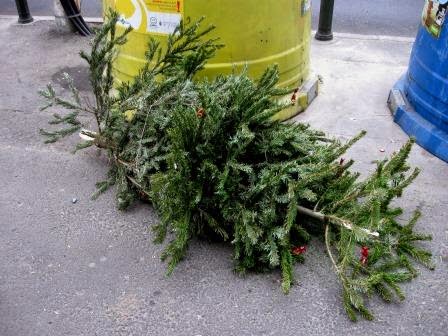
Many months after Christmas, there were still many traces of a massive slaughter that had taken place in Bucharest around what is essentially a celebration of life – Christ’s birth.

Undoubtedly, the same happened in other capitals of the ‘civilised world’, although I bet they are better at covering up such crime scenes.

Every one or two little streets or every 400-500 meters on a large boulevard, there was such a tree corpse to be found, lying obscenely near garbage bins.

The images are just saddneing, not shocking. There was no blood, no stench of death, and surely no mourners around them. Nobody cared.

And how should anyone care, in a city immune to caring about the cohorts of beggars, stray dogs, lousy political leaders and so on?

Generally speaking, we’re not used to caring about anything else, but our senseless worries and hedonist aspirations in Bucharest. Maybe it’s the same everywhere else.

There’s no way that I could claim to be better than others for having decorated a plastic made-in-China Christmas tree…

What I feel the urge to confess is that the photoholic I simply couldn’t pass by these slain trees and not take pics of them.

Far from being a hysteric ecologist, I can’t help feeling the noose of progress tightening around my neck as I watch them.

Like any slaughters of such scale (including the industrial killing animals for human consumption) this is another token of the progressive world we live in.

I wonder if for people living some 100-150 years ago – before this tradition became a worldwide commercial success – it made any sense to cut so many trees.

Just for fun. Just for the sake of making Christmas more enjoyable. It’s but a sacrifice on the altar of a ‘Christmas spirit’ which has nothing to do with Christ.

Like almost everything else during the contemporary consumerist Winter Holidays Season that hasn’t got anything to do with Him.

Well, I’d rather refrain from invoking religious reasons for taking action against the killling of trees for Christmas.

Sadly enough, they are present in many Othodox churches, along other so-called churches, shopping malls, public institutions, big and small firms, and homes.
It’s just that – be it from an ecological or just ethical perspective – I dislike this waste of tree life. Why should so many trees be chopped?

Who can correctly anticipate the volume of sales and guaranteee that there won’t be millions of trees cut worlwide, but remain unsold for Christmas?

Is there any environmentally friendly and economically sound solution for disposing of these trees and possibly turning them into something useful?

Indeed, big trees from city squares can be turned into something useful. But what about the countless little ones like those noticed by me throughout Bucharest?

They aren’t good for furniture, probably not for fuel either, nor for making paper. So what could be done with them?

As long as we were forced to use ecological light bulbs, why shouldn’t sellers and buyers be compelled to trade exclusively trees grown in Christmas tree farms?

I’d make cutting Christmas trees from forests (irrespective of who owns the forest), selling and buying them a serious crime, punishable by severe fines and/or imprisonment.

If the price of farmed Christmas trees skyrocketed, would that be a problem? More tree farms would mean more competition.

Such a restriction will be a boost for those manufacturing ecological Christmas trees, as I’d also forbdid unrecyclable plastic trees. Would anyone agree with me?

[For all the posts on this blog go to/Pentru toate postările de pe acest blog mergi la: Contents/Cuprins]

Friday, 14 December 2012

The end of toys?! [Sfârşitul jucăriilor?!]

Among so many ‘blessings’ of contemporary civilisation, one is the steady suprimation of the beautiful toys of yore.

Children are pushed into a forever incomplete growth, and the toys they wish for are but soulless consumer goods.


They are not the little treasures they once were, cherished along the years and passed on to younger siblings or to grandchildren.

On the one hand, the replacement of healthy toys made of wood or clay with plastic versions (often but not exclusively ‘made in China’), has been taken place for decades.


Who remembers the lovely Matchbox little diecast vehicles ‘made in England’, now found only on eBay, in toy museums or in rare personal collections?

On the other hand, there’s an accelerated process of removing toys altogether from childhood and replacing them with all sorts of gadgets and video games.


Instead of simple instruments for stirring creativity and fostering intelligence, children are taught to yearn for objects that rush them into a false adulthood.

Most fashionable toys of today are devices that need electricity to work. Unplug them, and they’re a bunch of useless electronic junk!


A child can rarely break such gadgets and repair them. All that the brat can to is to cry and drive the parents mad, so that they buy another device of a newer generation.

They also run on softwares that impose prefabricated universes on children and impede their creative thinking.


Inventing new games and putting imagination at work are no longer at hand, as children are mesmerized with gadgets that apparently do everything by themselves.

It’s good to know that at least Lego is not doing too bad… But can the family owned company from Denmark reverse the tide that is taking toys out of childhood?

[For all the posts on this blog go to/Pentru toate postările de pe acest blog mergi la: Contents/Cuprins]

Friday, 2 November 2012

[EN] Punished smokers / [RO] Fumători pedepsiţi

[EN] I admit that sinful I sometimes can’t help enjoying when I watch the sad view of some ‘punished smokers’. [RO] Admit că păcătosul de mine uneori nu mă pot abţine a mă bucura când urmăresc trista de privelişte a unor ‘fumători pedepsiţi’.

[EN] I remember the long hours when I breathed in the sickening smoke... at school, at work, on the street, in pubs, sometimes even on beaches or in parks. [RO] Îmi amintesc lungile ore când am inspirat scârbosul fum… la şcoală, la serviciu, pe stradă, în localuri, uneori chiar şi pe plaje sau în parcuri.

[EN] Nevertheless, there’s nothing funny – neither I, nor anyone else should laugh at these enslaved people. [RO] Cu toate acestea, nu este nimic amuzant – nici eu, nici altcineva nu ar trebui să râdă de aceşti oameni înrobiţi.

[EN] None of us would look better if our power of will were diminished by nicotine and the tyranny of hedonism. [RO] Niciunul dintre noi nu ar arăta mai bine dacă puterea voinţei ne-ar fi diminuată de nicotină sau de tirania hedonismului.


[EN] This is how those once ‘cool’ smokers (like these teens drinkers) look when they grow up… pretty ‘un-cool’, I’d say… [RO] Aşa arată acei cândva ‘cool’ fumători (precum aceşti băutori adolescenţi) când cresc mari... destul de ‘ne-cool’ aş zice eu...

[EN] Sidelined: taken out of their daily routine, out of their work environment or even out of buildings. [RO] Marginalizaţi: scoşi din rutina zilnică, afară din mediu de lucru sau chiar afară din clădiri.

[EN] Smoking is no longer a comfortable experience in most of EU countries and the USA. It still is in China and Russia. [RO] Fumatul nu mai este o experienţă confortabilă în cele mai multe state UE şi în SUA. Este încă în China şi Rusia.

[EN] Lighting a cigarette has become something that must always be done outside… And not only outside the European Commission headquarters in Brussels (pic 1). [RO] Aprinderea unei ţigări a devenit ceva care trebuie făcut întotdeauna afară… Şi nu doar în afara sediului Comisiei Europene din Bruxelles (poza 1).


[EN] Smokers are compelled to go out in front of little stores in Brighton (2) or to descend 30-40-50 floors in New York City. [RO] Fumătorii sunt forţaţi să iasă afară în faţa unor mici prăvălii din Brighton ori să coboare 30-40-50 de etaje în New York City.

[EN] And that may not be the worst. They could be crammed into glass cubes like in the Airport of Munich (3)… [RO] Şi aceasta s-ar putea să nu fie cel mai rău. Ar putea fi înghesuiţi în cuburi de sticlă precum în Aeroportul din Munchen (3)...

[EN] Is it good? Is it bad? Is it discriminatory? Is it politically correct? What about the efficiency of these constraints? [RO] Este bine? Este rău? Este discriminatoriu? Este politic corect? Ce putem zice de eficienţa acestor constrângeri?

[EN] Maybe some good results will be observed over the decades, when other cause of death would seem insurmountable… [RO] Poate că unele rezultate bune vor fi observate peste decenii, când alte cauze ale morţii vor părea insurmontabile…

[For all the episodes of this series, and all the posts on this blog go to/Pentru toate episoadele din această serie şi toate postările de pe acest blog mergi la: Contents/Cuprins]

Monday, 24 September 2012

[EN] A few wonders from the UK / [RO] Câteva minunăţii din UK (30)

[EN] The tallest observation wheel in Europe. [RO] Cea mai înaltă roată de observaţie din Europa şi a treia cea mai înaltă din lume.


[EN] At 135 meters, it’s also the third tallest in the world. [RO] La 135 de metri, este şi a treia cea mai înaltă din lume.


[EN] The biggest – in Singapore. The second – in China. [RO] Cea mai mare – în Singapore. A doua – în China.


[EN] London Eye – an iconic brand of London, like the Big Ben. [RO] London Eye – o marcă iconică a Londrei, precum Big Ben-ul.

 
[EN] Also near the river Thames, but on the opposite bank. [RO] Tot lângă râul Tamisa, dar pe malul opus.


[EN] Pictures taken soon before and after sunset on a warm February day. [RO] Fotografii făcute curând înainte şi după apus, într-o zi caldă de februarie.

[For all the episodes of this series, and all the posts on this blog go to/Pentru toate episoadele din această serie şi toate postările de pe acest blog mergi la: Contents/Cuprins]

Tuesday, 19 June 2012

[EN] No comment / [RO] Fără comentarii (32) – Consumerist oddity / Ciudăţenie consumistă

[EN] Some would say that this could only happen when shopping  in America… [RO] Unii ar zice că aceasta nu s-ar putea întâmpla decât la cumpărături în America...

[EN] I’d say we’ve got absolutely no guarantee that this is not happening everywhere in our consumerist world. [RO] Eu aş zice că nu avem absolut nicio garanţie că aceasta nu se întâmplă peste tot în lumea noastră consumistă.

[EN] At least these Californian ‘packagers’ are honest, aren’t they? Are others hypocrites?! [RO] Cel puţin aceşti ambalatori’ californieni sunt oneşti, nu-i aşa? Sunt alţii ipocriţi?!

[EN] They admit that their jelly gums can be “a product of USA or Mexico or Brazil or Czech Republic or China or Indonesia.[RO] Ei admit că bomboanele lor gumate pot fi “un produs din SUA sau Mexic sau Brazilia sau Republica Cehă sau Indonezia”.

[For all the episodes of this series, and all the posts on this blog go to/Pentru toate episoadele din această serie şi toate postările de pe acest blog mergi la: Contents/Cuprins]

Thursday, 29 March 2012

A message to Big Brother: We’re photographers, not terrorists! [Un mesaj către Big Brother: Suntem fotografi, nu terorişti!]

One of the oddities of our troubled times is the fact that, the more people expose themselves without any moral boundaries, the more restrictions are imposed on taking pictures.

In the free and so-called civilised patch of the world where we were born, everyone is free to wear tattoes, to turn themselves into walking bilboards, to fall drunk on the pavement, to undress for ‘good causes’ and sometimes to walk naked on the streets.

Then, people can exert the liberty to dispose of their own image, even by giving up the rights over their pics (+ here, here) when they post them on Facebook.

Nevertheless, it seems that everyone – from amateur photoholics to professional photojournalists – should be aware of growing inconveniences, restrictions and risks. Taking pics is no longer as free as it was five or ten years ago.

Anyone carrying a camera in Britain (but not only there!) can be stopped, have his pictures ‘checked’ and even have his memory cards seized or erased.

Such situations occur here, in our self-proclaimed democratic world, not in Iran, North Korea or China – where policemen were persistently looking at me everywhere I was taking pics, yet none of them approached me in a big city like Shanghai.

In the UK, photographers have put their outcry on this issue on a website taking attitude:

Photography is under attack. Across the country it that seems anyone with a camera is being targeted as a potential terrorist, whether amateur or professional, whether landscape, architectural or street photographer.

The threat to press freedom should be obvious to anyone, but if this crackdown on picture taking goes on, a greater risk looms ahead:

Not only is it corrosive of press freedom but creation of the collective visual history of our country is extinguished by anti-terrorist legislation designed to protect the heritage it prevents us recording.

They may be exaggerating, as everyone in our age of Information Technology does it, in order to ehnance the receptivity of a message in a world overwhelmed with stories.

Since most readable stories that have an impact today are about risks, threats, dangers, hazards and so forth, I can’t blame anyone for considering the limitations imposed on photographers as unwelcome constrains on our democratic societies.

As a matter of fact, I do believe that this is a risk. And may I have the right to speak in defence of democratic principles, not of my photoholism :-)

I’m aware that taking pictures often proves to be intruding, annoying and unnecessary for the immediate welfare of society. But it’s a (little, bearable, tolerable) distress that democratic societies should learn to cope with.

Apart from some legitimate privacy concerns, why is taking pictures in shopping centres forbidden in many parts of the world, thus some of my images*** are illegal?

What about Big Brother’s monopoly on taking pics?  Isn’t it strange that nothing can be limited today because of public morality, whilst almost anything can be restricted on grounds of public security?

*** NOTE: Pic 2 – from inside the Churchill Square Shopping Centre, Brighton; pic 4 – from inside the Pentagon City Mall, on the outskirts of Washington D.C., near the Pentagon.

[For all the posts on this blog go to/Pentru toate postările de pe acest blog mergi la: Contents/Cuprins]

Monday, 13 February 2012

[EN] No comment / [RO] Fără comentarii (24) – Emergency chargers / Încărcătoare de urgenţă

[EN] When I first saw them in Brighton, I thought they are another weird Brit stuff, although they were ‘made in China’. [RO] Când le-am văzut prima oară în Brighton, m-am gândit că sunt alte ciudăţenii britanice, deşi erau made in China’.

[EN] The more civilised the country you’re in, the less obvious seems the emergency. [RO] Cu cât este ţara mai civilizată în care te afli, cu atât mai puţin evidentă pare urgenţa.

[EN] As long as you’re not doing anything adventurous and not travel to remote, scarcely inhabited areas… I mean. [RO] Câtă vreme nu faci nimic adventuros şi nu călătoreşti către zone îndepărtate, puţin locuite... vreau să zic.

[EN] If you have no ‘fuel’ for a phone call, how likely is that everyone else around you have the same problem? [RO] Dacă nu ai suficient ‘combustibil’ pentru un apel telefonic, cât de probabil este ca toată lumea din jurul tău să aibă aceeaşi problemă?

[EN] And who hasn’t got a mobile phone in an EU country, in our times?! [RO] Şi cine n-are un telefon mobil într-o ţară UE, în vremurile noastre?!

[EN] Actually, these emergency mobile phone batteries (here, here, here) can be extemely useful these days. [RO] De fapt, aceste baterii de urgenţă pentru telefonul mobil (aici, aici, aici) pot fi extrem de utile în aceste zile.

[EN] Especially when you happen to be in parts of Romania swept by blizzards, facing blackouts of 4-5 days… [RO] În special când se întâmplă să fii în părţi din România măturate de viscole, înfruntând pene de curent de 4-5 zile…

[EN] …and you’re in need of making repeated calls or send SMSes to emergency services that are overwhelmed by a ‘Big Freeze’. [RO] …şi ai nevoie să faci apeluri disperate sau să trimiţi SMS-uri către servicii disperate care sunt copleşite un ‘Mare Îngheţ’.

[EN] Too bad that such batteries can’t save Nokia… But maybe states should store them along with fuel, blankets and food. [RO] Păcat că astfel de baterii nu pot salva Nokia... Dar poate că statele ar trebui să le stocheze alături de combustibil, pături şi alimente.

[EN] How long until a ‘clever guy’ makes a big business of of these items ? [RO] Cât o mai fi până ce un băiat deştept’ va face profit din aceste produse?

[For all the episodes of this series, and all the posts on this blog go to/Pentru toate episoadele din această serie şi toate postările de pe acest blog mergi la: Contents/Cuprins]

Friday, 3 February 2012

[EN] No comment / [RO] Fără comentarii (23) – Obscene towers / Turnuri obscene

[EN] I noticed the first of these towers, among other very high buildings, in the financial heart of London (pics 1 + 3). [RO] L-am observat primul dintre aceste turnuri, între alte clădiri foarte înalte, în inima financiară a Londrei (pozele 1 + 3).

[EN] And I couldn’t have missed the other one, maybe not the tallest in Barcelona, but the strangest, rivalling Sagrada Familia. [RO] Şi nu puteam să-l fi ratat pe celălalt, poate nu cel mai înalt, dar cel mai ciudat din Barcelona, rivalizând cu Sagrada Familia.

[EN] I find hard to like both obscene buildings, as they look like some nasty… suppositories :-( [RO] Îmi vine greu să-mi placă ambele clădiri obscene, căci arată ca nişte neplăcute… supozitoare :-(

[EN] Neither in New York City, nor in Shanghai have I seen such ‘funny’ skyscrapers… [RO] Nici în New York City, nici în Shanghai n-am văzut astfel de zgârie-nori amuzanţi’…

[For all the episodes of this series, and all the posts on this blog go to/Pentru toate episoadele din această serie şi toate postările de pe acest blog mergi la: Contents/Cuprins]

Saturday, 24 December 2011

Aşteptând încă revoluţia mondială... (9) [Still waiting for the world revolution...]

N-or putea măsura vreodată statisticile câţi or fi fost aceia care, acum 22 de ani, aşteptau zorii libertăţii de a-L putea mărturisi pe Cel Care revoluţionează conştinţele de două mii de ani încoace şi oferă adevărata libertate...

În schimb, este sigur că la un alt fel de revoluţie şi alt fel de libertate se aşteptau majoritatea românilor – să se dea drumul’ la cumpărături, să ai cu ce, dar şi ce să cumperi.

După decenii de dezumanizare – brutală mai întâi, apoi mai rafinată, cu destule părţi bune’ de sub spoiala cărora mulţi nu îşi mai pot aminti nonsensurile şi releleîn paradisul comunist’, puhoaiele de neterminaţi oameni noi nu mai aveau decât aspiraţii de sorginte materială.

Libertatea nu putea fi concepută ca însemnând a fi liber, ci a avea. A deţine, a cumpăra, a folosi sau adesea doar a etala bunuri de tot soiul era expresia supremei libertăţi.

Dacă şi eu, la nici zece ani, eram contaminatvisând să am jucării ca în Germania :-) – ce alte aşteptări puteau să aibă cei abrutizaţi de lipsa de perspectivă, cu mintea trecută fără de încetare prin râşniţa sloganurilor ideologice?

Puţini spre niciunii or mai fi fost aceia care să creadă în posibilitatea de îndeplinire a falselor promisiuni de înfăptuire a paradisului comunist.

Utopia îşi arătase hidoasa neputinţă de multă vreme. Mai degrabă ar fi făcut plopul pere şi răchita micşunele decât să iasă ceva bun din fantasmagoria comunistă.  Probabil că şi cei mai fanatici comunişti (de or mai fi fost vreunii?!) înţelegeau aceasta.

Totuşi, evidenţa eşecului nu era suficientă pentru a aduce eliberarea de credinţa că raiul pe pământ se poate înfăptui. Ba chiar că acesta ar şi exista deja, dincolo de Cortina de Fier.

Comunismul murea, dar efectul său otrăvitor abia avea să se desăvârşească. Majoritatea oamenilor erau robiţi de aceeaşi iluzie pe care o constata Sf. Apostol Pavel: “Dacă morţii nu înviază, să bem şi să mâncăm, căci mâine vom muri!”.

Robii lui ‘aici şi acum’ nu se puteau elibera de comunism decât spre a preschimba lanţurile sclaviei anterioare cu altele mai sclipitoare şi – doar aparent! – mai uşor de purtat.

Din lacul cu rumeguş ideologic al comunismului s-a sărit în puţul consumismului, într-o mocirlă călduţă. Ca de carton putred, sloganurile comuniste erau tot mai greu de ros, dar şi mai greu de digerat. Le-au înlocuit cele de marketing, parcă mai crocante şi apetisante.

Sufletelor constipate de o cvasiabsolută lipsă a opţiunilor, 22 de ani de ‘libertate’ le-au adus o permanentă cufureală, ca urmare a chiolhanului de alegeri care le sunt puse înainte.

Cine nu cumpără nu este şi n-ar putea fi fericit, sugerează – chiar dacă nu explicit – lozincile vremurilor noastre. Cine nu consumă, nu contează (pentru progresul economiei). Cine nu are, nu este (nimic pe lumea aceasta). Acestea sunt proclamatele noi adevăruri.

Şi nici nu s-ar putea numi post-revoluţionare, căci mereu se anunţă noi revoluţii în comerţ, în tehnologie sau economie, başca în politică.

Aşa cum troţkiştii vorbesc despre o revoluţie permanentă, şi în paradisul consumist se tot succed revoluţii – ale preţurilor, ofertelor, bonusurilor, chilipirurilor… Nimic nu stagnează, totul se schimbă. Oare în mai bine?!

Culmea este când negustori din ţara Revoluţiei Culturale a lui Mao Zedong, vin să ne promită  o revoluţie a comerţului (potrivit imaginilor de faţă).

Aşa fraieri să fi fost?! La peste două decenii de ‘libertate’, pare-se că n-am învăţat cât de fericiţi putem fi cheltuind mai puţin, dar cumpărând mai mult. Nici nu vrem mai mult de atât, nici că ni se oferă altceva.

Ca ţară creştin-ortodoxă (oare?!) s-ar fi cuvenit să căutăm mai mult nepreţuitele – pace, bucurie, iubire, blândeţe, compasiune, răbdare…

Bine ne-ar fi fost să nu ne fi scobit de miez sufletele, pentru a le umple cu biete consumabile, prin care îşi închipuie rostul sute de milioane de oameni din lumea aşa-zis dezvoltată sau în care îşi caută eliberarea miliardele de chinezi şi de indieni.

Din păcate, şi românii se leagănă letargic  pe pânza de păianjen a amăgirii că suntem ceea ce avem şi avem ceea ce putem cumpăra – iar aceasta ar fi o condiţie absolut necesară a fericirii.

[Pentru toate episoadele din această serie şi toate postările de pe acest blog mergi la/For all the episodes of this series, and all the posts on this blog go to: Contents/Cuprins]